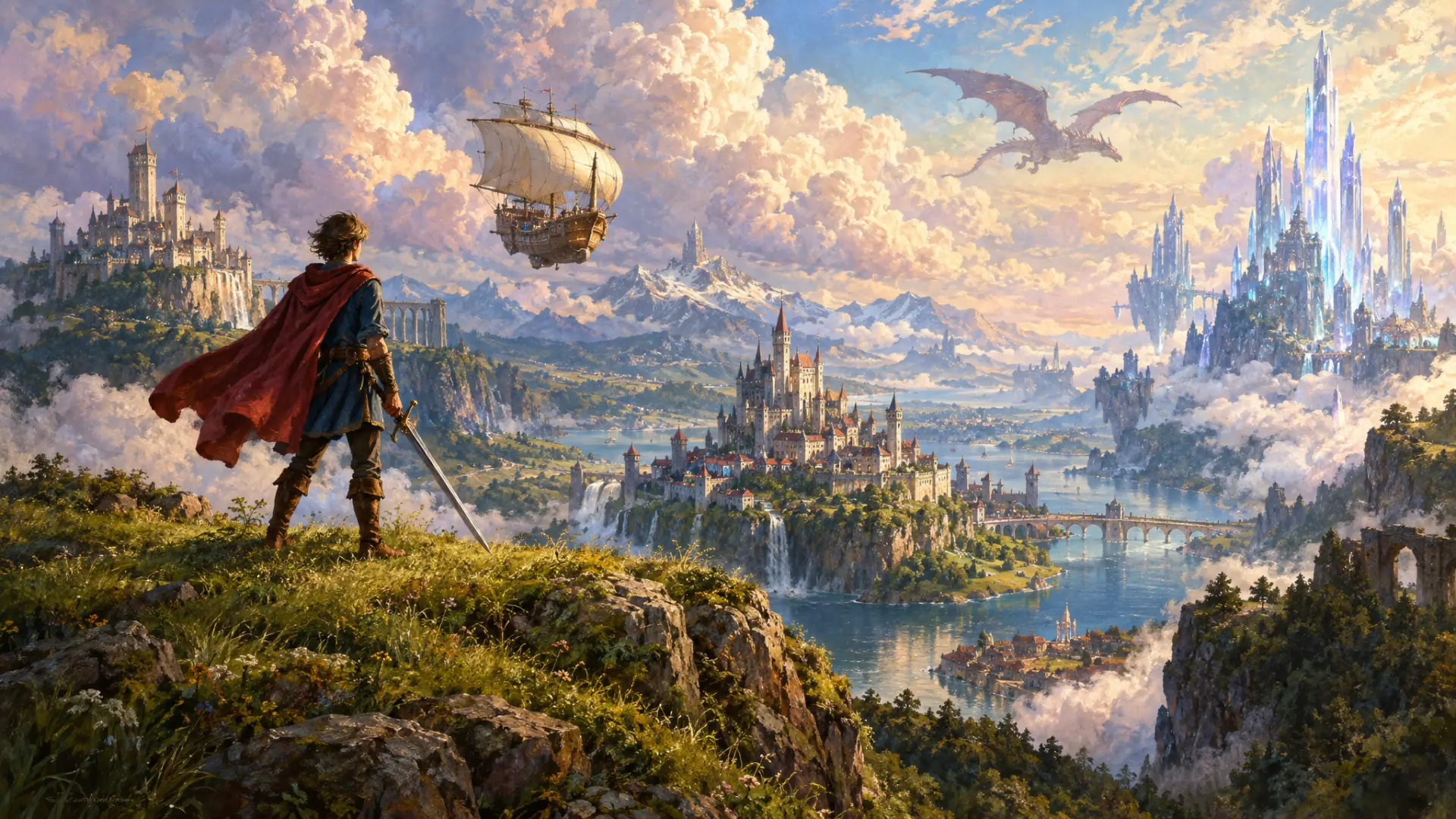
Miyamoto's The Legend of Zelda (1986) fused exploration, items and puzzles into a template for the action RPG and open-world design, and his mentorship helped bring Pokémon into being.
Video games are bad for you? That's what they said about rock and roll.
Life
Shigeru Miyamoto was born on November 16, 1952, in the town of Sonobe in Kyoto Prefecture, to parents of modest means; his father taught English. As a boy he roamed the countryside around his home, and one discovery stayed with him: a cave that, after days of hesitation, he finally entered. He loved manga and hoped to draw it professionally, absorbing its classic four-part kishōtenketsu structure as well as American Western shows on television. He graduated from the Kanazawa Municipal College of Industrial Arts with a degree in industrial design, and the arcade hit Space Invaders drew him toward games.
Work
Through a friend, Miyamoto's father arranged an interview with Nintendo president Hiroshi Yamauchi, and in 1977, after showing toys he had designed, Miyamoto was hired as an apprentice in the planning department of what was still largely a playing-card and toy company. When Nintendo was stuck with unsold Radar Scope arcade machines in North America, Yamauchi asked him to turn them into a new game. The result, Donkey Kong (1981), with its carpenter hero Jumpman, later Mario, rescued Nintendo's struggling American business. Mario Bros. followed, and then, for the Famicom (Nintendo Entertainment System), Super Mario Bros. (1985), which helped revive the North American market after the 1983 crash.
Alongside it he made a very different game. The Legend of Zelda, released in Japan on February 21, 1986, as the launch title of the Famicom Disk System, was deliberately nonlinear: a large overworld to explore freely, dungeons hidden in the landscape, puzzles solved with collected items, and a battery-backed save in its later cartridge release. Miyamoto has said he wanted players to feel what he had felt as a child, hiking without a map and stumbling on a lake, and that its labyrinthine dungeons echoed the maze of sliding doors in his family home; he described the world as a "miniature garden" players could keep in a drawer. He also named an unexpected influence: Henk Rogers's Japanese computer RPG The Black Onyx (1984), whose sense of a character growing stronger he found fun.
Zelda itself was not an RPG, and Miyamoto has said so. In a 1992 interview he called it "a real-time adventure," saying he was interested not in games "decided by stats and numbers" but in preserving a "live" feeling, and in 2003 he described a "fundamental dislike" of the genre, arguing that RPGs let anyone become strong by persistence, whereas with Mario a player might never get good. Yet he has praised Yuji Horii's writing for Dragon Quest and the cinematic approach of Final Fantasy. And his own sequel, Zelda II: The Adventure of Link (1987), borrowed heavily from RPGs, with experience points, leveling, magic spells and towns full of talkative characters. On the Super Nintendo he produced The Legend of Zelda: A Link to the Past and led Nintendo's side of Super Mario RPG (1996), a collaboration with Square.
He also shaped the monster-collecting RPG. Miyamoto mentored Satoshi Tajiri during the long development of Pocket Monsters Red and Green (Pokémon Red and Green, 1996), serving as a producer and contributing ideas on social play such as trading between players. In the 3D era he directed Super Mario 64 (1996) and led the team behind The Legend of Zelda: Ocarina of Time (1998), whose lock-on targeting and context-sensitive controls became standards for 3D action games. As general manager of Nintendo's Entertainment Analysis & Development division and later a representative director, he oversaw series from Star Fox to Pikmin and Nintendogs, the last inspired by his Shetland sheepdog. After president Satoru Iwata's death in 2015 he served briefly as acting representative director, then became Nintendo's Creative Fellow. He produced The Super Mario Bros. Movie (2023) and The Super Mario Galaxy Movie (2026), and is producing a live-action Legend of Zelda film.
Legacy
Miyamoto is widely regarded as the most influential designer in the medium; games from the franchises he created have sold more than a billion copies. For the history of the RPG his importance is oblique but real. The Legend of Zelda established an action-adventure template from which much of the Action RPGs & Hack-and-Slash tradition grew, and its free, unguided exploration anticipated the Open-World RPGs. Through Tajiri he helped launch the Monster-Collecting RPGs.
His honors include the AIAS Hall of Fame's first induction (1998), France's Ordre des Arts et des Lettres (2006), the Game Developers Choice Lifetime Achievement Award (2007), a BAFTA Fellowship (2010), Spain's Prince of Asturias Award (2012) and Japan's Person of Cultural Merit (2019). Away from work he plays guitar, mandolin and banjo, loves bluegrass, and rarely plays video games.
Marginalia
- Born November 16, 1952, in Sonobe, Kyoto Prefecture, he studied industrial design and hoped to become a manga artist.
- He joined Nintendo in 1977 after impressing president Hiroshi Yamauchi with toys he had designed.
- He has said The Legend of Zelda grew from childhood explorations near Kyoto, including finding a lake and venturing into a cave.
- He said Henk Rogers's The Black Onyx influenced Zelda, because he found its "character's process of gaining strength" fun.
- In 1998 he became the first person inducted into the Academy of Interactive Arts & Sciences Hall of Fame.
- In 2019 he became the first person from the video game industry named a Person of Cultural Merit in Japan.
Quick answers
- Who is Shigeru Miyamoto?
- Nintendo's master designer, who turned boyhood explorations of the Kyoto countryside into The Legend of Zelda and shaped the action RPG while professing a dislike of stats-driven RPGs.
- When was Shigeru Miyamoto born?
- Shigeru Miyamoto was born in 1952 in Sonobe, Kyoto, Japan.
- What is Shigeru Miyamoto known for?
- Shigeru Miyamoto is best known for The Legend of Zelda and Pokémon Red and Green.
- Why does Shigeru Miyamoto matter to fantasy and games?
- Miyamoto's The Legend of Zelda (1986) fused exploration, items and puzzles into a template for the action RPG and open-world design, and his mentorship helped bring Pokémon into being.