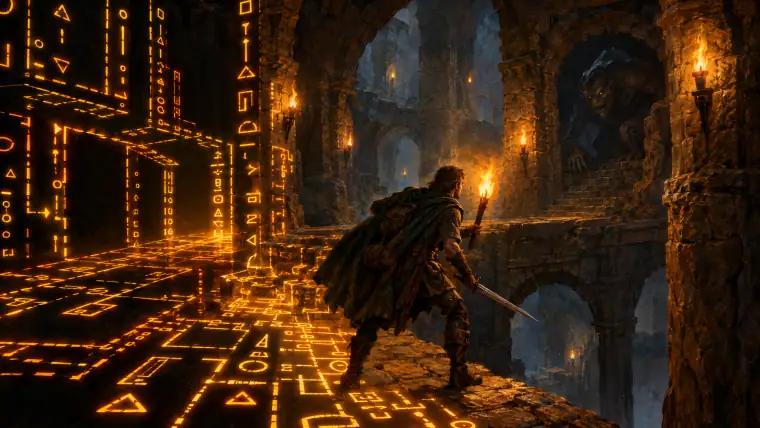
Brevik conceived Diablo and led Diablo II, fusing the procedurally generated dungeons and item hunts of roguelikes with real-time action and online play to create the modern action RPG.
Life
David Brevik was born on February 14, 1968, in Madison, Wisconsin. His family moved to Georgia and then to California, where they lived near Mount Diablo in the East Bay. Blind in one eye, Brevik decided that his lack of depth perception ruled out a future in sports and put his energy into programming instead. He studied computer science at California State University, Chico, from 1986 to 1991.
After graduating he worked at FM Waves, a clip-art company, where he met the brothers Max and Erich Schaefer. When FM Waves went bankrupt he became lead technical director at Iguana Entertainment. In September 1993 he, Max and Erich founded their own studio, Condor, in the San Francisco Bay Area.
Work
Condor survived at first on contract work for the publisher Sunsoft, including Justice League Task Force for the Sega Genesis and NFL football games. Brevik, though, had wanted to make Diablo from Condor's earliest days: a dungeon crawl that combined Dungeons & Dragons with the Roguelikes tradition of Rogue, NetHack and especially Angband, with randomly generated levels, random monsters and a bottomless supply of Loot & loot tables. He wanted it to be as easy to start as a console sports game, with a simple class choice, and as direct to control as Doom.
At the 1994 Consumer Electronics Show, while showing Condor's Genesis work, he met Allen Adham of Blizzard, whose team had made the Super Nintendo version of the same game. In January 1995 Brevik pitched Diablo to Blizzard, which agreed to publish it but asked for two big changes: real-time combat and multiplayer. Brevik resisted real time, fearing delays, and put it to a vote of his team; real time won. Then, on a Friday afternoon after everyone had left, he began converting the turn-based game himself, and by Monday he had the basics working. The multiplayer demand went further: Diablo was integrated into Blizzard's new online service, Battle.net, and permadeath was removed. In March 1996 Blizzard acquired Condor outright and renamed it Blizzard North.
Diablo shipped at the turn of 1997; Blizzard cited January 1997 as its release, though Brevik has said some West Coast stores were selling it by December 31, 1996. It was a sensation. A single town, Tristram, sat above a cathedral whose sixteen randomized levels descended to Hell; the player clicked to attack, clicked to pick up gold, and chased ever-better randomized items with magical prefixes and suffixes. GameSpot named Brevik the fourth most influential person in computer gaming for 1996. He served as lead programmer and senior designer on Diablo, then as project and design lead on Diablo II (2000), which expanded the formula with five character classes, skill trees, sprawling outdoor acts and an online community that traded and raced for years.
In June 2003 Brevik, the Schaefers and Bill Roper told Blizzard's then-parent Vivendi they would resign unless given financial protections amid rumors of a sale; Vivendi accepted their resignations. They founded Flagship Studios, which released Hellgate: London in 2007 and dissolved in 2008. Blizzard closed Blizzard North in 2005. Brevik went on to be creative director at Turbine, working on Dungeons & Dragons Online, and then joined Gazillion Entertainment in 2009, becoming its president and chief operating officer in 2011 and creating the action RPG Marvel Heroes (2013). He left in January 2016 for independent development, advised on the Chinese release of Grinding Gear Games' Path of Exile, founded Graybeard Games to make It Lurks Below, and in 2020 co-founded the publisher Skystone Games.
He has also told the story of turning down, in 1996, an offer to join the founders of what became Hotmail, which he later called the worst business decision of his career. After Diablo III's release he publicly criticized aspects of its design, including its narrative emphasis, its changed loot system and its real-money auction house.
Legacy
Diablo turned the slow, cerebral roguelike into something immediate, social and endlessly repeatable, and in doing so created the modern Action RPGs & Hack-and-Slash as a commercial genre. Its randomized dungeons, color-coded loot and online co-op run through the "Diablo-likes" that followed, from Path of Exile to Diablo's own sequels, and through the loot systems of countless games in other genres. The decision Brevik fought and then embraced, real time over turns, proved to be the design's heart.
For visitors to the Collapse & Renaissance: Cards, Vampires & Baldur's Gate chapter, Brevik is the designer who brought the dungeon crawl out of the text terminal and into the late-1990s mainstream, at the same moment Baldur's Gate was reviving the party-based CRPG.
Marginalia
- Born February 14, 1968, in Madison, Wisconsin, he named Diablo after Mount Diablo, near his childhood home in California.
- In September 1993 he founded Condor with brothers Max and Erich Schaefer; Blizzard bought the studio in 1996 and renamed it Blizzard North.
- Diablo was designed as a turn-based game; Brevik converted it to real time over a single weekend after his team voted for the change.
- The game drew on D&D and on roguelikes, especially Angband.
- GameSpot named him the fourth most influential person in computer gaming for 1996.
- He later advised on the Chinese release of Path of Exile and founded the indie studio Graybeard Games.
Quick answers
- Who is David Brevik?
- The roguelike fan who dreamed up Diablo, named it after a California mountain, and, at Blizzard's urging, turned a turn-based dungeon crawl into the real-time click-and-loot game that defined the action RPG.
- When was David Brevik born?
- David Brevik was born in 1968 in Madison, Wisconsin.
- What is David Brevik known for?
- David Brevik is best known for Diablo and Diablo II.
- Why does David Brevik matter to fantasy and games?
- Brevik conceived Diablo and led Diablo II, fusing the procedurally generated dungeons and item hunts of roguelikes with real-time action and online play to create the modern action RPG.