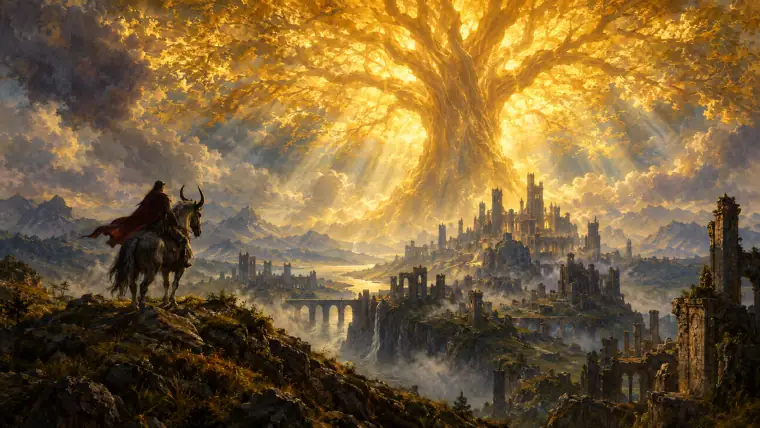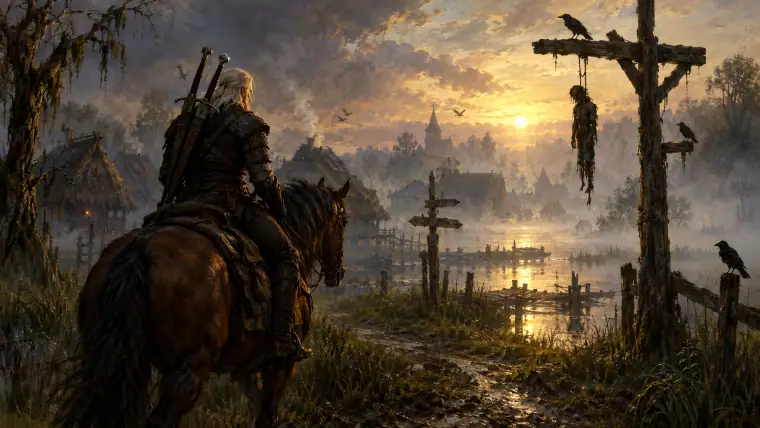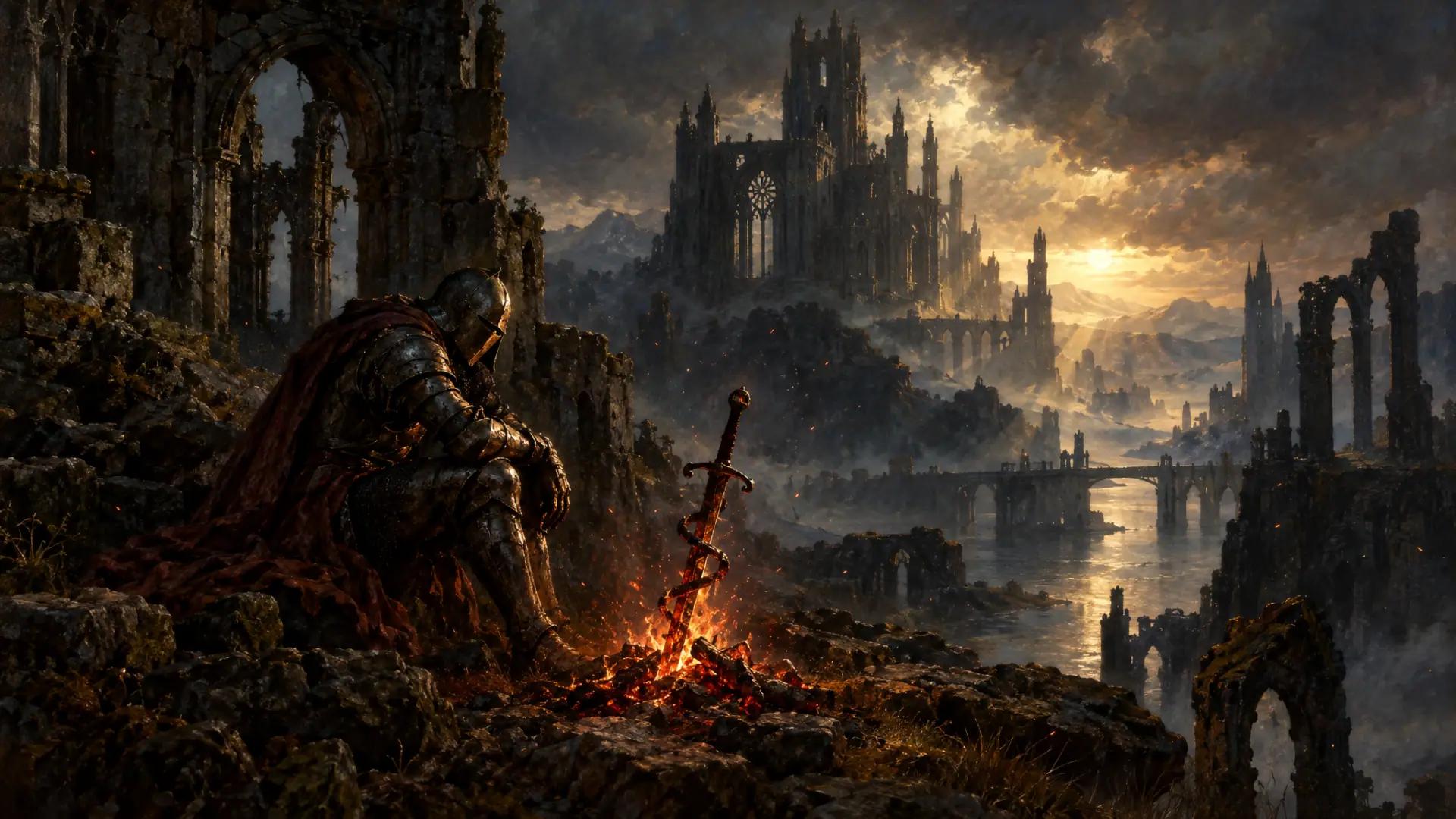
Dark Souls turned Demon's Souls' cult design into an international phenomenon, gave its name to the soulslike genre, and became a standard example of games as an art form, repeatedly ranked among the greatest video games ever made.
Overview
In the Age of Ancients the world was gray and ruled by everlasting dragons. Then came the First Flame, and with it heat and cold, life and death, light and dark. Gwyn, Lord of Sunlight, the Witch of Izalith and Gravelord Nito found the souls of lords in the flame and overthrew the dragons. But fire fades. Now the Age of Fire is ending, and humans bearing the Darksign cannot stay dead: they revive, again and again, until they go hollow.
The player is one of these undead, released from an asylum by a dying knight and sent on a pilgrimage to Lordran. Dark Souls, developed by FromSoftware and directed by Hidetaka Miyazaki, was released in Japan on September 22, 2011, and in the West in early October for PlayStation 3 and Xbox 360. A spiritual successor to Demon's Souls, it kept that game's lethal, deliberate combat but set it in one continuous world. Marketed with the slogan "Prepare to Die," it sold 2.37 million copies by April 2013 and gave its name to a genre, the Soulslikes.
Origins
After Demon's Souls, whose rights stayed with Sony, FromSoftware made a new game with the same director and much of the same team, published outside Japan by Namco Bandai. Miyazaki said the goal was to keep and increase the challenge without simply making it harder: players should have freedom to experiment and feel rewarded for overcoming obstacles. The bonfires, called "Beacon Fires" before release, would be rare places of warmth in a cold, dark world.
Miyazaki directed the art through short prompts, "image words," from which his artists developed designs he then revised. The world was organized around themes: gods and knights in the golden city of Anor Londo, chaos and demons in Lost Izalith, death and decay around Nito's tombs, and the ancient dragons. Real architecture fed in, with Milan Cathedral behind Anor Londo's buttresses and Mont-Saint-Michel behind the drowned city of New Londo. He also acknowledged the influence of Kentaro Miura's manga Berserk, one of the defining works of Japanese dark fantasy.
How it plays
The heart of Dark Souls is its map. Rather than Demon's Souls' separate worlds reached from a hub, Lordran is a single interlocking space in which the Undead Burg, the Parish, the Depths and the poisonous shanty town of Blighttown stack on top of one another, and a door unlocked hours later can open onto the first bonfire. Shortcuts reward exploration, and the world rewards careful attention to enemy placement and patterns.
Bonfires restore health and the Estus Flask, the healing draught, and let players level up, attune spells and upgrade gear, but resting also brings most enemies back to life. Souls, earned by killing, serve as both experience and currency; die, and they lie in a bloodstain that must be reached before dying again. Sorceries, miracles and pyromancies have a set number of uses rather than drawing on Mana. The online features of Demon's Souls returned: messages scrawled on the ground, ghosts of other players, cooperative summoning and invasions, filtered through "humanity," a resource that restores human form, and through covenants, optional factions with their own multiplayer goals.
The story is told almost entirely through item descriptions, architecture and brief encounters with melancholy characters such as the onion-armored knight Siegmeyer of Catarina. The pilgrim rings two bells, reaches Anor Londo, defeats the infamous pair Ornstein and Smough, and gathers the souls of the lords to either rekindle the First Flame or let it die and begin an Age of Dark.
Reception & impact
Critics praised the level design, the atmosphere, the depth of combat and the online integration, while arguing over the difficulty. IGN noted "a difference between punishing, and downright unfair," and Game Informer faulted its lack of direction. After a fan petition gathered almost 100,000 signatures, Namco Bandai released a Windows version, the Prepare to Die Edition, in August 2012, with new areas and bosses that consoles received as the Artorias of the Abyss add-on. The port was criticized for its locked resolution and 30-frames-per-second cap, and a fan-made fix, DSFix, quickly appeared.
Its standing grew with time. Edge awarded it a retroactive 10 in 2013, named it the best game of its console generation, and in 2015 ranked it first of the 100 greatest videogames; GamesRadar+ put it at the top of its best games ever the same year. In 2021, a public vote at the Golden Joystick Awards named it the Ultimate Game of All Time.
Legacy
Dark Souls II (2014) and Dark Souls III (2016) followed, alongside Bloodborne (2015), and a remastered edition in 2018. Its influence spread through the industry: Destiny, Shovel Knight, Salt and Sanctuary, Nioh, God of War and The Witcher 3 are among the games cited as influenced by it, and a whole genre of soulslikes took its checkpoints, corpse runs and boss design. Its community produced exhaustive lore analysis and extreme challenge runs, from finishing without leveling up to beating it with unconventional controllers. It was even cited as an inspiration for Stranger Things. Its open-world descendant, Elden Ring, took the design to tens of millions of players.
Marginalia
- Before release it was billed as a spiritual successor rather than a sequel to Demon's Souls; the checkpoints were first called 'Beacon Fires' before becoming bonfires.
- Miyazaki based the ruined city of New Londo partly on Mont-Saint-Michel; a designer cited Milan Cathedral for Anor Londo's buttresses.
- Miyazaki has acknowledged the influence of Kentaro Miura's dark fantasy manga Berserk.
- A fan petition with almost 100,000 signatures helped persuade Namco Bandai to release a Windows version.
- Spells are not cast from a mana pool; each attuned spell has a set number of uses restored at a bonfire.
- Edge named it the best game of the seventh console generation, and in 2015 put it at number one on its list of the 100 greatest videogames.
- It has been cited as an inspiration for the Netflix series Stranger Things.
Quick answers
- When was Dark Souls first released?
- Dark Souls was first released in 2011 (PS3, Xbox 360); 2012 (Windows).
- Who created Dark Souls?
- Dark Souls was made by Hidetaka Miyazaki (director, producer & writer).
- Who published or developed Dark Souls?
- FromSoftware.
- What kind of work is Dark Souls?
- Dark Souls is an action RPG in the Action RPGs & Hack-and-Slash, Soulslikes and Dark Fantasy tradition, released for PlayStation 3, Xbox 360, Microsoft Windows, PlayStation 4, Xbox One and Nintendo Switch.
- Why is Dark Souls important?
- Dark Souls turned Demon's Souls' cult design into an international phenomenon, gave its name to the soulslike genre, and became a standard example of games as an art form, repeatedly ranked among the greatest video games ever made.