Ars Magica gave roleplaying its most admired magic system, pioneered troupe-style play with a rotating game master, and was the direct seedbed of White Wolf and its Storyteller games.
Overview
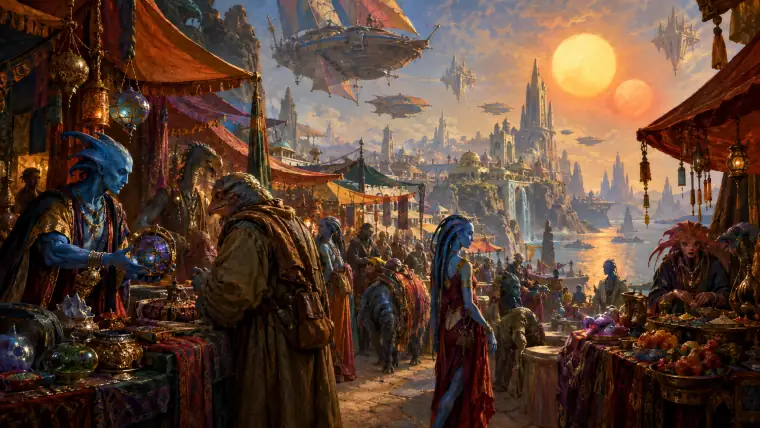
Ars Magica is a roleplaying game about wizards, designed by Jonathan Tweet and Mark Rein·Hagen and first published in 1987 by their small company, Lion Rampant. Its setting, Mythic Europe, is Europe and the Levant around AD 1200 as medieval people believed it to be: faeries haunt the forests, demons tempt the unwary, relics work miracles and wizards study in fortified retreats.
The player characters are magi of the Order of Hermes, a pan-European society of wizards bound by a code that keeps them from destroying one another and from meddling too openly in mundane affairs. Where most fantasy games treat magic as a list of ready-made spells, Ars Magica treats it as a discipline — something characters research, invent and improvise.
Origins
Tweet and Rein·Hagen were both at the start of their careers when they launched Lion Rampant, and Ars Magica was its flagship: a game that grounded fantasy in medieval belief rather than in the generic, Tolkien-and-D&D world most rivals shared, and that made magic a craft to be studied. The first edition appeared in 1987 and a revised second edition in 1989. (Tweet would soon co-write the third edition of Talislanta as well.)
In 1991 Lion Rampant merged with Stewart and Steve Wieck's White Wolf magazine to form White Wolf Game Studio, which published Rein·Hagen's Vampire: The Masquerade that same year and a third edition of Ars Magica in 1992. The rights were sold to Wizards of the Coast in 1994; when Wizards withdrew from roleplaying in late 1995, the game passed in 1996 to Atlas Games, its home ever since. Atlas published a fourth edition (1996), developed by Tweet and Jeff Tidball, and a fifth (2004), led by David Chart.
How it plays
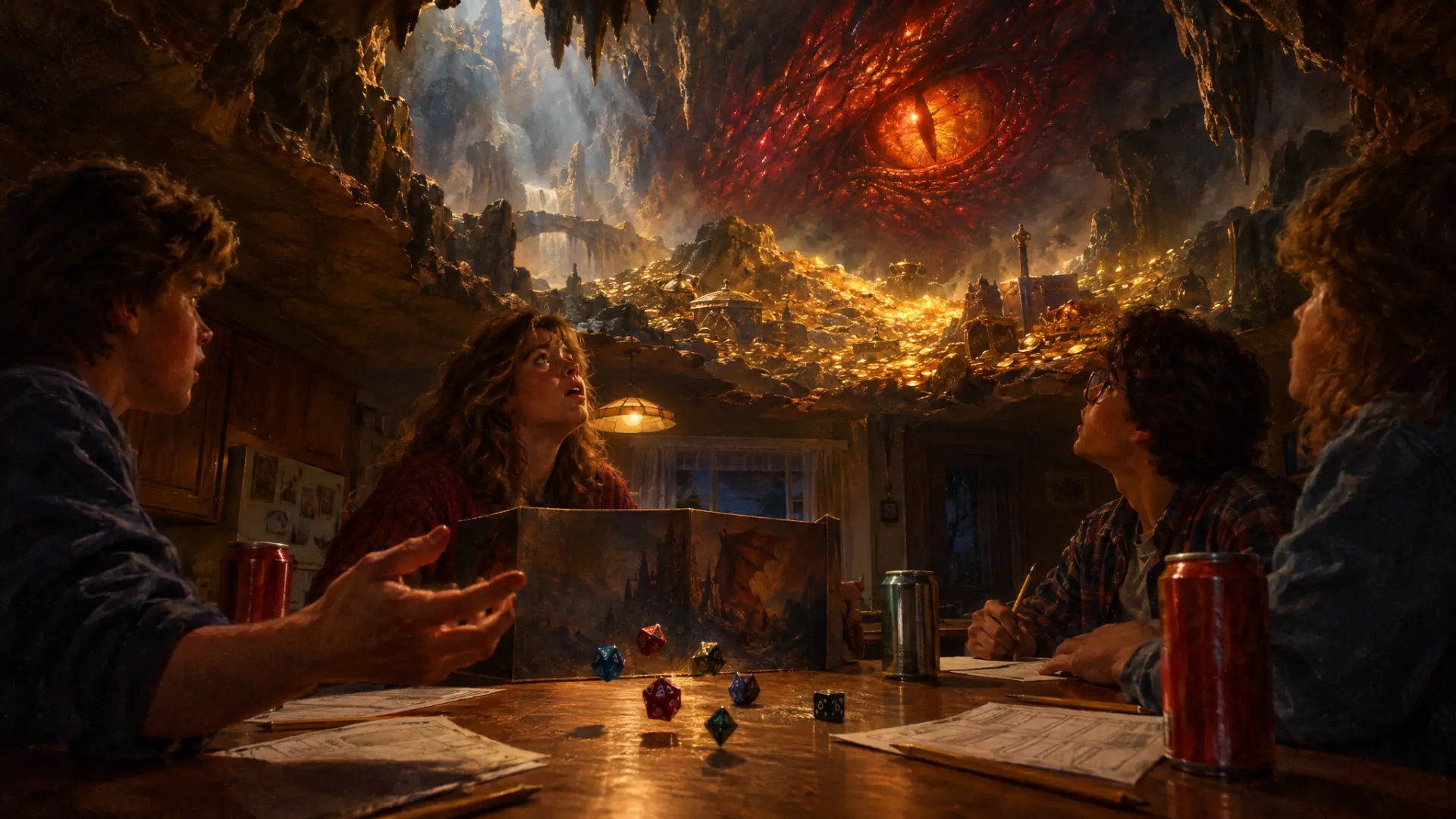
A roleplaying game has no board and no winner. One player — here called the Storyguide — describes the world and plays everyone else, while each other player controls a character and describes what that character attempts; dice settle uncertain outcomes.
Ars Magica's resolution is simple: add a Characteristic (such as Intelligence or Dexterity, rated from −5 to +5) and an Ability to a roll of a ten-sided die and compare the total with a target number. In dangerous moments players roll a "stress die," which can explode upward on a 1 or collapse into a botch on a 0.
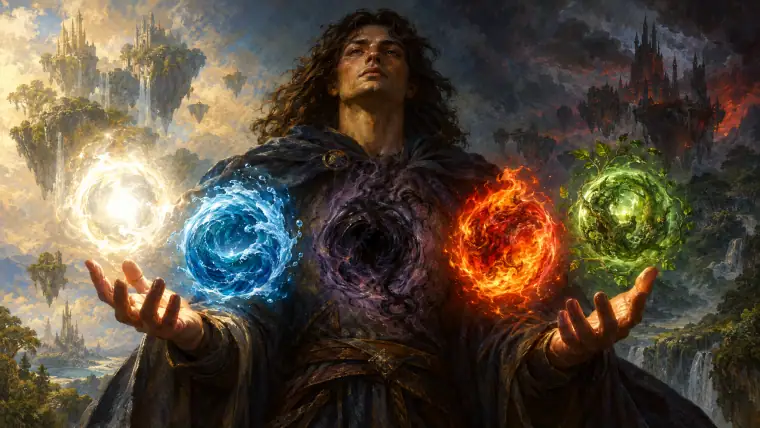
The magic is the heart of the game. Every Hermetic spell pairs a Technique — a Latin verb: Creo (I create), Intellego (I perceive), Muto (I transform), Perdo (I destroy) or Rego (I control) — with a Form, a Latin noun such as Ignem (fire), Aquam (water), Corpus (the body), Mentem (the mind) or Vim (magic itself). Creo Ignem conjures flame; Perdo Corpus withers flesh; Intellego Mentem reads thoughts. Magi can cast learned formulaic spells or improvise spontaneous ones on the spot, and they spend seasons of game time in their laboratories studying, enchanting items and writing books.
Ars Magica also introduced troupe-style play. Each player usually has several characters — a powerful magus, a skilled companion and ordinary "grogs" such as guards and servants — and the group's shared home, the covenant, is itself a kind of character that grows over years. The Storyguide role can rotate, so one player's magus can pursue research while another player runs the story.
Reception & impact
Critics were enthusiastic. Ken Rolston in Dragon (December 1988) called it "distinctive, original, and intriguing," and Stewart Wieck gave it 10 out of 10 in White Wolf. Rick Swan (1990) rated it 3.5 out of 4, praising the magic while finding the combat overly complex; Dave Nalle, in Abyss, was one of its few detractors. At the 1988 Origins Awards it won Gamer's Choice for Best Fantasy Roleplaying Game, and Arcane's 1996 reader poll ranked it nineteenth of the fifty best RPGs. The fifth edition won the 2004 Origins Award and ENnie Gold for Best Rules in 2005.
Legacy
Ars Magica's most visible legacy is White Wolf itself. Many features of the Storyteller system behind Vampire trace to it, and Mage: The Ascension (1993) was conceived as "Ars Magica in the modern world." Its verb-and-noun magic remains a touchstone in any discussion of magic systems, admired and borrowed by designers who want spellcasting to be creative rather than a menu.
The game has also become unusually open. Since 2014 its fourth edition has been distributed free, and Atlas Games crowdfunded a Definitive Edition announced in 2024 and completed in 2026, releasing its fifth-edition texts under an open license. Jonathan Tweet, meanwhile, went on to co-design Dungeons & Dragons 3rd Edition; the game he started with his friend in 1987 is still in print nearly four decades later.
Marginalia
- Spells combine one of five Latin Techniques — Creo, Intellego, Muto, Perdo, Rego — with one of ten Forms such as Ignem (fire) or Corpus (body): Creo Ignem creates fire.
- Each player typically runs a powerful magus plus a companion and humble 'grogs,' and the role of game master (Storyguide) can rotate among the troupe.
- In the game's history, the Order of Hermes was founded in AD 767 by the magus Bonisagus and the witch Trianoma.
- Lion Rampant merged with White Wolf magazine in 1991 to form White Wolf Game Studio, publisher of Vampire: The Masquerade.
- White Wolf's Mage: The Ascension was conceived as 'Ars Magica in the modern world.'
- Ken Rolston, in Dragon (December 1988), called it 'the most interesting and original fantasy role-playing system' he had seen.
Quick answers
- When was Ars Magica first released?
- Ars Magica was first released in 1987 (Lion Rampant).
- Who created Ars Magica?
- Ars Magica was made by Jonathan Tweet (co-designer) and Mark Rein·Hagen (co-designer).
- Who published or developed Ars Magica?
- White Wolf Publishing and Wizards of the Coast.
- What kind of work is Ars Magica?
- Ars Magica is a tabletop RPG in the Tabletop Roleplaying Games and Historical Fantasy tradition, released for Softcover and hardcover rulebooks.
- Why is Ars Magica important?
- Ars Magica gave roleplaying its most admired magic system, pioneered troupe-style play with a rotating game master, and was the direct seedbed of White Wolf and its Storyteller games.