The third of the big early MMORPGs after Ultima Online and EverQuest, Asheron's Call pioneered the seamless world, the monthly episodic content update, and a formal system of player allegiances. Its studio, Turbine, went on to build The Lord of the Rings Online.
Overview
Asheron's Call was the third of the great first-generation Western online worlds, arriving on November 2, 1999, some two years after Ultima Online and nine months after EverQuest. Developed by the young Massachusetts studio Turbine and published by Microsoft, it was set on Dereth, an island continent on the world of Auberean, and it was built differently from its rivals: one seamless landscape with no loading screens, characters without fixed classes, a story that changed the world month by month, and a feudal web of player loyalties. It never matched EverQuest's numbers, but it drew explorers and lovers of story, and it ran for more than seventeen years.
Origins
Turbine was founded in April 1994 as CyberSpace, Inc. by Jeremy Gaffney, Jonathan Monsarrat, Kevin Langevin and Timothy Miller, several of them from Brown University. Its first major project, developed with extensive assistance from Microsoft, took 40 months plus eight months of beta testing and had a multimillion-dollar budget. It had been scheduled for the fourth quarter of 1997, but the inexperience of the production team pushed it back by more than a year. The design team was led by Toby Ragaini, with Chris Foster, Eri Izawa and Chris Pierson, and the full team numbered more than 30, including 15 software engineers.
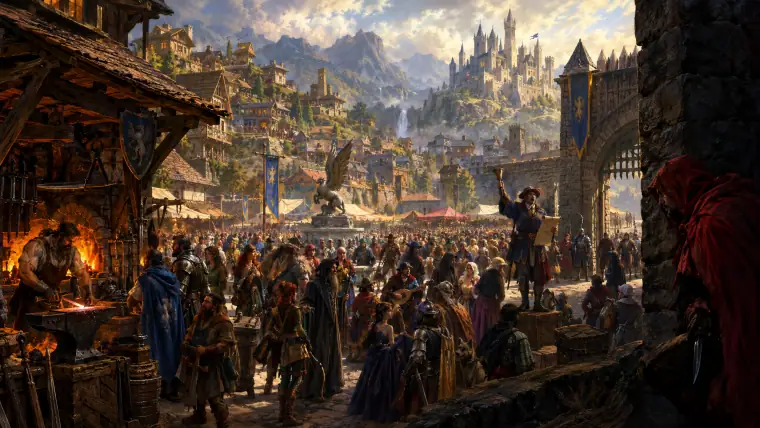
The central technical ambition was the seamless world. Other games divided their maps into zones run on separate machines, with a pause at every border. Turbine's servers used dynamic load balancing instead, shifting control of crowded areas between computers in the cluster so that the whole of Dereth, more than 1,300 square kilometers, could be crossed on foot without a loading screen. Six servers were available at launch, and the game shipped with about 2 million lines of code.
How it plays
Players created a character from one of three human peoples, the Aluvians, Sho and Gharu'ndim, loosely modeled on medieval Britain, Japan and Egypt, and spent points on attributes such as Strength, Coordination and Quickness and on skills such as War Magic and Melee Defense. There were no classes: skills could be combined freely and even reallocated later. Experience earned in combat and quests was spent directly on the attributes and skills a player chose to raise. Travel ran through a web of one-way portals, some of which led into intricate dungeons.
Magic was the game's most famous early puzzle. In the original system each spell required a specific formula of components that casters had to discover through experiment, which made magic challenging, rare and a subject of intense community research; it was later simplified to focus items and scrolls, with the old system left in as an option. Death sent a character back to a bound lifestone with a temporary "vitae" penalty, having lost half their pyreals, the local currency, and one or more valuable items, which had to be retrieved from the corpse.
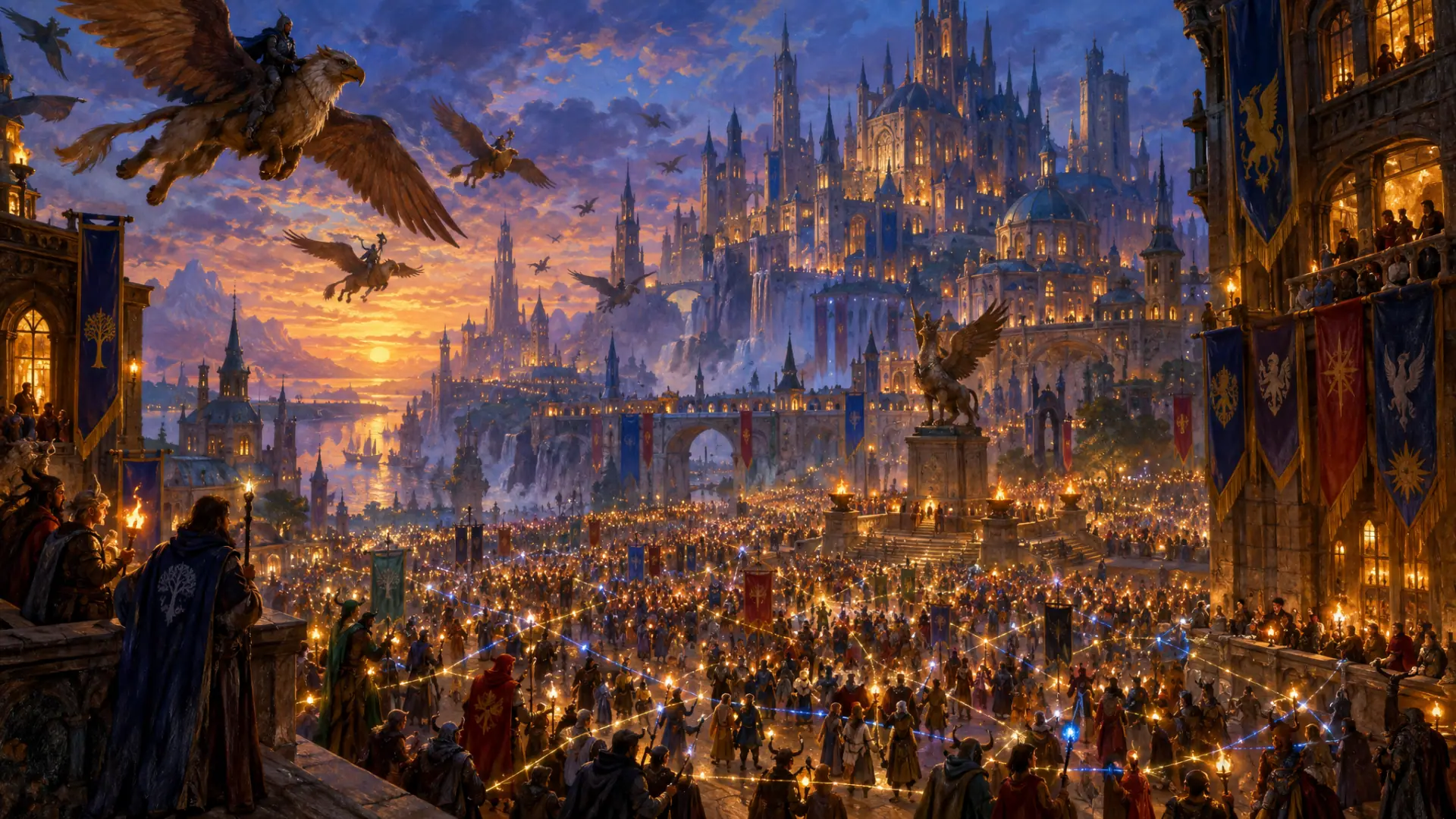
The allegiance system gave the world its social shape. Any player could swear fealty to a player of equal or higher level, becoming a vassal to a patron; the patron received a share of the experience the vassal earned, and in return offered money, items, knowledge or protection. Chains of allegiance could grow into large player-run hierarchies. On most servers combat between players was opt-in, but one, Darktide, was PK-only: every character was a player killer, all the time, and it became the home of rival PK and anti-PK dynasties.
Reception & impact
Critics were generally positive, with an average of 81 on Metacritic, though Next Generation found it deep and complex but less fun than EverQuest. It won CNET Gamecenter's best RPG award for 1999 and the Academy of Interactive Arts & Sciences' Computer Adventure/Role-Playing Game of the Year, losing Online Game of the Year to EverQuest; Computer Gaming World's role-playing award went to Planescape: Torment. By early 2000 it had sold 57,143 copies in the United States. It had 80,000 players by the end of its first year and 90,000 subscribers from 200,000 box sales by the end of 2000, third behind Ultima Online and EverQuest. Neither Turbine nor Microsoft published exact figures, but it is believed to have peaked at about 120,000 accounts in early 2002, the year Dark Age of Camelot overtook it.
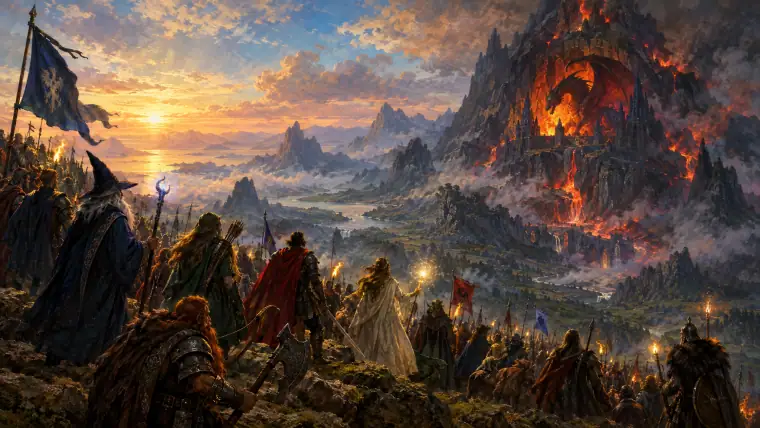
Its most influential idea was the living story. Turbine shipped free monthly content updates that added quests, monsters, skills and even new landmasses, strung together into story arcs about Asheron, the ancient Empyrean mage who had sealed away the Shadow lord Bael'Zharon, and about the insectile Olthoi. Players did not just read the story; they watched it change the world around them.
Legacy
A first expansion, Dark Majesty, followed in 2001, and a sequel, Asheron's Call 2: Fallen Kings, in 2002; the sequel closed in 2005 and was briefly revived in 2012. In December 2003 Turbine bought the franchise from Microsoft, taking over all operations in 2004, and released a second expansion, Throne of Destiny, on July 18, 2005, with a graphics upgrade, a new landmass and a new playable race. Monthly updates continued until the last content patch on March 4, 2014, after which the game went free to play in maintenance mode.
Warner Bros. bought Turbine in April 2010, and the studio's later worlds, Dungeons & Dragons Online (2006) and The Lord of the Rings Online (2007), carried its methods forward. New account creation ended in December 2016, and both Asheron's Call games closed on January 31, 2017, despite attempts by the community to buy or lease the rights. Its concepts outlived it: the seamless world, the episodic live update and the formal allegiance are all now familiar tools in online-world design, and the open-source ACEmulator project, begun in January 2017 as the servers were closing, keeps Dereth walkable on fan-run servers.
Marginalia
- Dereth covered more than 1,300 square kilometers with no zones on its surface: anything seen on the horizon was a real place you could walk to.
- Magic originally required discovering each spell's formula of components by trial and error.
- In the allegiance system, a vassal swore fealty to a patron, who earned a share of the vassal's experience.
- On the Darktide server every player was a player killer, all the time, with no way to opt out.
- It was due in late 1997 but slipped by more than a year; the finished game had about 2 million lines of code.
- It won the Academy of Interactive Arts & Sciences' role-playing game of the year award for 1999.
Quick answers
- When was Asheron's Call first released?
- Asheron's Call was first released in 1999 (Windows).
- Who published or developed Asheron's Call?
- Turbine.
- What kind of work is Asheron's Call?
- Asheron's Call is a MMORPG in the MMORPGs and Western Computer RPGs (CRPG) tradition, released for Microsoft Windows.
- Why is Asheron's Call important?
- The third of the big early MMORPGs after Ultima Online and EverQuest, Asheron's Call pioneered the seamless world, the monthly episodic content update, and a formal system of player allegiances. Its studio, Turbine, went on to build The Lord of the Rings Online.