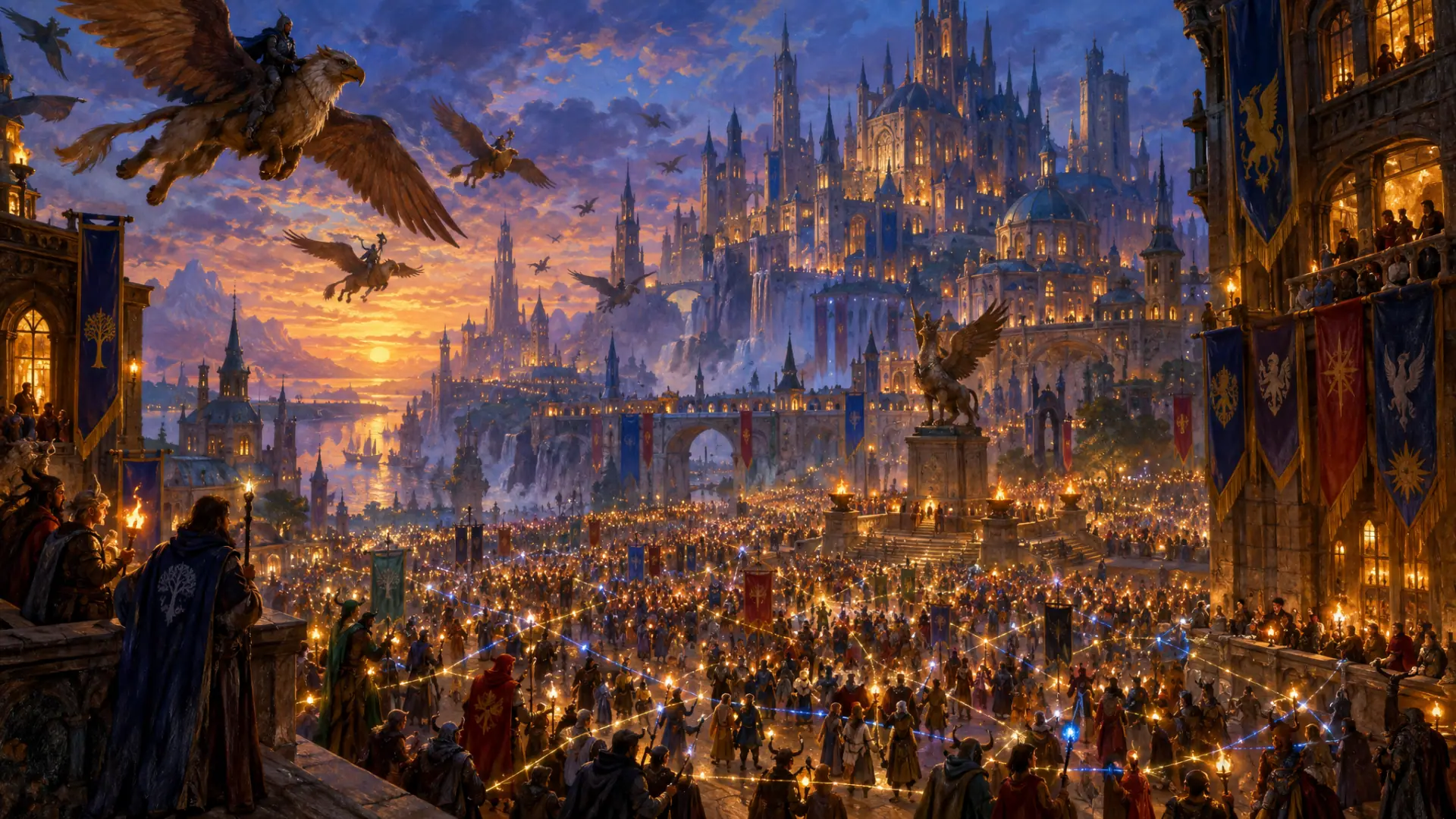
The Lord of the Rings Online is the longest-running game set in Tolkien's world and one of the most faithful. Its 2010 switch from subscriptions to free-to-play, which tripled its revenue, helped show the industry a new way to sustain an online world.
Overview
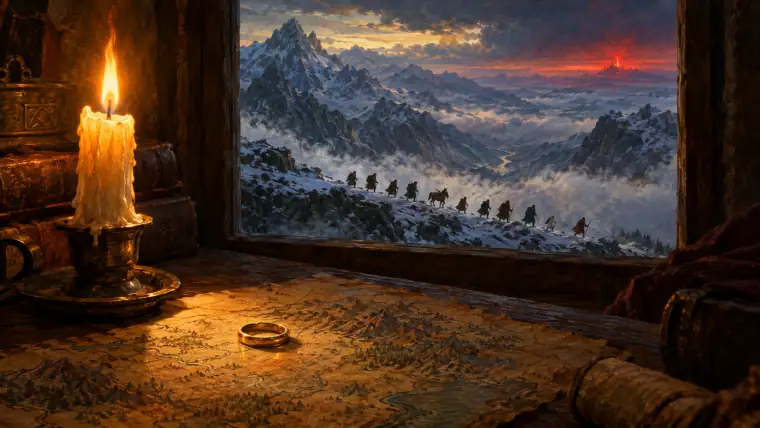
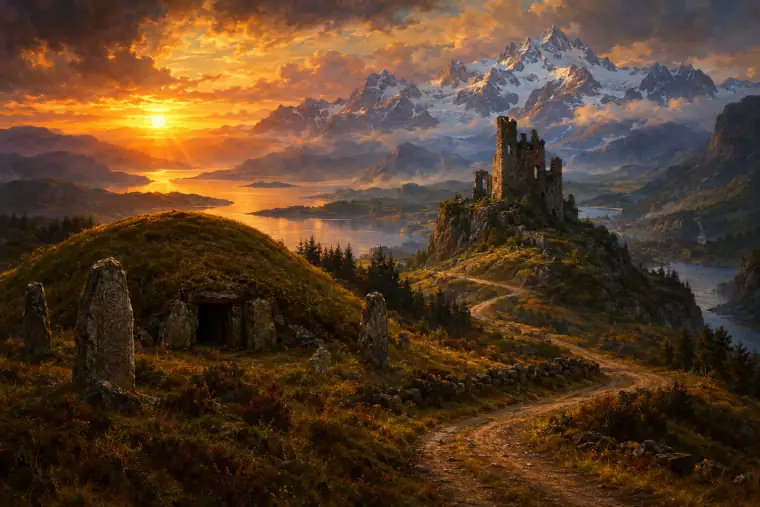
The adventure begins in Bree-land, days after four hobbits have left the Shire with a Ring. A new arrival in town meets a ranger called Strider and a wizard named Gandalf, and is soon drawn into a war that runs in the margins of the story everyone knows. The Lord of the Rings Online, developed by Turbine and launched on April 24, 2007, as The Lord of the Rings Online: Shadows of Angmar, put a massively multiplayer world inside J. R. R. Tolkien's Middle-earth at the time of The Lord of the Rings. Players followed the Fellowship's path from Eriador through Moria, Lothlórien, Rohan and Gondor to the Black Gate, and then beyond it, into the years after Sauron's fall. Nearly two decades later the game is still running, the most enduring digital version of Tolkien's world.
Origins
Getting there took almost a decade. Sierra On-Line announced a licensed Middle-earth online game in 1998, but financial trouble in 1999 led it to replace the team, and little was heard of it. Sierra's parent, Vivendi Universal Games, secured game rights to the books in 2001 and in 2003 signed Turbine, the Massachusetts studio behind Asheron's Call, to make Middle-earth Online. In March 2005 Turbine announced that it had acquired the online rights itself and would publish the game, with Midway later joining as co-publisher and Codemasters running the European service. Beta testing began in late 2006, and the game launched in North America, Europe, Australia and Japan in April 2007. It cost $14.99 a month, and founders who preordered could buy a lifetime subscription for $199.
The design was shaped by World of Warcraft's success: a quest-driven structure, instanced group content and a friendly pace. What distinguished it was Middle-earth itself and the care taken with it. The license from Tolkien Enterprises (now Middle-earth Enterprises) covered only The Lord of the Rings and The Hobbit, not The Silmarillion, so the designers invented around the edges of the books, and a rule of thumb, as one developer explained when a planned marriage feature was dropped, was to allow only what had precedent in the text.
How it plays
At launch players could choose from four races, men, elves, dwarves and hobbits, and seven classes built around Tolkien rather than Dungeons & Dragons: the Burglar, the Captain, the Champion, the Guardian, the Hunter, the Lore-master and the Minstrel, who heals with song. Health is called "morale," and a character who runs out of it is defeated, having lost heart rather than life. Crafting leans hobbitish, with cooking and farming as important as smithing. Groups are "fellowships."
The central thread is the "Epic" story, told in volumes, books and chapters, in which the player's character follows just behind the Fellowship, meeting Aragorn, Gandalf, Elrond and Galadriel and helping with tasks the books leave offstage. Each region is fixed at a moment of the War of the Ring, so Isengard can be visited before and after the Ents. Instead of open player-versus-player combat, players create "Monster Player" orcs, spiders and wargs to battle heroes in the Ettenmoors, a war zone north of Rivendell. And there is music: characters can learn instruments from lute and harp to bagpipes and cowbell, and play them in real time or from ABC notation files. Bands perform nightly at the Prancing Pony, and players hold a festival called Weatherstock on Weathertop.
Reception & impact
Reviews were warm. The New York Times called it "a major achievement of interactive storytelling, the first game truly worthy of the Lord of the Rings franchise." Critics praised its faithfulness, its storytelling and its polish, while noting that it changed little about the genre's formula and offered weak competitive play. It won the Golden Joystick Award for PC Game of the Year in 2007 and again in 2008, and GameSpy's MMO of the year. The first expansion, Mines of Moria (November 2008), sent a dwarf expedition into Khazad-dûm days after Gandalf's fall and added two classes; Siege of Mirkwood followed in December 2009.
In 2010 Turbine made a decision that proved influential. On September 10 in North America, and in November in Europe, the game became free-to-play, with an optional subscription and an in-game store. Turbine reported that revenue tripled in the following six months. With Dungeons & Dragons Online, which had made the same move a year earlier, it became a model for subscription games facing World of Warcraft's dominance, and PC Gamer named it MMO of the year.
Legacy
Content kept coming: Rise of Isengard (2011), Riders of Rohan (2012) with mounted combat, Helm's Deep (2013) with large-scale "epic battles," and in 2017 Mordor, which brought the main story to the fall of Sauron. Turbine was absorbed into Warner Bros., and in December 2016 development passed to Standing Stone Games, an independent studio of former Turbine staff, with Daybreak Game Company as publisher. The game has since told stories set after the war and "Tales of Yore" set before it, with expansions including Minas Morgul (2019), Fate of Gundabad (2021) and Corsairs of Umbar (2023). New races and classes arrived along the way, among them Beornings, High Elves and River-hobbits. The long-running story of Tolkien's licenses has produced many games, from Middle-earth Role Playing onward; few have lived as long, or in as much detail, as this one.
Marginalia
- Sierra announced a Middle-earth MMORPG in 1998; the license passed through Vivendi before Turbine took over the project, then called Middle-earth Online.
- Its license covers The Lord of the Rings and The Hobbit only, so the game cannot draw on The Silmarillion.
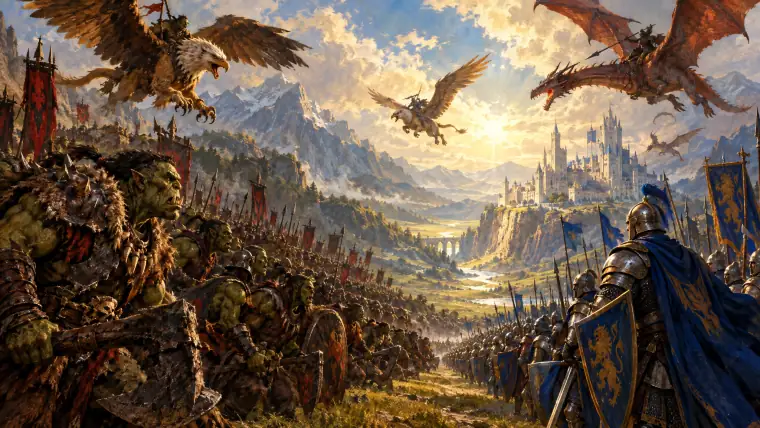
- There is no ordinary player-versus-player combat; instead players can create Orcs, spiders and wargs to fight other players in the Ettenmoors.
- Characters can play lutes, harps, bagpipes and cowbells using ABC notation; the music system became the subject of a Harvard anthropological study.
- Players stage concerts such as 'Weatherstock,' a festival on the slopes of Weathertop.
- A planned player-marriage feature was dropped before launch amid debate over which weddings Tolkien's books would allow.
- It won the Golden Joystick Award for PC Game of the Year in both 2007 and 2008.
Quick answers
- When was The Lord of the Rings Online first released?
- The Lord of the Rings Online was first released in 2007 (Windows).
- Who published or developed The Lord of the Rings Online?
- Turbine.
- What kind of work is The Lord of the Rings Online?
- The Lord of the Rings Online is a MMORPG in the MMORPGs and Western Computer RPGs (CRPG) tradition, released for Microsoft Windows and OS X (2012–2022).
- Why is The Lord of the Rings Online important?
- The Lord of the Rings Online is the longest-running game set in Tolkien's world and one of the most faithful. Its 2010 switch from subscriptions to free-to-play, which tripled its revenue, helped show the industry a new way to sustain an online world.