The longest-lived American society devoted to Tolkien, Lewis and Charles Williams, it bridged fan enthusiasm and academic study, and its Mythopoeic Awards have honored fantasy fiction and scholarship since 1971.
What happened
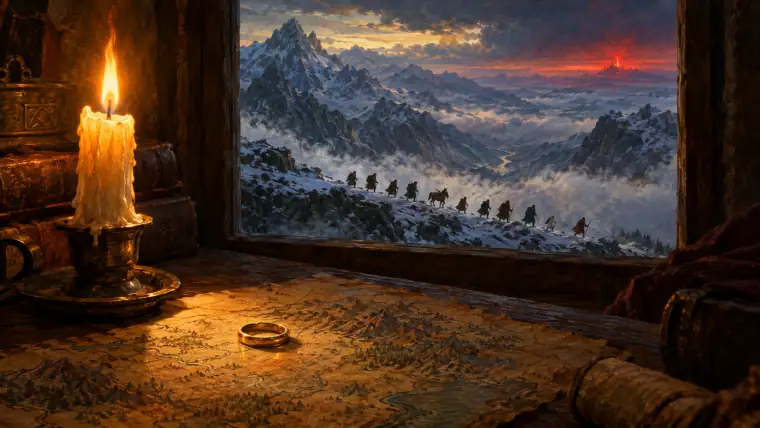
In September 1967, at the height of the American Tolkien craze, a Los Angeles college student named Glen GoodKnight threw a picnic to celebrate the shared birthday of Bilbo and Frodo Baggins — 22 September in the calendar of the Shire. The party went well enough that GoodKnight invited anyone interested to keep meeting, and the Mythopoeic Society was born. "Mythopoeic" means myth-making, and the name signaled an ambition larger than one author: GoodKnight wanted serious discussion not only of J. R. R. Tolkien but of his Inklings friends C. S. Lewis and Charles Williams.
The first monthly discussion meeting, in January 1968, was held at the home of the Lewis scholar Kathryn Lindskoog in Orange, California, and the book under discussion was Lewis's The Screwtape Letters. Discussion groups multiplied around Los Angeles and then across North America. In 1969 the society launched Mythlore, a quarterly mixing essays, artwork and poetry; GoodKnight edited it for most of the next three decades, over which it grew from an enthusiastic fanzine into a peer-reviewed academic journal. A newsletter, Mythprint, and later an annual of original fiction and verse, The Mythic Circle, followed.
In September 1970 the society held its first annual conference, Mythcon, at the Claremont Colleges east of Los Angeles, with papers, readings, a costume competition and an art show in the style of the science fiction conventions of the day. At Mythcon II in 1971 it presented the first Mythopoeic Awards. The society incorporated in California in 1971, and in 1972 it absorbed the Tolkien Society of America — the group founded in New York by Richard Plotz in 1965 — along with its members, making it the principal American home for Tolkien fandom.
Why it mattered
The Mythopoeic Society was one of the first places where the fan enthusiasm of "Frodo Lives!" met academic seriousness. At a time when many English departments dismissed Tolkien and Lewis as children's writers or escapists, Mythlore published close readings of The Lord of the Rings and The Chronicles of Narnia, and Mythcon gave students, teachers and amateurs a shared forum. By grouping Tolkien, Lewis and Williams together, it also made the Inklings themselves a subject of study.
Its awards gave the growing fantasy genre an early critical benchmark. The Mythopoeic Fantasy Award honored Mary Stewart's Arthurian novel The Crystal Cave in 1971, and Poul Anderson's A Midsummer Tempest in 1975. Later winners included Tolkien's own posthumous Unfinished Tales, edited by Christopher Tolkien (1981), Peter S. Beagle's The Folk of the Air (1987) and Susanna Clarke's Jonathan Strange & Mr Norrell (2005). The fiction award was split into adult and children's categories in 1992 (a young-adult category followed in 2024), and parallel scholarship awards honor studies of the Inklings and of myth and fantasy more broadly. Critic Brian Stableford ranked it among the principal annual awards in fantasy.
Legacy
The society remains an active nonprofit, and Mythcon still meets each year, usually on a college campus; in 1992, Tolkien's centenary year, it met in Oxford. Alongside the British The Tolkien Society (1969) and the professional World Fantasy Convention & Award (1975), it forms one of the three pillars of organized fantasy appreciation that took shape in the wake of the 1960s Tolkien boom.
GoodKnight, who worked as an elementary school teacher, died in 2010; his collection of some 700 volumes by and about the Inklings went to Azusa Pacific University. His society's larger achievement is a change in attitude: the idea that Mythic Fantasy and High / Epic Fantasy deserve the same scholarly care as any other literature. That idea is now taken for granted in university courses on Tolkien, and it underwrites the reverence with which Middle-earth has been adapted since, from The One Ring roleplaying game to The Lord of the Rings Online. It was argued first, and longest, in the pages of Mythlore.
Marginalia
- Founder Glen GoodKnight, then a college student, organized a Bilbo and Frodo birthday picnic in Los Angeles in September 1967; the society grew out of it.
- Its first monthly discussion meeting, in January 1968, took up C. S. Lewis's The Screwtape Letters.
- The journal Mythlore began in 1969; GoodKnight edited it for about three decades as it grew from fanzine into a peer-reviewed journal.
- The first Mythcon was held in September 1970 at the Claremont Colleges near Los Angeles.
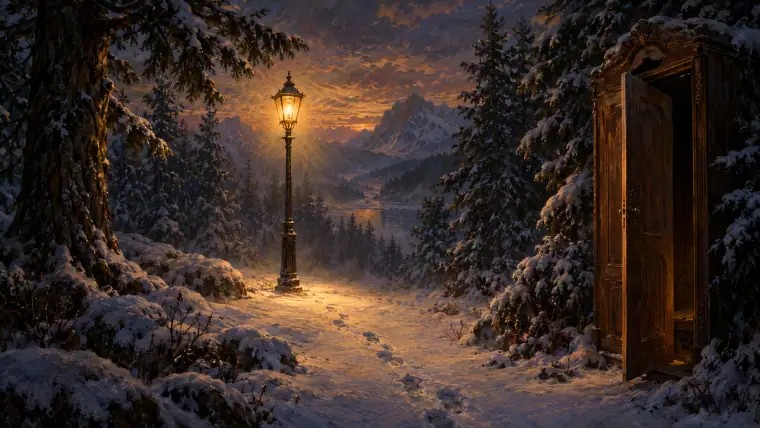
- The first Mythopoeic Fantasy Award, in 1971, went to Mary Stewart's The Crystal Cave; the trophy is a small seated lion, often likened to Aslan.
- In 1972 the society absorbed the assets and membership of the Tolkien Society of America, founded in New York by Richard Plotz in 1965.
Quick answers
- What is The Mythopoeic Society?
- Born at a hobbit birthday picnic in Los Angeles in 1967, the Mythopoeic Society turned Inklings fandom into a scholarly tradition — with a journal, an annual conference and a seated-lion award.
- When did The Mythopoeic Society begin?
- 1967 to the present.
- Why does The Mythopoeic Society matter?
- The longest-lived American society devoted to Tolkien, Lewis and Charles Williams, it bridged fan enthusiasm and academic study, and its Mythopoeic Awards have honored fantasy fiction and scholarship since 1971.