Without Christopher Tolkien, the deep history of Middle-earth — the First Age, the Silmarils, Morgoth and the Balrogs — would exist only as unpublished manuscripts. He also drew the maps that generations of readers and game designers have studied.
Life
Christopher John Reuel Tolkien was born in Leeds on 21 November 1924, the third son of J. R. R. Tolkien and his wife Edith. He grew up in Oxford as the audience for his father's stories: as a small boy he famously pointed out inconsistencies in the tale of Bilbo, and he was among the first to hear The Hobbit. In 1943 he joined the Royal Air Force and was sent to South Africa for pilot training; his father wrote to him constantly and sent him new chapters of The Lord of the Rings as he finished them, and the letters to Christopher are among the richest in Tolkien's published correspondence. After the war he returned to Oxford, read English, and was invited to join The Inklings, where he sometimes read his father's new chapters aloud to the group.
He became an academic in his own right, lecturing on Old and Middle English and Old Norse, and was a fellow of New College, Oxford, from 1963 to 1975. He edited the Old Norse Saga of King Heidrek the Wise (1960). He married Faith Faulconbridge in 1951 and, after their divorce, Baillie Klass in 1967; the novelist Simon Tolkien is his son. In 1975, two years after his father's death, he resigned his fellowship, moved to Provence and devoted the rest of his life to his father's papers, later taking French citizenship. He died in Draguignan on 16 January 2020, aged 95.
Work
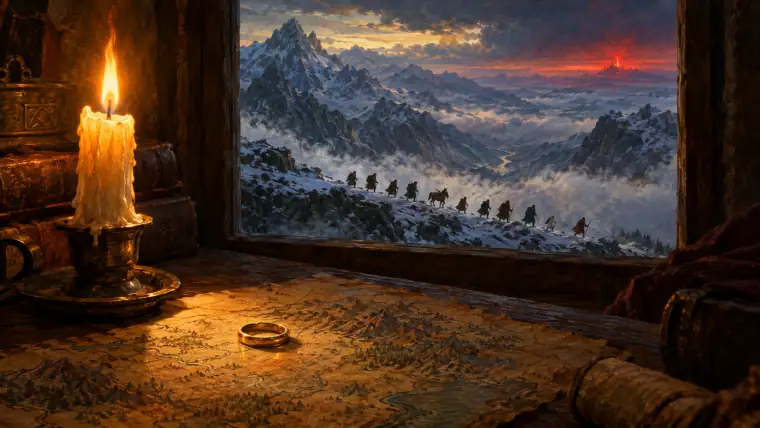
Christopher was his father's cartographer long before he was his editor. In 1954 he drew, from his father's sketches, the general map of Middle-earth published in The Fellowship of the Ring, with its distinctive lettering; it became one of the most copied maps in fantasy, and he revised it for Unfinished Tales.
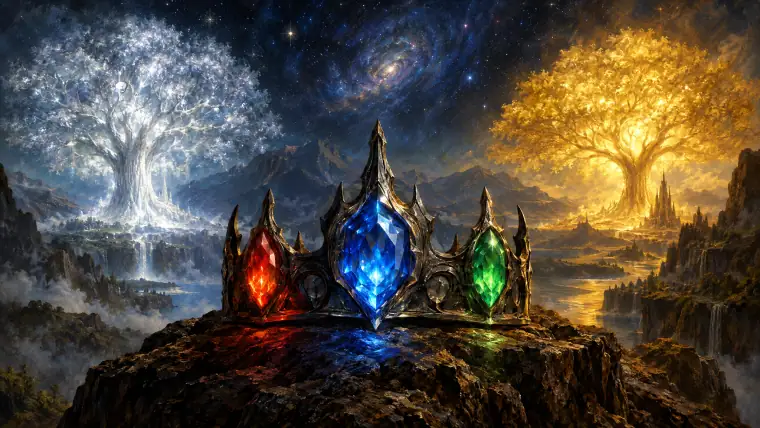
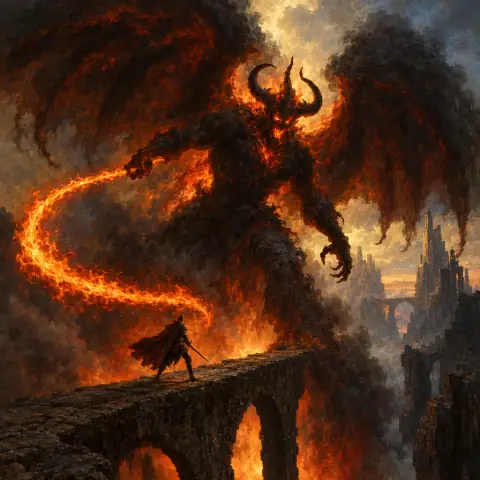
As literary executor he faced thousands of pages of drafts, many contradictory, some half a century old. With the assistance of Guy Gavriel Kay, then a young Canadian student who went on to his own fantasy career, he assembled The Silmarillion (1977), a single, coherent narrative of the Elder Days — the making of the world, the theft of the Silmarils by Morgoth, the wars of the Elves against him and his Balrogs. It sold enormously and baffled some readers expecting another hobbit story. Unfinished Tales (1980) followed, and then the monumental twelve-volume History of Middle-earth (1983–96), which published the drafts themselves with commentary and showed, step by step, how the legendarium had grown. Later he reconstructed three of the "Great Tales" as standalone books: The Children of Húrin (2007), Beren and Lúthien (2017) and The Fall of Gondolin (2018). He also edited his father's scholarly works and translations, including Beowulf (2014).
Legacy
Christopher Tolkien turned a private mythology into a public one. The First Age — Morgoth, Fëanor, Gondolin, the Silmarils — is known only because he published it, and fantasy writers and game designers have drawn deeply on those pages; the demon-lord Morgoth is a template of the Dark Lord, and his published drafts are a textbook of Worldbuilding.
He is not on Gygax's Appendix N — The Silmarillion appeared only in 1977, after D&D was already in print — and he had no role in the games. He was, however, a guardian of the texts. As a director of the Tolkien Estate he kept tight control of the books themselves while the film, merchandising and game rights to The Hobbit and The Lord of the Rings, sold by his father in 1969, passed through other hands, a history told in The Tolkien Rights Saga. He was openly skeptical of the commercialization of his father's work, including the Peter Jackson films, and the estate sued New Line Cinema over film profits in 2008, settling in 2009. Because The Silmarillion itself was never part of that sale, game and screen adaptations of Middle-earth have generally been confined to the material of The Hobbit and The Lord of the Rings and its appendices. He resigned from the estate's board in 2017; in 2016 he received the Bodley Medal for his contributions to literature.
Marginalia
- He trained as a pilot in South Africa with the RAF during the Second World War, receiving chapters of The Lord of the Rings by letter from his father.
- He was invited to join the Inklings at 21, an honor his father called 'quite unprecedented'.
- He drew the general map of Middle-earth published in The Fellowship of the Ring in 1954, working from his father's sketches.
- He edited The Silmarillion (1977) with the help of the young Canadian writer Guy Gavriel Kay.
- The History of Middle-earth ran to twelve volumes, published from 1983 to 1996.
- He resigned as a director of the Tolkien Estate in 2017, aged 92, and died in Draguignan, France, on 16 January 2020.
Quick answers
- Who was Christopher Tolkien?
- J. R. R. Tolkien's youngest son, first reader and mapmaker, who spent nearly half a century turning his father's boxes of drafts into The Silmarillion and the twelve-volume History of Middle-earth.
- When was Christopher Tolkien born?
- Christopher Tolkien was born in 1924 in Leeds, England and died in 2020.
- What is Christopher Tolkien known for?
- Christopher Tolkien is best known for The Silmarillion.
- Why does Christopher Tolkien matter to fantasy and games?
- Without Christopher Tolkien, the deep history of Middle-earth — the First Age, the Silmarils, Morgoth and the Balrogs — would exist only as unpublished manuscripts. He also drew the maps that generations of readers and game designers have studied.