Lee is the rare illustrator whose private vision of a book became a global public one: his Tolkien watercolors shaped the design of the Lord of the Rings and Hobbit films, and with them the look of modern high fantasy.
Life
Alan Lee was born on August 20, 1947, in Middlesex, England, and studied at the Ealing School of Art. He is famously private, living and working far from the film and publishing capitals, and his reputation was built slowly through books rather than publicity. His preferred media are watercolor and pencil: soft, layered washes, weathered stone, drifting mist, figures dwarfed by landscapes that seem older than any of the people in them. Critics have traced a debt to the graphic approach of William Morris, a lineage that suits an artist who would spend much of his life on Tolkien, himself a Morris admirer.
Work
Lee's first great success was Faeries (1978), a folkloric field guide produced with fellow artist Brian Froud. It was a runner-up for the Locus Award for best art book and became the basis of a 1981 animated film. He followed it with Castles (1984, with text by David Day) and two illustrated versions of The Mabinogion, the medieval Welsh tales, and painted the covers for the 1983 Penguin edition of Mervyn Peake's Gormenghast trilogy. Illustrating Peter Dickinson's Merlin Dreams (1988) won him a Chesley Award and a BSFA Award; his pictures for Rosemary Sutcliff's Black Ships Before Troy, a young readers' retelling of the Iliad, won the Kate Greenaway Medal. He later illustrated Sutcliff's Odyssey retelling, The Wanderings of Odysseus (1995), extending his reach back to Homer.
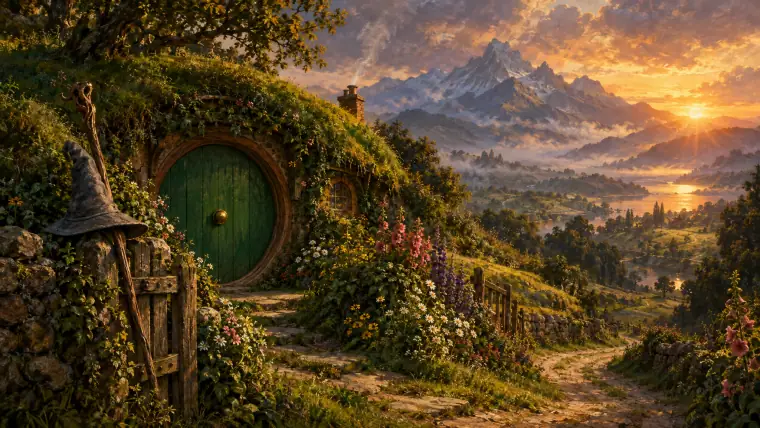
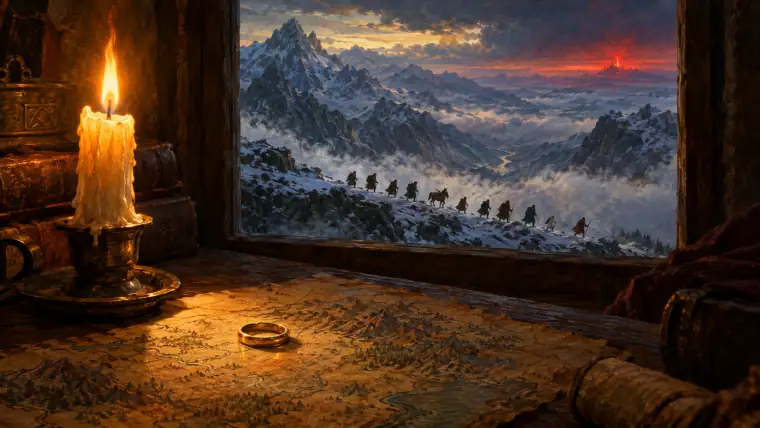
Tolkien became the center of his career. Lee painted the illustrations for the one-volume edition of The Lord of the Rings published in 1991, ahead of the 1992 centenary of Tolkien's birth, and for the 60th-anniversary The Hobbit in 1997, which brought him a second Chesley Award and the 1998 World Fantasy Award for Best Artist. He also painted covers for American editions of Christopher Tolkien's History of Middle-earth volumes. When Christopher assembled Tolkien's "great tales" as standalone books, Lee illustrated each: The Children of Húrin (2007), Beren and Lúthien (2017), The Fall of Gondolin (2018), and later The Fall of Númenor (2022).
Film came next. Peter Jackson and Fran Walsh courted the reclusive painter by sending two of their films, Forgotten Silver and Heavenly Creatures, by courier to his home in the south of England with a note that intrigued him enough to sign on. From 2000 to 2003 Lee and John Howe were the lead concept artists of the Lord of the Rings trilogy. Lee's influence runs through the whole production, from architecture to props and weapons; his drawing of Saruman's tower of Orthanc was closely followed by the model-makers who built a 1:35-scale "bigature" of it for The Two Towers. He even appears on screen, as one of the nine kings of Men seduced by Sauron's rings in the prologue of The Fellowship of the Ring and as a Rohan soldier in the armory of Helm's Deep. With Grant Major and Dan Hennah he won the Academy Award for Best Art Direction for The Return of the King. His Lord of the Rings Sketchbook (2005) gathered the concept work, and Jackson wrote that "his art captured what I hoped to capture with the films."
Lee and Howe were recruited again in 2008 by Guillermo del Toro for the planned Hobbit films, specifically to preserve continuity of design, and stayed on when Jackson took over as director. Beyond Tolkien, Lee's film credits include concept design for Ridley Scott's Legend, Terry Jones's Erik the Viking, Jackson's King Kong, and the television miniseries Merlin.
Legacy
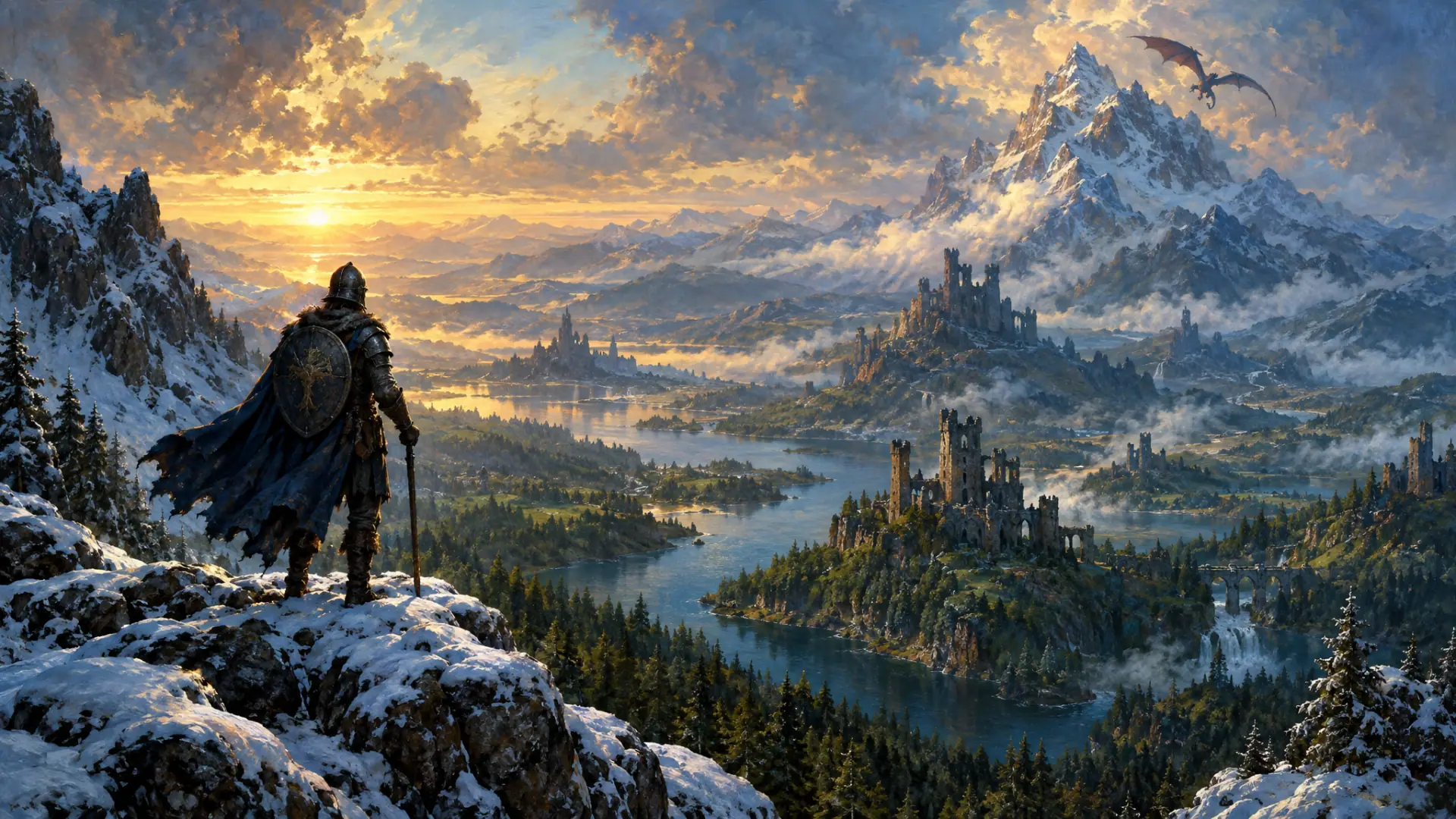
Few illustrators have seen their private imaginings become a world's consensus. Before the films, Lee's Middle-earth was one of several competing visions, alongside the Hildebrandts' bright storybook calendars and the paintings of Ted Nasmith and Howe. After 2001 his elegiac, lived-in look, with ruined Númenórean masonry, moss-covered statues, and elven halls of pale stone, became what "Middle-earth" means to most of the world. It also raised the bar for historical texture in screen fantasy; later productions from Game of Thrones to The Rings of Power were inevitably compared with it. The scholar Hans Velten has argued that Lee's film work shaped the audience's "collective imagination" of how Tolkien's places and people should look.
Lee also represents a thread this museum follows from Beowulf and The Mabinogion to the modern screen: the illustrator as translator of old stories. His career moved from Welsh myth and Homeric epic to Tolkien's invented mythology and then to the blockbuster, without his style changing at all. It was the world that came around to him.
Marginalia
- Peter Jackson recruited the reclusive Lee by couriering him copies of Forgotten Silver and Heavenly Creatures with a personal note.
- Lee won an Academy Award for Best Art Direction for The Return of the King, shared with Grant Major and Dan Hennah.
- He appears on screen twice: as one of the nine kings of Men who become the Nazgûl, and as a Rohan soldier in The Two Towers.
- His 1978 book Faeries, made with Brian Froud, became the basis of a 1981 animated film.
- He won the Kate Greenaway Medal for Black Ships Before Troy, Rosemary Sutcliff's retelling of the Iliad.
- His drawing of Orthanc was followed closely by the builders of a 1:35-scale 'bigature' of the tower.
- He illustrated The Children of Húrin (2007), Beren and Lúthien (2017), The Fall of Gondolin (2018) and The Fall of Númenor (2022).
Quick answers
- Who is Alan Lee?
- The quiet English watercolorist whose misty, melancholy Middle-earth became the definitive illustrated Tolkien, and then, through Peter Jackson's films, the Middle-earth most of the world now sees.
- When was Alan Lee born?
- Alan Lee was born in 1947 in Middlesex, England.
- What is Alan Lee known for?
- Alan Lee is best known for The Lord of the Rings, The Hobbit and The Lord of the Rings film trilogy.
- Why does Alan Lee matter to fantasy and games?
- Lee is the rare illustrator whose private vision of a book became a global public one: his Tolkien watercolors shaped the design of the Lord of the Rings and Hobbit films, and with them the look of modern high fantasy.