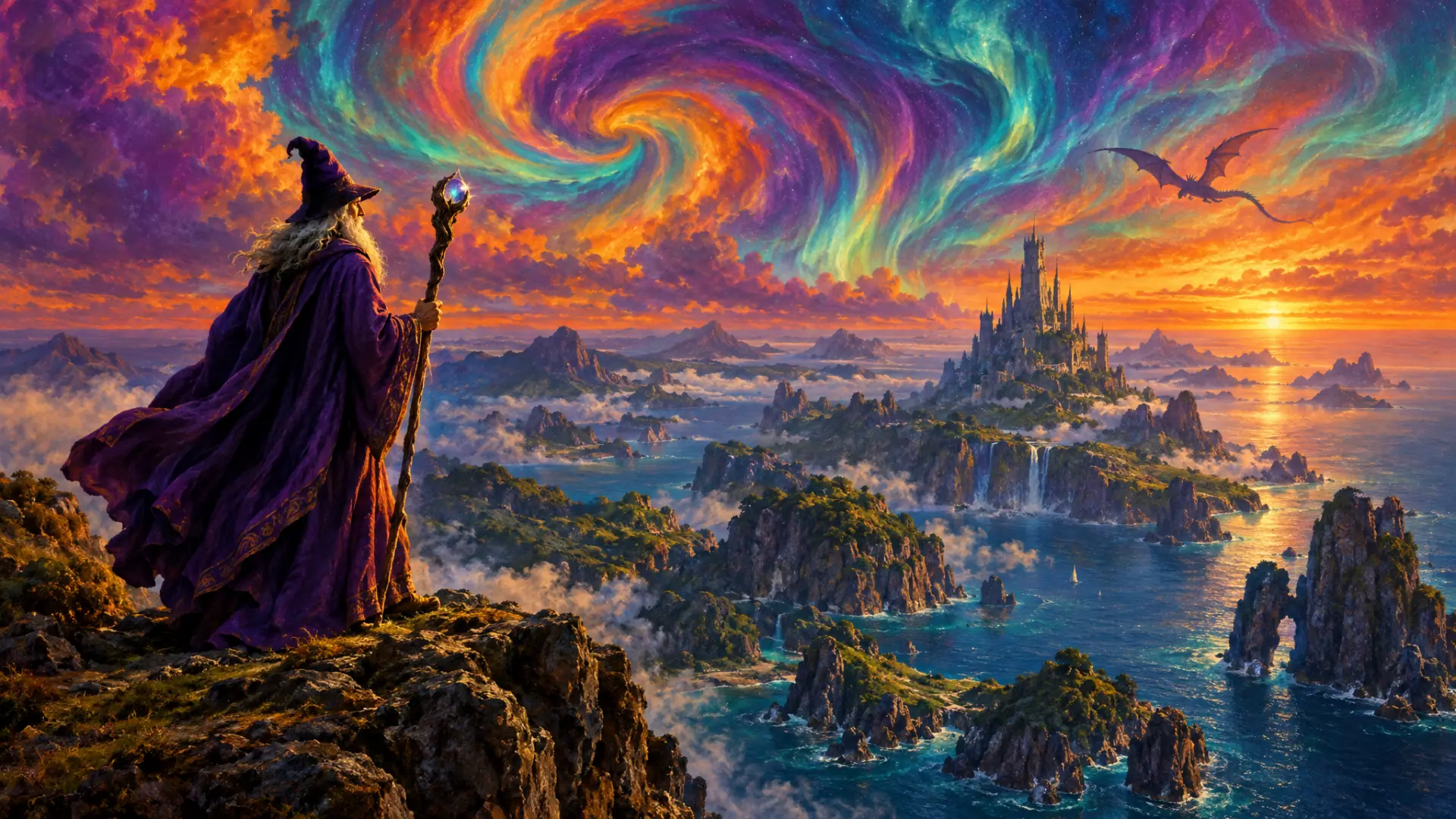
The Hildebrandts' Ballantine Tolkien calendars made Middle-earth a visual mass-market object during the 1970s Tolkien boom, set the look of the first great post-Tolkien bestseller, and inspired the artists who later designed Peter Jackson's films.
Life
Greg and Tim Hildebrandt were twins, born in Detroit, Michigan, on January 23, 1939. As boys they wanted to be Disney animators, and the saturated color and theatrical lighting of Snow White, Pinocchio, and Fantasia stayed in their work for life; so did the influence of Norman Rockwell and Maxfield Parrish. They studied at Detroit's Meinzinger Art School and began painting professionally as a team in 1959, working under the joint name the Brothers Hildebrandt.
After a run of successes in the 1970s, the twins went their separate ways in 1981, partly, it has been suggested, because their self-generated fantasy project Urshurak failed to become the film they hoped for. They reunited around twelve years later for Marvel Comics and book work. Tim married Rita Murray, who designed and made costumes for the brothers' Lord of the Rings work; he died on June 11, 2006, at 67, of complications from diabetes. Greg died on October 31, 2024, at 85.
Work
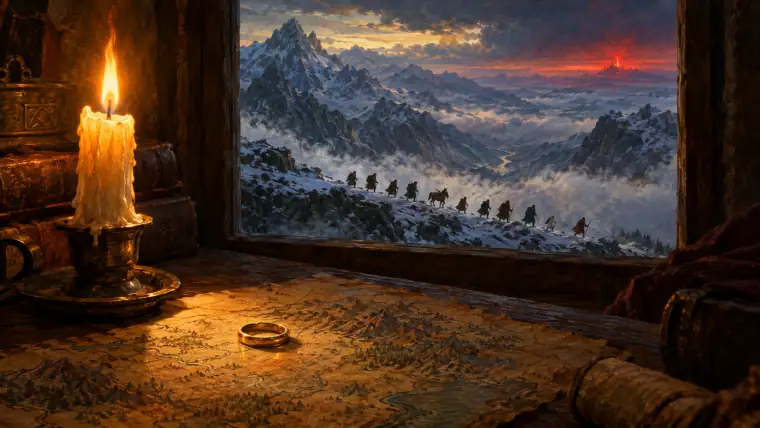
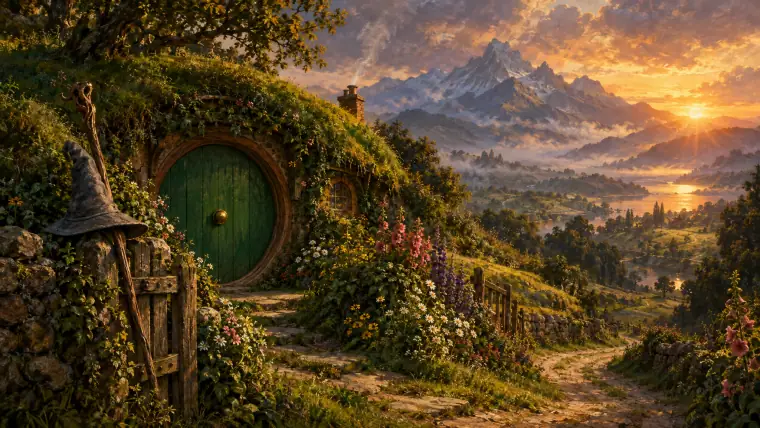
The brothers' breakthrough was Tolkien. In the mid-1970s, with The Lord of the Rings at the height of its campus-and-counterculture popularity, Ballantine Books commissioned them to paint its official Tolkien calendars, which they illustrated for 1976, 1977, and 1978. The 1977 calendar was reported to have sold nearly half a million copies. Their Middle-earth was bright, sculptural, and theatrical rather than gloomy: chunky, apple-cheeked hobbits, Gandalf as a storybook wizard, and dramatic stage lighting on every orc and troll. For millions of readers who had only imagined these scenes, the calendars were the first shared picture.
That picture was quickly put to commercial use. When Lester and Judy-Lynn del Rey launched Del Rey and prepared Terry Brooks's The Sword of Shannara (1977), the Hildebrandts, fresh from their Tolkien calendars, were asked to paint its cover, and they later made oil paintings for a limited edition. The book became the first fantasy novel on the New York Times trade paperback bestseller list, and its Hildebrandt wrapping signaled to buyers exactly what kind of book it was.
In 1977 20th Century Fox asked the twins to rework Tom Jung's poster for the British release of Star Wars, which executives found too dark. Working in shifts, they produced the "Style B" poster in about 36 hours: a heroic Luke Skywalker holding a blazing lightsaber aloft, Leia at his side, Vader's helmet looming behind. It hung on British billboards from the film's UK opening that December until early 1978 and remains perhaps their best-known image. They painted the poster for Clash of the Titans (1981) as well; Tim alone painted the poster for The Secret of NIMH (1982).
Their solo careers were prolific. Greg painted covers for Omni and Heavy Metal, the cover of Black Sabbath's Mob Rules (1981), art for the Trans-Siberian Orchestra, and illustrated editions of The Wonderful Wizard of Oz, Dracula, and Alice in Wonderland. Tim illustrated children's books, Dungeons & Dragons calendars, and covers for Amazing Stories, and won the World Fantasy Award for Best Artist in 1992. Games came to them as well: the brothers painted cards for Wizards of the Coast's Magic: The Gathering, and a signed Hildebrandt lithograph was packed into the Charter Edition of Ultima Online in 1997.
Legacy
The Hildebrandts stand between the cheap paperback cover and the art book. Where Frazetta gave Sword & Sorcery its brutal glamour, the twins gave High / Epic Fantasy its warmth: an accessible, luminous, almost Disney-like Middle-earth that made Tolkien feel like a family possession during the "Frodo Lives!" years. Their calendars proved that fantasy art was a mass market in its own right, and helped establish the Tolkien calendar as an annual institution that later carried the work of Ted Nasmith, Alan Lee, and John Howe.
Howe's debt is explicit. He said the Hildebrandt calendars gave him "a real spark" because they proved Tolkien's books could be illustrated at all; as a teenager he redrew their scenes in his own versions. Decades later Howe and Lee became the chief conceptual designers of Peter Jackson's film trilogy, carrying the line of illustrated Middle-earth from a 1970s kitchen wall to the multiplex. The brothers themselves, somewhat ruefully, were never invited into Ralph Bakshi's 1978 animated film, but their paintings still appear on borderless Magic cards, a sign of how completely their vision became part of fantasy's shared iconography.
Marginalia
- Greg and Tim Hildebrandt were twins born in Detroit on January 23, 1939; they began painting professionally as a team in 1959.
- Their Tolkien calendars for Ballantine were hugely popular; the 1977 edition was reported to have sold nearly half a million copies.
- In 1977 they painted the British 'Style B' poster for Star Wars in about 36 hours, working in shifts.
- The Del Reys had them paint the cover of The Sword of Shannara (1977), a book pitched squarely at Tolkien readers who knew their calendars.
- They were not asked to work on Ralph Bakshi's 1978 animated Lord of the Rings, which disappointed them.
- Their Lord of the Rings paintings have appeared as borderless cards in Magic: The Gathering.
- Tim won the World Fantasy Award for Best Artist in 1992.
Quick answers
- Who is The Brothers Hildebrandt?
- Twin painters from Detroit whose glowing, storybook Tolkien calendars of the 1970s showed a generation what Middle-earth looked like, and who painted Star Wars in thirty-six hours.
- When was The Brothers Hildebrandt born?
- The Brothers Hildebrandt was born in 1939 in Detroit, Michigan.
- What is The Brothers Hildebrandt known for?
- The Brothers Hildebrandt is best known for The Lord of the Rings and The Sword of Shannara.
- Why does The Brothers Hildebrandt matter to fantasy and games?
- The Hildebrandts' Ballantine Tolkien calendars made Middle-earth a visual mass-market object during the 1970s Tolkien boom, set the look of the first great post-Tolkien bestseller, and inspired the artists who later designed Peter Jackson's films.