The earliest surviving epic lays down fantasy's founding moves — the bonded companion, the monster-slaying expedition, the journey past the edge of the world — and has resurfaced in games from The Tower of Druaga to Final Fantasy.
Overview
Before there were elves, dwarves or dungeons, there was a king who would not accept that he had to die. The Epic of Gilgamesh follows the ruler of Uruk, a city in southern Mesopotamia, from arrogant tyranny through friendship, adventure, grief and a journey to the ends of the world. It is the oldest surviving work of literature that feels, to a modern reader, like an adventure story — complete with a monster in a forest, a divine beast to slay, a wise survivor of the flood, and a prize snatched away at the last moment.
For the Lantern Hall it is the first room in the building. Nearly every pattern that myth and epic would hand down to fantasy fiction and then to games appears here in embryo: the hero and his companion, the expedition to a far and guarded place, the treasure that costs more than it gives, and the descent past the edges of the map.
Origins
A historical Gilgamesh probably ruled Uruk sometime in the first half of the third millennium BCE, and stories gathered around his name. The oldest written episodes are separate poems in Sumerian that may date to the Third Dynasty of Ur, around 2100 BCE. By about 1800 BCE poets writing in Akkadian had shaped them into a single epic, known from its opening words as Surpassing All Other Kings, which survives only in fragments.
The version most readers know is the Standard Babylonian edition, compiled sometime between roughly 1300 and 1000 BCE and traditionally attributed to a scribe named Sîn-lēqi-unninni. Written on twelve clay tablets, it begins "He who saw the Deep" — a line that frames the whole poem as the story of a man who went to the bottom of things and came back changed.
The epic then vanished for more than two thousand years. Its tablets lay buried in the ruins of Nineveh, in the great library of the Assyrian king Ashurbanipal, which excavators including Austen Henry Layard, Hormuzd Rassam and W. K. Loftus dug up in the early 1850s — some fifteen thousand cuneiform fragments in all. In 1872 George Smith, working through the fragments at the British Museum, announced that one tablet told of a great flood sent by the gods, a man warned to build a boat, and birds released to find dry land. The parallel with Noah made the find front-page news, and the epic has been reassembled piece by piece ever since; Andrew George's two-volume critical edition (Oxford, 2003) remains the scholarly standard.
The story
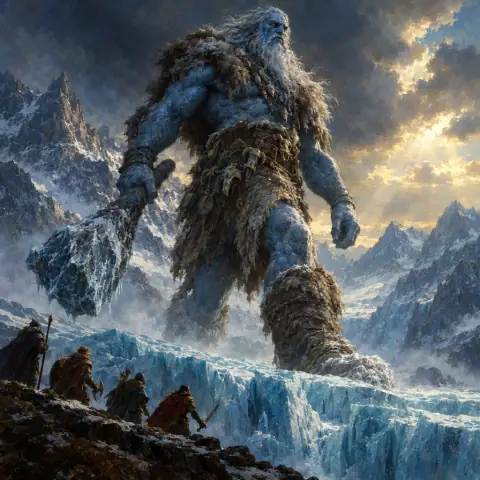
Gilgamesh, two-thirds divine and one-third mortal, oppresses his own people, so the gods shape a rival from clay: Enkidu, a wild man who runs with the animals. After a wrestling match the two become inseparable friends. Seeking fame, they march to the Cedar Forest and kill its guardian, the monster Humbaba. When Gilgamesh spurns the goddess Ishtar, she sends the Bull of Heaven against Uruk, and the heroes kill that too.
The gods decree that one of them must die for these outrages, and Enkidu sickens and perishes. Terrified by death for the first time, Gilgamesh abandons his kingdom and travels beyond the edge of the world to find Utnapishtim, the one man granted eternal life after surviving the flood. Utnapishtim tells him that immortality is not for humans but reveals a plant that restores youth. Gilgamesh retrieves it from the deep — and a serpent steals it while he bathes. He returns to Uruk with nothing but the sight of its great walls, and the poem ends with him showing them off: the lasting thing a mortal can build.
Reception & impact
The rediscovered epic reshaped the study of the ancient Near East and of the Bible, whose flood narrative, Garden of Eden story and the book of Ecclesiastes show parallels with it. Scholars have also argued that it influenced Greek epic, including Homer's Odyssey, another tale of a wanderer beyond the known world.
Its direct line to modern fantasy is thinner than that of the Northern sources. J. R. R. Tolkien's imagination was fed chiefly by Beowulf and the Eddas, not by cuneiform. What Gilgamesh gave the genre was structural and emotional rather than a list of borrowed names: the pairing of hero and companion that becomes the adventuring The party, the monster who guards a remote place, and the discovery that the greatest quest may end in loss. Those shapes recur so often in later fantasy that the poem reads today less like a source than like an ancestor.
Legacy
Gilgamesh entered roleplaying games by name. The first printing of TSR's Deities & Demigods (1980), written for Advanced Dungeons & Dragons, included Babylonian and Sumerian pantheons alongside Greek and Norse ones; those sections were removed from the book's 2nd-edition successor.
Its most important video-game descendant came from Japan. Masanobu Endō's arcade game The Tower of Druaga (Namco, 1984) sends a golden-armored knight named Gilgamesh up a sixty-floor tower to rescue the maiden Ki from the demon Druaga, with the goddess Ishtar in the background. Endō's influences included Wizardry: Proving Grounds of the Mad Overlord, Dungeons & Dragons and Mesopotamian myth, the epic among it. Druaga's hidden items and secret-sharing culture have been cited as influences on Hydlide, Dragon Slayer and The Legend of Zelda — so a hero from 2100 BCE stands near the root of the action RPG.
Final Fantasy adopted him too: Final Fantasy V (1992) introduced a swaggering, sword-collecting Gilgamesh with a companion named Enkidu, a recurring figure in the series ever since. Type-Moon's visual novel Fate/stay night (2004) cast a haughty King of Heroes Gilgamesh among its summoned legendary warriors. The historical king, who carved his fame on city walls, has ended up as one of gaming's most recognizable mythic names.
Marginalia
- Its hero is described as two-thirds divine and one-third mortal — a demigod who still cannot escape death.
- The Standard Babylonian version opens 'He who saw the Deep'; an older Old Babylonian version was titled 'Surpassing All Other Kings'.
- George Smith's 1872 announcement that a Nineveh tablet told a flood story strikingly like Noah's made the poem a sensation in Victorian Britain.
- The 'Gilgamesh Dream Tablet', illegally imported into the United States, was returned to Iraq in September 2021.
- The hero of Namco's 1984 arcade game The Tower of Druaga is a golden-armored knight named Gilgamesh; designer Masanobu Endō drew on Mesopotamian myth.
- The first 1980 printing of AD&D's Deities & Demigods included Babylonian and Sumerian pantheons; the 2nd-edition revision dropped them.
Quick answers
- When was Epic of Gilgamesh first published?
- Epic of Gilgamesh was first published in c. 2100 BCE (Sumerian poems) – c. 1300–1000 BCE (Standard Babylonian version).
- What kind of work is Epic of Gilgamesh?
- Epic of Gilgamesh is an epic poem in the Myth & Epic and Mythic Fantasy tradition.
- Why is Epic of Gilgamesh important?
- The earliest surviving epic lays down fantasy's founding moves — the bonded companion, the monster-slaying expedition, the journey past the edge of the world — and has resurfaced in games from The Tower of Druaga to Final Fantasy.