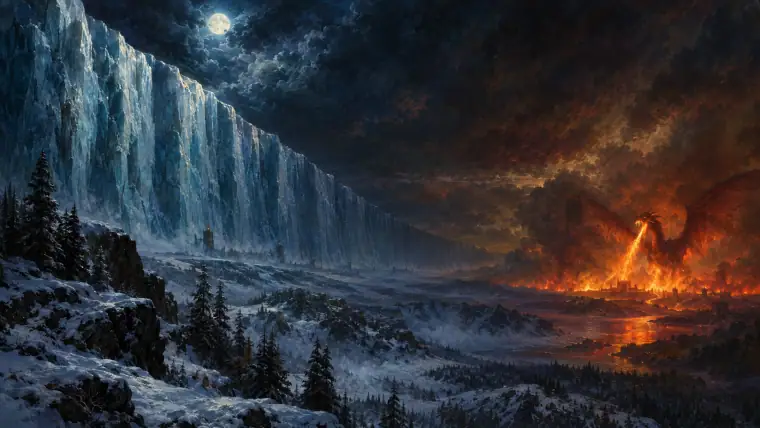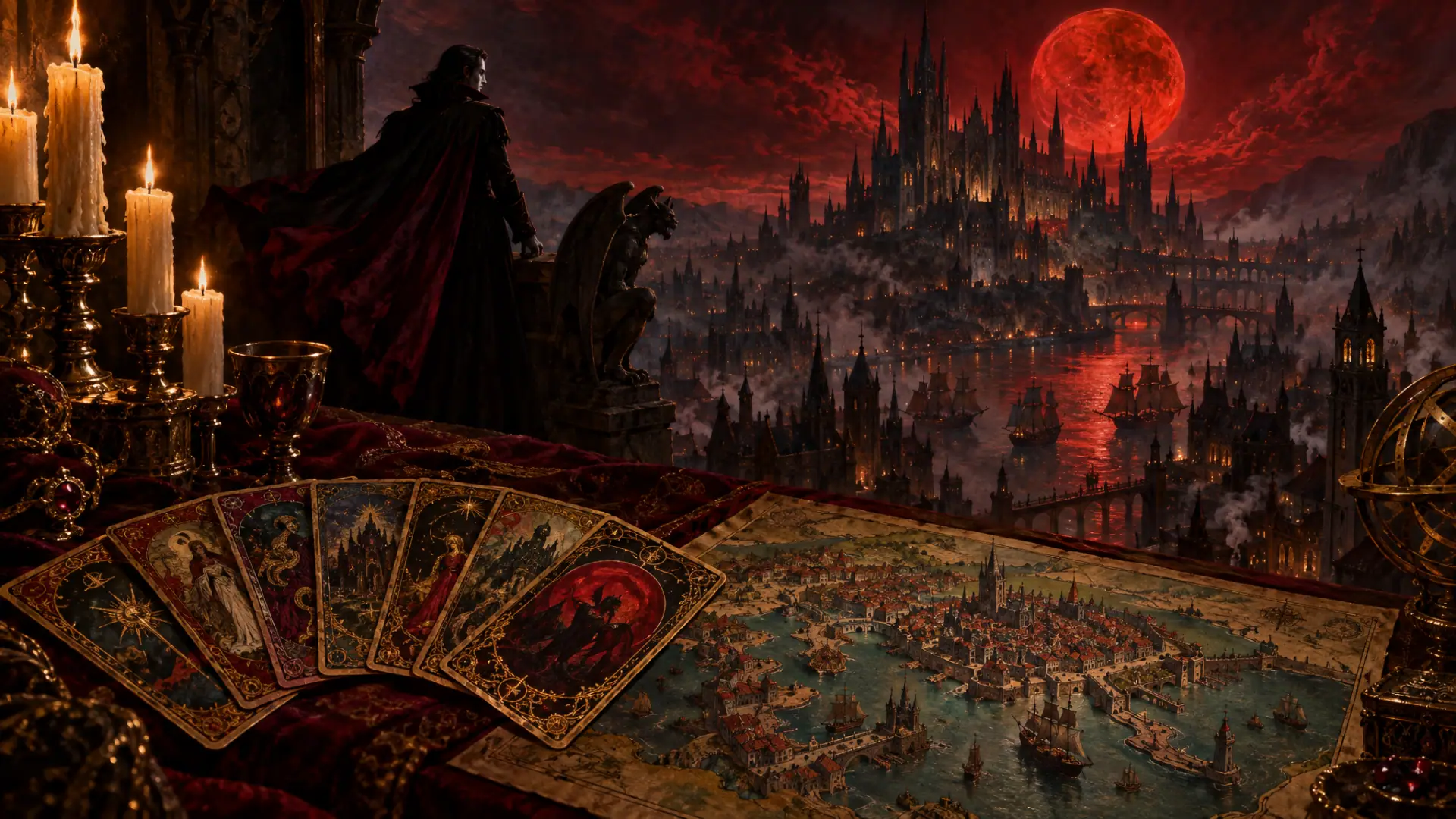
Malazan is the most celebrated case of a tabletop campaign becoming literature, and its archaeologist's sense of deep time and its soldiers'-eye view of war set a new ceiling for the scale of epic fantasy.
Overview
Most fantasy novels that began as roleplaying campaigns hide the fact. Malazan Book of the Fallen wears it openly. Its world — a planet of collapsing empires, ascending mortals, warring gods and races older than memory — was built over years of play by two Canadian friends, and it still feels like a setting that existed long before the story began. Steven Erikson's ten novels, from Gardens of the Moon (1999) to The Crippled God (2011), are famously difficult to start and famously hard to put down, and they represent one of the most ambitious translations of a gaming table into prose.
Origins
In the early 1980s Steve Rune Lundin — who would write as Steven Erikson — and Ian Cameron Esslemont, both students of archaeology and anthropology, began a campaign together. They started with Advanced Dungeons & Dragons and moved to Steve Jackson's GURPS, whose flexible rules suited the eclectic, magic-heavy world they were building. Their "Malazan Empire" accumulated centuries of history, gods and continents through play. They first tried to bring it to the screen, writing a screenplay together; when that failed to sell, Erikson reworked the material as a novel.
Gardens of the Moon was completed in the early 1990s but took years to find a publisher. When it did, Bantam Press in the UK offered a contract for the whole series reportedly worth £675,000, described at the time as among the largest ever paid for a fantasy series. Tor Books published it in the United States.
The story
Gardens of the Moon drops the reader into the middle of a war: the Malazan Empire, ruled by the usurper Empress Laseen, is besieging the Free Cities of Genabackis, and its elite soldiers, the Bridgeburners, are being quietly sacrificed by their own commanders. Gods walk and meddle; mages channel power through "warrens," which Erikson treats almost as geological strata of magic; the immortal Tiste Andii and T'lan Imass wage wars that began hundreds of thousands of years ago.
The later novels move across continents and eras: the harrowing Chain of Dogs retreat in Deadhouse Gates (2000), the Letherii empire in Midnight Tides (2004), and a vast convergence on the imprisoned Crippled God in the final volumes. The recurring subject is compassion — the question of whether it can survive among soldiers and gods.
Reception & impact
Readers either bounce off Malazan's lack of exposition or fall into it completely. Fellow writers including Glen Cook, author of the soldiers'-eye Black Company novels, and Stephen R. Donaldson praised it, and critics compared Erikson's scope to Joseph Conrad's and William Faulkner's. It became a touchstone of the Grimdark and military-fantasy boom alongside A Song of Ice and Fire and later The First Law, though its underlying moral seriousness sets it apart.
For the history of games, Malazan matters as proof of concept: a Campaign setting invented for GURPS play grew into ten bestselling novels. Readers who know tabletop RPGs can feel it in the books' bones — in the scattered parties of adventurers, in the treatment of magic as a system of warrens, in the sense that every ruin had a session behind it.
Legacy
The world expanded in multiple directions. Esslemont wrote six Novels of the Malazan Empire (2004–14) and the prequel Path to Ascendancy series; Erikson began the Kharkanas prequel trilogy with Forge of Darkness (2012). His sequel sequence, The Tales of Witness, set in the far north years after the main series, began with The God Is Not Willing (2021); the second volume, No Life Forsaken, appeared in October 2025, and Erikson has said the planned trilogy will be four books. No screen adaptation has been produced. Malazan remains what it was at the start: a table game that became a library.
Marginalia
- The Malazan world was co-created by Steven Erikson and Ian Cameron Esslemont in the early 1980s as the setting of their roleplaying campaign, first in AD&D and then in GURPS.
- Before becoming novels, the world was the backdrop for a screenplay the two wrote together.
- Steven Erikson is the pen name of Steve Rune Lundin, a trained archaeologist and anthropologist.
- Gardens of the Moon was published in 1999; the tenth novel, The Crippled God, in 2011.
- Esslemont wrote six companion Novels of the Malazan Empire (2004–14) set in the same world.
- Erikson's sequel sequence, The Tales of Witness, reached its second book, No Life Forsaken, in October 2025 and is planned as four novels.
Quick answers
- When was Malazan Book of the Fallen first published?
- Malazan Book of the Fallen was first published in 1999–2011.
- Who created Malazan Book of the Fallen?
- Malazan Book of the Fallen was made by Steven Erikson (author; co-creator of the world).
- Who published or developed Malazan Book of the Fallen?
- Tor Books.
- What kind of work is Malazan Book of the Fallen?
- Malazan Book of the Fallen is a book series in the High / Epic Fantasy, Grimdark and Dark Fantasy tradition.
- Why is Malazan Book of the Fallen important?
- Malazan is the most celebrated case of a tabletop campaign becoming literature, and its archaeologist's sense of deep time and its soldiers'-eye view of war set a new ceiling for the scale of epic fantasy.