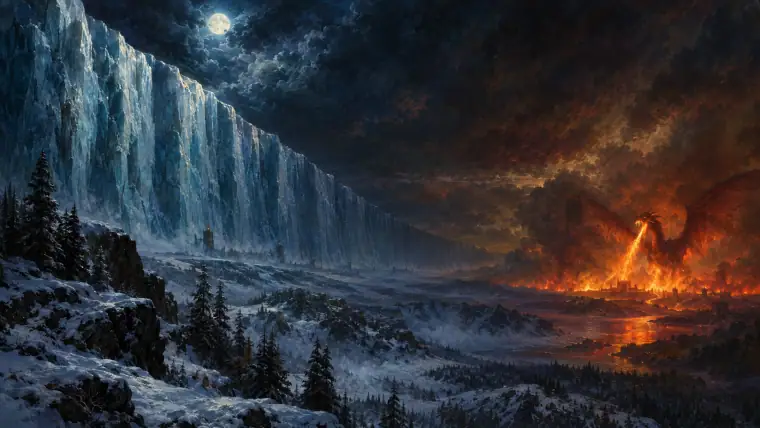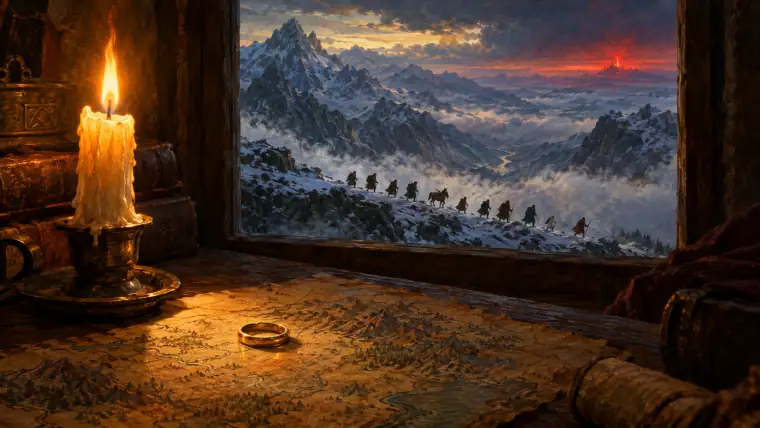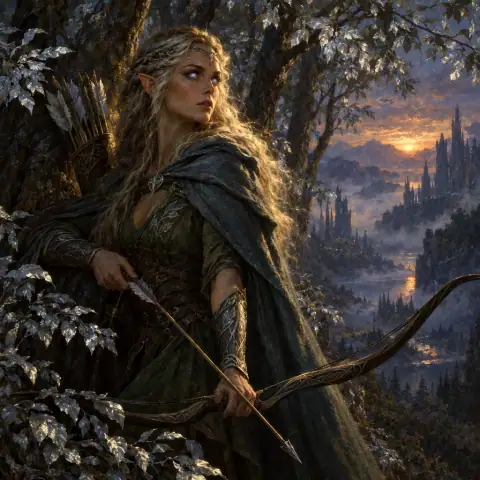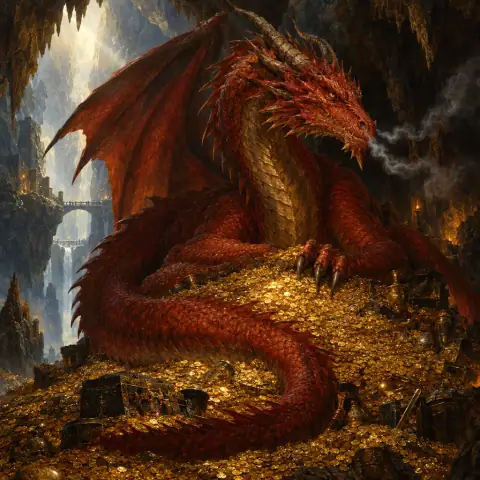
Memory, Sorrow, and Thorn is the bridge between the formula quests of the 1980s and the morally complex epics of the 1990s; George R. R. Martin has cited it as a key inspiration for A Song of Ice and Fire.
Overview
The opening of The Dragonbone Chair (1988) looks like every farm-boy fantasy on the late-1980s shelf. Simon, a daydreaming scullion in the vast Hayholt castle, is apprenticed to an eccentric doctor and nicknamed "Mooncalf." But Tad Williams had read those other books too, and Memory, Sorrow, and Thorn spends its three enormous volumes quietly dismantling their assumptions: about prophecy, about kingship, about good and evil peoples, and about who gets to be the hero. Its most famous reader, George R. R. Martin, credits it with helping to spark A Song of Ice and Fire.
Origins
Williams, a Californian who had worked as a radio host, musician and in other jobs before writing fiction, published his first novel, the cat fantasy Tailchaser's Song, with DAW Books in 1985. He then set out to write an epic in the lineage of The Lord of the Rings that took seriously the questions Tolkien's imitators skipped. The trilogy appeared from DAW as The Dragonbone Chair (1988), Stone of Farewell (1990) and To Green Angel Tower (1993). The last volume was so large that UK paperback editions split it into two books, Siege and Storm.
The story
Osten Ard is a continent of human kingdoms built over the ruins of an older civilization belonging to the Sithi, an immortal, elf-like people, and their estranged kin the Norns. When the great king Prester John dies, his son Elias falls under the influence of the sorcerer-priest Pryrates and, through him, of the Storm King Ineluki, a long-dead Sithi prince whose hatred of mortals has outlasted his body. Winter comes unnaturally; Simon flees the Hayholt and joins a desperate alliance seeking three legendary swords — Minneyar, Jingizu and Thorn — said to be the only hope against the Storm King.
What the characters believe about those swords, and about the prophecy that sends them searching, turns out to be dangerously incomplete. The Sithi are not simply benevolent elves, the humans' founding legends conceal a genocide, and Simon's heroism is slow, clumsy and costly. The trilogy's length allows it a novelistic density of politics, grief and humor rare in the genre at the time.
Reception & impact
Locus praised Stone of Farewell as "an epic fantasy you can get lost in for days," and the trilogy became a bestseller and a touchstone for writers. Martin has cited it as a key influence on A Song of Ice and Fire, praising the way it used the form of the Tolkien quest while undermining its comforts. The Eragon author Christopher Paolini called it "one of the great fantasy epics of all time."
The trilogy arrived at a hinge moment. The first wave of post-Tolkien quests, from The Sword of Shannara to The Belgariad, had established the market; Memory, Sorrow, and Thorn showed that the same shelf could hold something more ambivalent. The Wheel of Time, which began in 1990, shares its scale, while the grimmer epics of the late 1990s share its suspicion of destiny.
Legacy
Unlike many contemporaries, the trilogy was never adapted for games or screen, though its imagery — a castle built on the ruins of an older one, a returning undead elf-king, an unnatural winter — became part of the common vocabulary of epic fantasy. It remained in print and in conversation for decades.
In 2017, after a gap of 24 years, Williams returned to Osten Ard with the short bridging novel The Heart of What Was Lost and the first volume of a sequel series, The Last King of Osten Ard: The Witchwood Crown (2017), Empire of Grass (2019), Into the Narrowdark (2022) and The Navigator's Children (2024), which concluded that sequence. A prequel, Brothers of the Wind (2021), tells the tragedy of the Sithi princes Hakatri and Ineluki. The world that inspired Westeros is now one of the longest-running epic settings still being written by its original author.
Marginalia
- To Green Angel Tower (1993) was so long that UK paperback editions split it into two volumes, Siege and Storm.
- George R. R. Martin has cited the trilogy as an inspiration for A Song of Ice and Fire.
- Christopher Paolini called it 'one of the great fantasy epics of all time.'
- Williams returned to Osten Ard after 24 years with The Witchwood Crown (2017).
- The sequel tetralogy, The Last King of Osten Ard, concluded with The Navigator's Children in 2024.
Quick answers
- When was Memory, Sorrow, and Thorn first published?
- Memory, Sorrow, and Thorn was first published in 1988–93.
- Who created Memory, Sorrow, and Thorn?
- Memory, Sorrow, and Thorn was made by Tad Williams (author).
- What kind of work is Memory, Sorrow, and Thorn?
- Memory, Sorrow, and Thorn is a book series in the High / Epic Fantasy tradition.
- Why is Memory, Sorrow, and Thorn important?
- Memory, Sorrow, and Thorn is the bridge between the formula quests of the 1980s and the morally complex epics of the 1990s; George R. R. Martin has cited it as a key inspiration for A Song of Ice and Fire.