The collectible card game, invented in 1993, rescued and reshaped the tabletop industry: its profits bought Dungeons & Dragons, its business model flowed into video game loot boxes and gacha, and its biggest brands have sold tens of billions of cards.
Hallmarks
- Cards sold in randomized booster packs, with common, uncommon and rare tiers
- Each player builds a personal deck from a collection before play
- Regular expansions that add cards and shift the metagame
- Head-to-head duels, often in organized tournaments
- A resource system, such as lands and mana, that paces each game
- Cards that both play and trade, with a secondary market that sets their value
What it is
A collectible card game (CCG), also sold as a trading card game (TCG), is two products fused into one. The first is a strategy game, usually a duel, in which each player brings a deck of their own construction. The second is a collection, sold in sealed booster packs whose contents are random and whose cards come in tiers of rarity. You cannot buy the game outright; you assemble it, pack by pack, trade by trade, and the deck you field is a portrait of your taste and your budget.
The design consequences are distinctive. Because no one owns every card, games are asymmetric and surprising. Because new expansions arrive regularly, the set of legal cards (the "format") and the tournament meta-game keep changing. And because rare cards are scarce, they acquire prices, creating a secondary market in which a single piece of cardboard can be worth more than the box it came in.
Origins
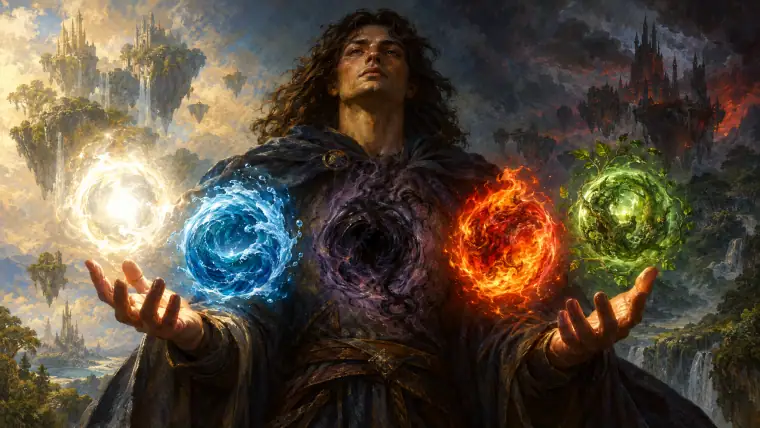
The idea had near-misses. A 1904 baseball card game was patented but never produced as a collectible, and Topps sold baseball card games in random packs in the 1950s, though they lacked real strategy. The breakthrough came from mathematician Richard Garfield. Around 1991 Peter Adkison of the small Seattle-area publisher Wizards of the Coast asked him for a quick game that needed minimal equipment and could be played in convention downtime. Garfield returned to a card game about dueling wizards, drawing on his earlier design Five Magics (1982), on Cosmic Encounter's card-driven rules, and on Strat-O-Matic's team-building. The result was Magic: The Gathering, launched in August 1993. Its lands and Mana provided a resource curve, its five colors of magic gave it identity, and its random boosters made every opened pack a small lottery. The first 2.6 million cards sold out almost at once.
Evolution
A gold rush followed. By one count 38 new CCGs appeared in 1995 alone, among them Garfield's own Jyhad (1994) for the world of Vampire: The Masquerade, a Star Wars game, and Legend of the Five Rings (1995), whose tournament winners shaped its ongoing story. The model's pull is easy to see in the booster itself: a pack typically holds 8 to 15 random cards with a guaranteed mix of rarities, so every purchase is both a practical addition to a deck and a gamble on a rare. Most of the 1990s entrants vanished in the bust that followed, and the money drained from the rest of the hobby hit roleplaying publishers hard. Magic, however, made Wizards rich enough to buy TSR, Inc. and Dungeons & Dragons in 1997; Hasbro bought Wizards in 1999.
The next wave came from Japan and from video games. The Pokémon Trading Card Game, launched by Media Factory in October 1996 as a spin-off of Pokémon Red and Green, was released in English by Wizards of the Coast and by summer 1999 had become the first CCG to outsell Magic. Konami's Yu-Gi-Oh! followed in 1999. Collecting became part of the Monster-Collecting RPGs from the start, and the random pack's psychology later reappeared as the gacha pull of mobile gacha RPGs.
The 2000s and 2010s brought alternatives to the booster. Magic went online in 2002 and Blizzard's Hearthstone (2014) proved a wholly digital CCG could be a mass hit. Fantasy Flight Games introduced the trademarked "Living Card Game" in 2008 with Call of Cthulhu and A Game of Thrones, selling fixed expansions with no random cards; Android: Netrunner (2012) and Arkham Horror: The Card Game (2016) followed, and FFG relaunched Legend of the Five Rings as an LCG in 2017. Meanwhile Magic reached into fantasy's heartland, with a 2023 set built on The Lord of the Rings.
How to tell it apart
Versus the Living Card Game. Both are expandable deck-construction games. The CCG sells random packs and rewards collecting; the LCG sells every card openly, so every buyer of a pack owns the same cards.
Versus the deck-builder. In Dominion (2008) and its descendants, players start with identical weak decks and build them during play from a shared supply in the box. A CCG deck is built before the game from a personal collection. The mechanism later migrated into video games such as Slay the Spire.
Versus the adventure board game. An Fantasy Adventure Board Games ships complete, and its cards generate encounters for everyone; a CCG's cards are each player's private arsenal.
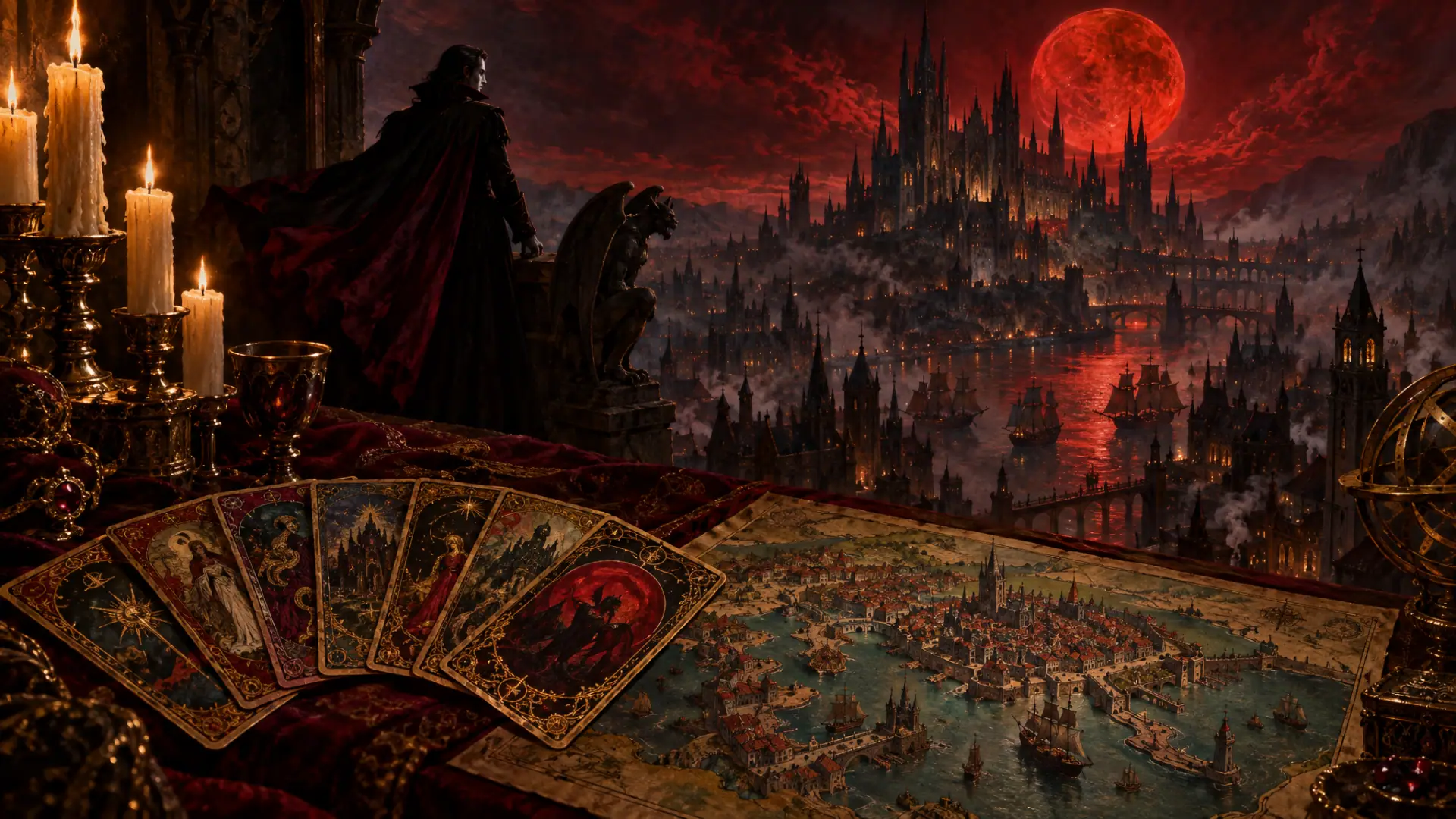
Versus the roleplaying game. A CCG may share a world with a Tabletop Roleplaying Games, as Legend of the Five Rings and Vampire did, but it plays as a competitive duel with a winner, not an open-ended story.
Where to start
- Magic: The Gathering — the original and still the reference point.
- Legend of the Five Rings — the CCG whose players wrote the story.
- The Pokémon Trading Card Game — the best-selling bridge from video games to the kitchen table.
- For the RPG connection, see Vampire: The Masquerade and Collapse & Renaissance: Cards, Vampires & Baldur's Gate, the chapter in which cards and roleplaying collided.
Marginalia
- Magic's first print run of 2.6 million cards sold out almost immediately in 1993.
- According to one count, 38 new collectible card games entered the market in 1995 alone.
- Magic's profits funded Wizards of the Coast' 1997 purchase of TSR, Inc., owner of D&D.
- The Pokémon Trading Card Game launched in Japan on October 20, 1996, and by summer 1999 it was outselling Magic.
- In Legend of the Five Rings, tournament results decided what happened next in the official storyline.
- "Living Card Game" is a Fantasy Flight Games trademark for expandable card games sold in fixed, non-random packs, launched in 2008.
- Dominion (2008) popularized, and is usually credited with inventing, the deck-building game, in which decks are built during play from a shared supply.
Quick answers
- What is Collectible & Trading Card Games?
- A game you assemble from a collection you are still building: crack a booster, find a rare, rebuild your deck, and meet a stranger across the table with sixty cards neither of you has fully revealed.
- What are the hallmarks of Collectible & Trading Card Games?
- Cards sold in randomized booster packs, with common, uncommon and rare tiers; Each player builds a personal deck from a collection before play; Regular expansions that add cards and shift the metagame; Head-to-head duels, often in organized tournaments; A resource system, such as lands and mana, that paces each game; Cards that both play and trade, with a secondary market that sets their value.
- When did Collectible & Trading Card Games emerge?
- 1993 (Magic: The Gathering).
- What are the key works of Collectible & Trading Card Games?
- Magic: The Gathering and Legend of the Five Rings.