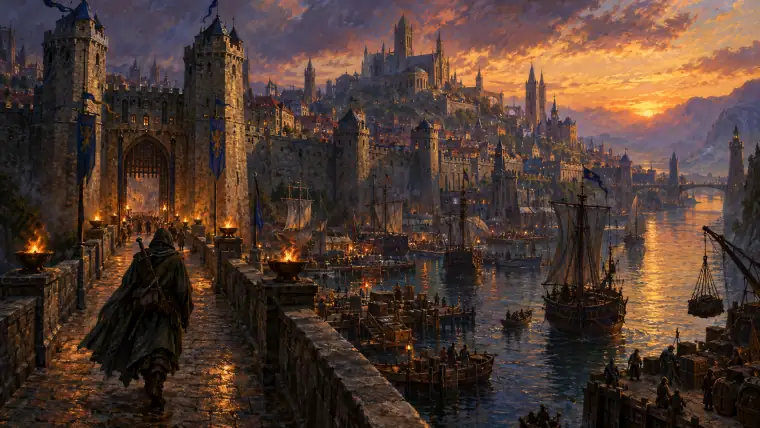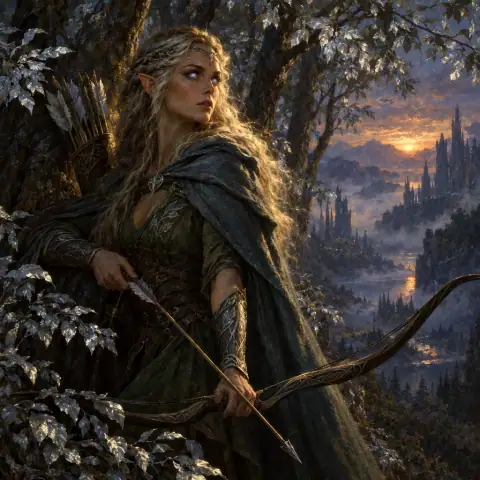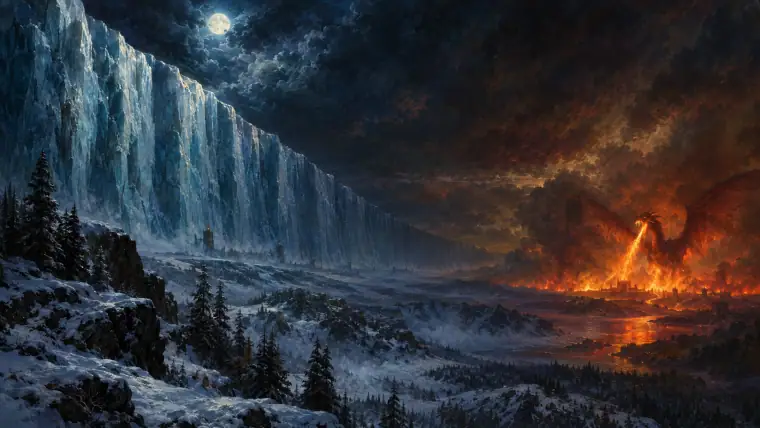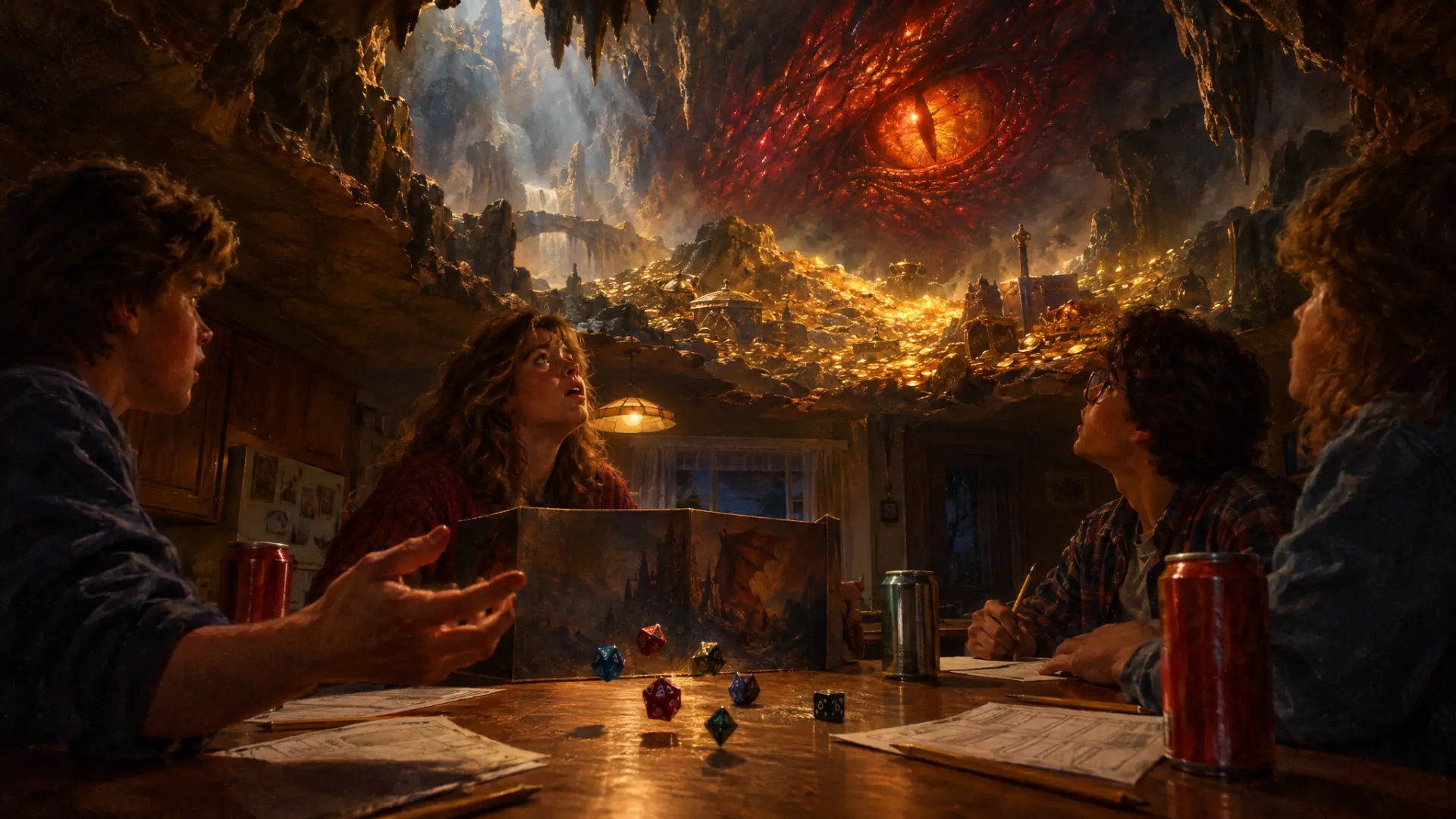
The Icewind Dale Trilogy turned a game setting into a bestselling literary franchise and gave D&D its signature character, Drizzt Do'Urden, who walked from the page into dozens of computer and board games.
Overview
Every fictional universe has a character who escapes the story he was written for. In the Forgotten Realms, that character is Drizzt Do'Urden, a lavender-eyed dark elf with twin scimitars and a magical panther named Guenhwyvar, who first appeared as a supporting player in R. A. Salvatore's The Crystal Shard (1988). The novel and its sequels, Streams of Silver (1989) and The Halfling's Gem (1990), form The Icewind Dale Trilogy, the books that made TSR's new campaign setting a literary brand and turned a roleplaying game into a source of long-running heroic fiction.
Origins
Salvatore, an aspiring novelist from Leominster, Massachusetts, had sent TSR a manuscript called Echoes of the Fourth Magic. Managing editor Mary Kirchoff liked his writing and asked him to try something set in the Forgotten Realms, the world Ed Greenwood had developed and TSR had published in 1987. She sent him a map; Salvatore found an empty region at its northern edge and, in his own words, "moved the story a thousand miles to the north" to Icewind Dale.
When Kirchoff phoned on her way into a marketing meeting to say one of his characters could not be used, Salvatore improvised: off the top of his head, he said he had a dark elf. The drow of D&D were, by the rules of the game's Alignment system, an evil race of the Underdark. A drow who had rejected his people was a fresh idea, and Salvatore wrote the novel in about two months.
The story
In the frozen Ten-Towns on the edge of the known world, the dwarf Bruenor Battlehammer, the halfling Regis and the ranger Drizzt defend the settlements against a barbarian invasion — and then capture and befriend the young barbarian Wulfgar. When the apprentice wizard Akar Kessell finds Crenshinibon, a sentient artifact that craves domination, he raises an army of goblins, orcs, giants and barbarians to conquer the Dale. Streams of Silver sends the companions south in search of Bruenor's lost ancestral halls of Mithral Hall, and The Halfling's Gem follows them to the southern port of Calimport to rescue Regis from the assassin Artemis Entreri, Drizzt's dark mirror.
The books read, deliberately, like a well-run campaign: a balanced The party of fighter, rogue, ranger and later the human Catti-brie, dungeon crawls through dwarven mines, monsters straight from the Monster Manual, and fights described with a gamer's feel for positioning and momentum.
Reception & impact
The trilogy made Salvatore a star. Readers wanted Drizzt's backstory, and The Dark Elf Trilogy (1990–91) supplied it, beginning a sequence of novels collectively called The Legend of Drizzt that has continued for more than three decades; The Two Swords reached No. 4 on the New York Times list in 2004. Salvatore has sold more than 15 million books in the United States alone.
Drizzt then crossed back into games. He makes a cameo in BioWare's Baldur's Gate (1998); Black Isle's Icewind Dale (2000) is named after and set in his home region; Salvatore wrote the story of Stormfront Studios' Forgotten Realms: Demon Stone (2004); and Wizards of the Coast's The Legend of Drizzt board game (2011) and the action RPG Dark Alliance (2021) put the Companions of the Hall directly under players' control. Salvatore later worked as a game writer in his own right, creating the 10,000-year backstory and dialogue for Kingdoms of Amalur: Reckoning (2012).
Legacy
The Icewind Dale books are the template for game-setting fiction that stands on its own, the counterpart to Dragonlance for the Forgotten Realms. Their hero became so identified with D&D that the two-scimitar drow ranger turned into one of the game's most recognizable character archetypes, imitated at tables everywhere.
The saga continues. After Lolth's Warrior (2023) closed the Way of the Drow trilogy, Salvatore launched a new series with The Finest Edge of Twilight (October 7, 2025), starring Drizzt and Catti-brie's daughter, Breezy Do'Urden. Ten-Towns, meanwhile, remains one of the most revisited places in D&D, most recently as the setting of the fifth-edition adventure Rime of the Frostmaiden (2020).
Marginalia
- Salvatore wrote The Crystal Shard, his first published novel, in about two months; TSR published it in 1988.
- Drizzt was improvised: when his editor, on her way into a marketing meeting, told him one character could not be used, Salvatore said, off the top of his head, that he had a dark elf.
- Salvatore moved his story to Icewind Dale because it was an empty spot on the Forgotten Realms map he was given.
- Black Isle's 2000 computer RPG Icewind Dale takes its name and region from the setting of the novels.
- Salvatore wrote the story for the video game Forgotten Realms: Demon Stone (2004).
- Salvatore's The Finest Edge of Twilight (October 2025) begins a new series led by Drizzt's daughter, Breezy Do'Urden.
Quick answers
- When was The Icewind Dale Trilogy first published?
- The Icewind Dale Trilogy was first published in 1988–90.
- Who created The Icewind Dale Trilogy?
- The Icewind Dale Trilogy was made by R. A. Salvatore (author).
- Who published or developed The Icewind Dale Trilogy?
- TSR, Inc. and Wizards of the Coast.
- What kind of work is The Icewind Dale Trilogy?
- The Icewind Dale Trilogy is a book series in the Shared-World & Tie-In Fiction, Sword & Sorcery and High / Epic Fantasy tradition.
- Why is The Icewind Dale Trilogy important?
- The Icewind Dale Trilogy turned a game setting into a bestselling literary franchise and gave D&D its signature character, Drizzt Do'Urden, who walked from the page into dozens of computer and board games.