Bantam turned the second-person branching book into a worldwide brand, and through its Spectra imprint published some of the most important epic fantasy of the 1990s, from Robin Hobb's Farseer books to A Game of Thrones.
History
Bantam was born in the American paperback boom that followed the Second World War. In 1945 Walter B. Pitkin Jr., Sidney B. Kramer and Ian and Betty Ballantine founded it with money from the hardcover house Grosset & Dunlap and the magazine publisher Curtis. Its business was mass-market reprints of hardcover books, sold cheaply through newsstands and drugstores. The Ballantines left in 1952 to found Ballantine. By 1954 Bantam was failing, and its owners hired Oscar Dystel from Coronet magazine to run it; within about a year it was profitable, and by the time he retired as chairman in 1980 Bantam was the country's largest paperback publisher, with more than 15 percent of the market and sales above $100 million.
It also made legal history. When a Rhode Island commission "to encourage morality in youth" blacklisted books and threatened distributors, Bantam sued, and in Bantam Books, Inc. v. Sullivan (1963) the Supreme Court held unanimously that such informal censorship was an unconstitutional prior restraint. Ownership changed repeatedly: Grosset & Dunlap took full control in 1964, then National General, American Financial and the Italian firm IFI, until Bertelsmann bought half in 1977 and the rest in 1980. Bertelsmann added Doubleday and Dell in 1986 and Random House in 1998, merging Bantam and Dell into Bantam Dell in 1999. Bantam continues today as an imprint of Random House at Penguin Random House.
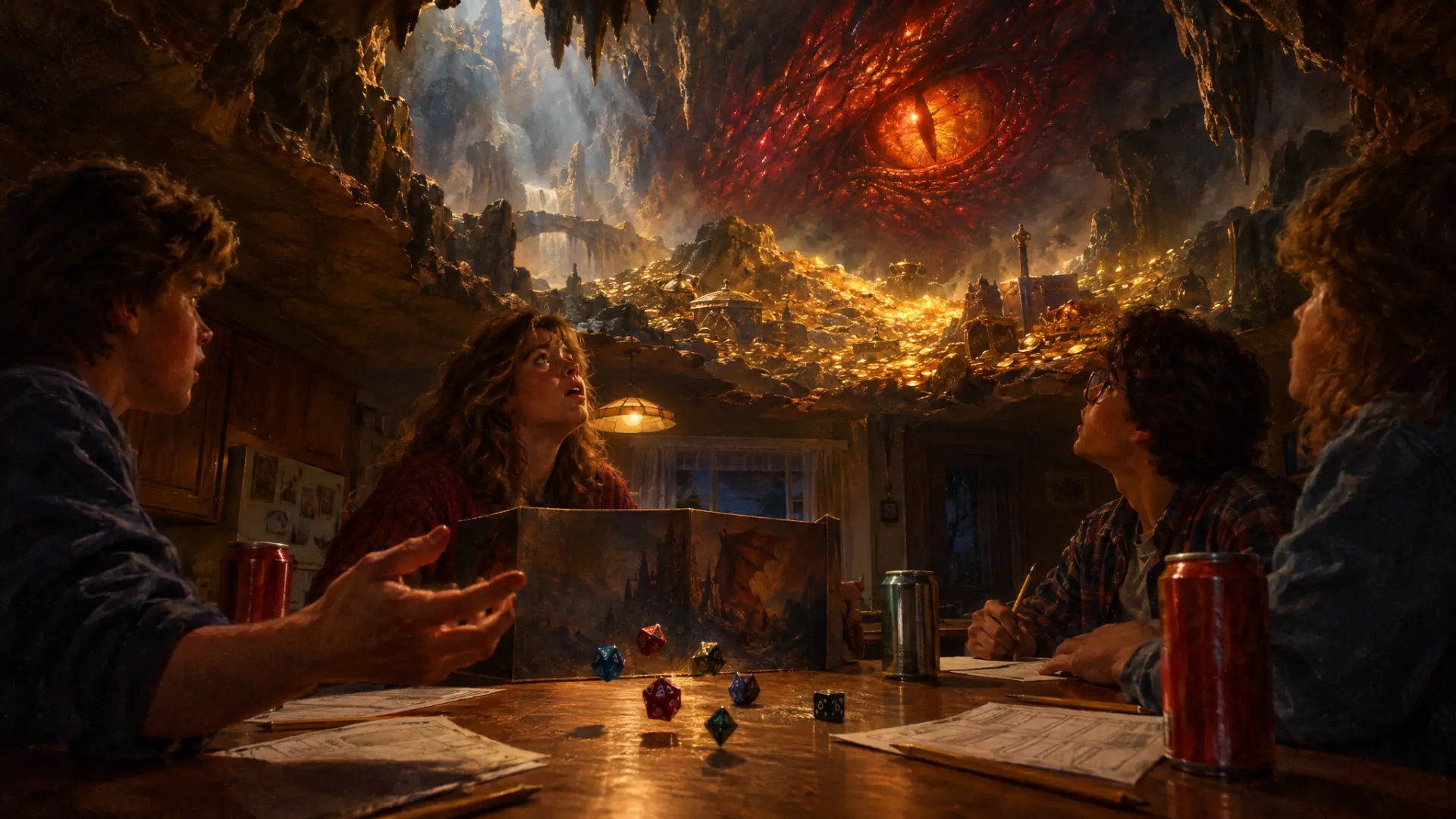
For the history of games, Bantam's most important decision came in 1979. A lawyer named Edward Packard had turned bedtime stories for his children into a branching second-person book, Sugarcane Island, published in 1976 by R. A. Montgomery and Constance Cappel's small Vermont Crossroads Press. Bantam offered Packard and his first publisher a contract for a series and launched the concept under a new name: Choose Your Own Adventure. The first title was Packard's The Cave of Time. Readers were addressed as "you," and at the foot of a page chose which of two or three pages to turn to next. A 1981 New York Times article and an appearance on the Today show brought national attention, and Choose Your Own Adventure became one of the best-selling children's series of its era: 184 titles between 1979 and 1998, more than 250 million copies, in about 40 languages. In Britain, Puffin's Fighting Fantasy added dice and statistics to the same idea.
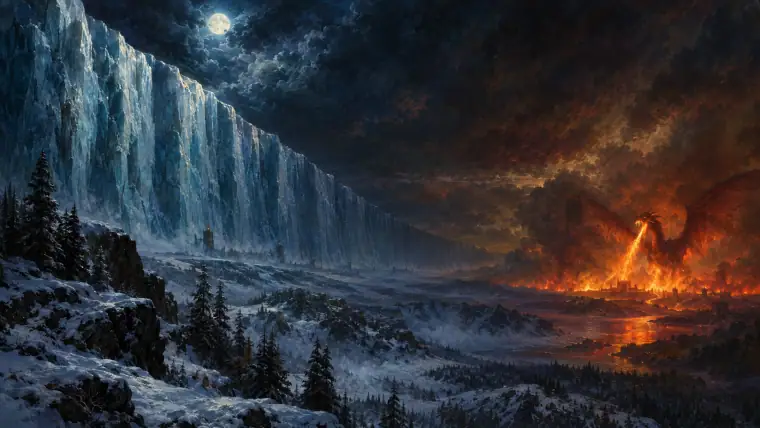
Bantam was also a major science fiction and fantasy house. It published the first original Star Trek novels (about a dozen, 1970–82) and, through its Spectra imprint, Margaret Weis and Tracy Hickman's Darksword trilogy and Death Gate Cycle after they left TSR, Robin Hobb's Farseer books in the United States, and George R. R. Martin's A Game of Thrones in August 1996, the start of A Song of Ice and Fire. It won the Locus Award for best publisher in 1998.
Notable work
Choose Your Own Adventure is Bantam's great contribution to interactive storytelling; A Song of Ice and Fire is its great contribution to fantasy. Between them sit Weis and Hickman's post-Dragonlance series, the Farseer trilogy, and decades of genre paperbacks from Isaac Asimov and Ray Bradbury to William Gibson.
Legacy
Choose Your Own Adventure taught millions of children that a story could branch and that the reader could steer it, the core idea behind the Gamebooks & Interactive Books, Interactive Fiction & Text Adventures and much of the computer RPG. Bantam ended the original series in 1998 and let the trademark lapse; Montgomery and Shannon Gilligan's Vermont company, Chooseco, later revived the books independently. The house's later bet on Martin gave the world Game of Thrones, another story whose readers would argue for years about every choice.
Marginalia
- Bantam was founded in 1945; one of its founders, Ian Ballantine, left to start Ballantine Books in 1952.
- Under Oscar Dystel, hired in 1954, Bantam went from failing to profitable in about a year; by his retirement in 1980 it was the largest paperback publisher, with more than 15% of the market.
- In Bantam Books v. Sullivan (1963) the U.S. Supreme Court ruled unanimously that a Rhode Island morality commission's blacklists were unconstitutional prior restraint.
- Bantam launched Choose Your Own Adventure in 1979 with Edward Packard's The Cave of Time.
- Bantam published 184 Choose Your Own Adventure titles between 1979 and 1998, selling more than 250 million copies in about 40 languages.
- Bantam published the first original Star Trek novels, about a dozen between 1970 and 1982.
- A Game of Thrones was published by Bantam Spectra in August 1996, as the first of a planned trilogy.
Quick answers
- What is Bantam Books?
- The mass-market paperback giant that published every original Choose Your Own Adventure book, 184 titles that let a generation pick the page, and later launched George R. R. Martin's A Song of Ice and Fire.
- When was Bantam Books founded?
- Bantam Books was founded in 1945 and is based in New York City.
- Who founded Bantam Books?
- Walter B. Pitkin Jr., Sidney B. Kramer, and Ian and Betty Ballantine, with funding from Grosset & Dunlap and Curtis Publishing.
- What is Bantam Books known for?
- Choose Your Own Adventure, A Song of Ice and Fire and The Farseer Trilogy.
- What happened to Bantam Books?
- Owned by Bertelsmann from 1980 (half in 1977); merged into Bantam Dell and later Ballantine Bantam Dell; continues as an imprint of Random House at Penguin Random House.