Divinity: Original Sin II is one of the most acclaimed computer RPGs ever made, a turn-based game whose freedom and elemental combat set a new standard for the genre. Its success persuaded Wizards of the Coast to give Larian Studios Baldur's Gate 3.
Overview
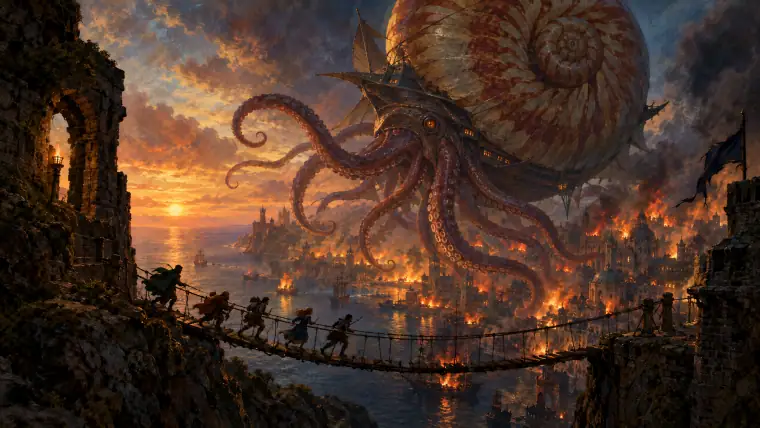
The ship Merryweather is carrying Sourcerers, people born able to wield the magic called Source, to Fort Joy, an island prison where the Divine Order's Magisters "purge" them into mindless husks. Source attracts the Voidwoken, monsters from beyond the Veil, so Sourcerers are feared and hunted. A Voidwoken kraken sinks the ship. A voice saves the player from drowning and calls them "Godwoken": one of several prisoners chosen by the gods as candidates to become the next Divine.
Divinity: Original Sin II, developed and published by Larian Studios of Ghent, Belgium, and released for Windows on September 14, 2017, is a party-based computer RPG with turn-based tactical combat, played alone or with up to three friends. It follows Divinity: Original Sin (2014) and is set in Rivellon, the world of Larian's Divinity series. Critics called it one of the best RPGs ever made. Its success, both critical and commercial, set the stage for Baldur's Gate 3.
Origins
Larian had spent two decades making ambitious, often troubled RPGs when Divinity: Original Sin, partly crowdfunded on Kickstarter in 2013, gave it a hit. Founder Swen Vincke went back to Kickstarter for the sequel, announced on August 12, 2015. The campaign, launched on August 26, reached its $500,000 goal in less than 12 hours and raised more than $2 million, meeting stretch goals faster than they could be announced; Larian said it wanted the community's input as much as its money. Composer Borislav Slavov replaced the series' late composer Kirill Pokrovsky. The game entered early access on September 15, 2016, and launched a year later, despite a power outage in Ghent on release day. Within a week it had 75,000 concurrent players on Steam.
How it plays
Players create a Sourcerer or choose one of six "origin" characters with their own backstories and quests: the dwarf rebel Beast, the ancient undead Fane, the mercenary Ifan ben-Mezd, the possessed singer Lohse, the exiled lizard noble the Red Prince, and the elven former slave Sebille. Unlike the first game, players can be elves, dwarves, lizards or humans, alive or undead. Companions react to the protagonist's choices, and in multiplayer each player's character pursues private goals, so friends can quietly sabotage one another.
Combat uses action points and a classless skill system drawn from ten schools, and it is built on interactions. Water can be electrified, oil ignited, poison clouds exploded, blood frozen; rain puts out fires; cursed and blessed versions of each surface add further effects. Height matters, and enemies can be teleported off cliffs. Physical and magic armor must be stripped before status effects land. Outside combat the game is equally permissive: the Pet Pal talent lets characters talk to animals, most non-player characters can be killed, and quests can be solved by persuasion, theft, stealth or violence. The story moves from Fort Joy to the Reaper's Coast, the Nameless Isle and the city of Arx, and reveals that the "gods" are not what they claim.
Reception & impact
Reviews were rapturous. GameSpot gave it 10 out of 10, the 14th perfect score in its history; Eurogamer called it a "masterpiece"; others called it the pinnacle of the CRPG. PC Gamer named it Game of the Year, and it won the BAFTA Games Award for Multiplayer, while Polygon was more reserved, finding it "stunningly ambitious" but not fully coherent. It sold 700,000 copies in its first month and more than a million by November 2017.
A Definitive Edition, with a reworked final act, an expanded story, better pacing and other improvements, was released for Windows, PlayStation 4 and Xbox One on August 31, 2018, free to existing PC owners, with Bandai Namco publishing on consoles. Ports to macOS (2019), Nintendo Switch (2019) and iPad (2021) followed.
Legacy
Original Sin II changed Larian's fortunes. Wizards of the Coast, which had turned down Vincke's earlier request to make Baldur's Gate 3, was impressed by prerelease footage and invited a new pitch, which Larian presented on the sequel's release day. The studio grew to hundreds of staff and applied Original Sin II's surfaces, verticality, shoving and freedom to fifth-edition Dungeons & Dragons. Several of its creators, including lead writer Sarah Baylus and composer Slavov, went on to Baldur's Gate 3. Alongside Pillars of Eternity, it was a cornerstone of the 2010s revival of the classic CRPG. In December 2025 Larian announced its next game, simply titled Divinity.
Marginalia
- Its Kickstarter reached its $500,000 goal in under 12 hours and ended with over $2 million, meeting every stretch goal.
- On launch day in 2017 a power outage hit Ghent, home of Larian's studio; the release went ahead anyway.
- GameSpot gave it a perfect 10, only the 14th game in the publication's history to receive one.
- Characters can take the Pet Pal talent to talk to animals, and undead player characters are healed by poison.
- Up to four players can share the story, each controlling a character with their own secret goals, and can work against one another.
- Wizards of the Coast, which had turned Larian down for Baldur's Gate 3 before, invited a pitch after seeing prerelease footage of this game.
- It won the BAFTA Games Award for Multiplayer and PC Gamer's Game of the Year.
Quick answers
- When was Divinity: Original Sin II first released?
- Divinity: Original Sin II was first released in 2017 (Windows); Definitive Edition 2018.
- Who created Divinity: Original Sin II?
- Divinity: Original Sin II was made by Swen Vincke (director).
- Who published or developed Divinity: Original Sin II?
- Larian Studios.
- What kind of work is Divinity: Original Sin II?
- Divinity: Original Sin II is a computer RPG in the Western Computer RPGs (CRPG) and Tactical & Strategy RPGs tradition, released for Microsoft Windows, PlayStation 4, Xbox One, macOS, Nintendo Switch and iPadOS.
- Why is Divinity: Original Sin II important?
- Divinity: Original Sin II is one of the most acclaimed computer RPGs ever made, a turn-based game whose freedom and elemental combat set a new standard for the genre. Its success persuaded Wizards of the Coast to give Larian Studios Baldur's Gate 3.