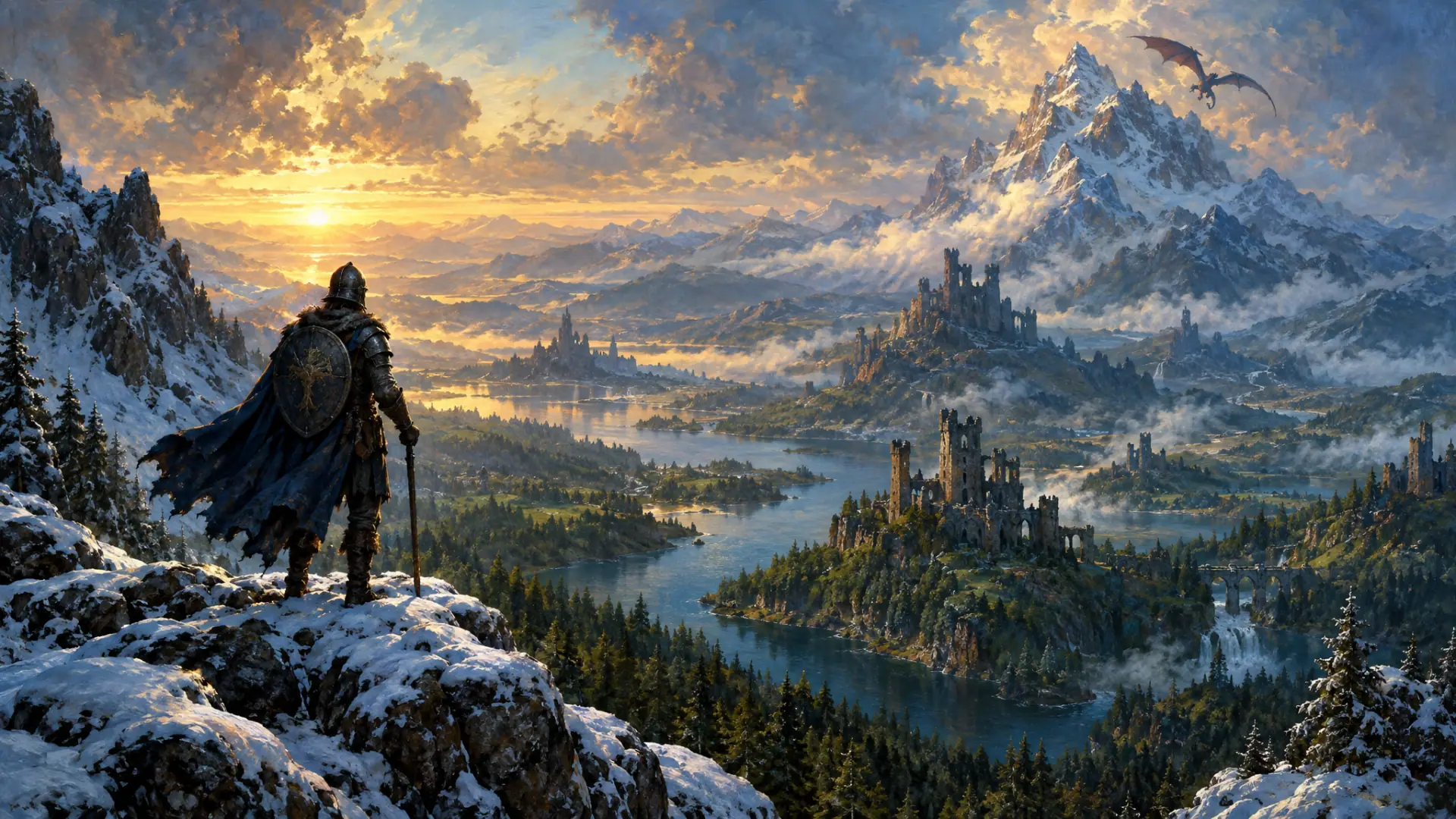
Rothfuss's Kingkiller Chronicle brought a musical, intimate voice to epic fantasy and sold more than 10 million copies, and he became a prominent figure in gaming culture through Tak, Torment: Tides of Numenera and Rick and Morty vs. Dungeons & Dragons.
Life
Patrick James Rothfuss was born in Madison, Wisconsin, on June 6, 1973. He graduated from DeForest Area High School and took a BA in English at the University of Wisconsin–Stevens Point in 1999; along the way he wrote for the campus paper, The Pointer, and produced a widely circulated parody of the "Goodtimes virus" email hoax. He then earned a master's degree from Washington State University in 2002 and returned to teach part-time at Stevens Point. In 2002 he won the Writers of the Future contest with "The Road to Levenshir," an excerpt from his sprawling unpublished manuscript.
In 2008 he founded Worldbuilders, a charity that turned the fantasy and gaming community's generosity into livestock, clean water and training through Heifer International; it has raised more than $11.5 million. In 2021 he co-founded Underthing Press with Grim Oak Press, reissuing Ursula Vernon's Hugo-winning webcomic Digger.
Work
Rothfuss sold The Name of the Wind to DAW Books, the house Donald A. Wollheim founded, in 2006, and it appeared in 2007 to rapid word-of-mouth success, winning a Quill Award and an Alex Award. The Kingkiller Chronicle is framed as a three-day confession. Kvothe, a legendary hero hiding as an innkeeper named Kote, tells a chronicler the true story behind the myths: his childhood in a troupe of traveling players, the murder of his family by the mysterious Chandrian, years as a street urchin, and his admission to the University, where students study sympathy, a rigorously explained magic of energy and linkage, alongside naming, a deeper and wilder art. The prose is musical, the storyteller is unreliable, and the frame story hints at a darker present.
The Wise Man's Fear (2011) debuted at No. 1 on the New York Times hardcover fiction list. Companion works include the novella The Slow Regard of Silent Things (2014), about the enigmatic Auri, and The Narrow Road Between Desires (2023), an expanded version of his Bast novella "The Lightning Tree." The concluding novel, The Doors of Stone, remains unpublished as of 2026. In 2020 his editor, Betsy Wollheim, wrote publicly that she had not seen a word of it; Rothfuss has since acknowledged the delay publicly. A chapter promised as a 2021 Worldbuilders fundraising reward had also not been released as of May 2026.
Legacy
The Kingkiller books have sold more than 10 million copies, and fans and fellow writers, including game designer Ron Gilbert, have ranked them among the best fantasy they have read. Rothfuss has cited Tad Williams as an influence, and his own book's popularity helped push lyrical, first-person fantasy back toward the center of the genre.
He is also unusually woven into gaming culture. He worked with designer James Ernest to turn Tak, the strategy game Kvothe plays in The Wise Man's Fear, into a real abstract board game, released by Cheapass Games in 2016 and reissued by Greater Than Games in 2021. He joined the story design team of inXile's crowdfunded Torment: Tides of Numenera, a spiritual successor to Planescape: Torment, and contributed to the backstory of the canceled game Hero's Song. With Jim Zub he co-wrote IDW and Oni Press's comic Rick and Morty vs. Dungeons & Dragons (2018–19), whose deluxe edition received a 2022 Eisner nomination.
On screen, Lionsgate took on the series for film, television and a video game; Showtime developed a series from 2017 until 2019, Lin-Manuel Miranda, who credited the books with inspiring a song in Hamilton, was attached as executive producer and composer before exiting in 2022, and Sam Raimi was announced to direct a film in 2018. None has yet reached the screen.
Marginalia
- He won the Writers of the Future contest in 2002 with an excerpt from what became The Wise Man's Fear.
- The Name of the Wind (DAW, 2007) won a Quill Award; its sequel, The Wise Man's Fear (2011), debuted at No. 1 on the New York Times hardcover list.
- Tak, the abstract strategy game played in The Wise Man's Fear, became a real board game designed by James Ernest and released in 2016.
- He was on the story design team for inXile's Torment: Tides of Numenera.
- His charity Worldbuilders, founded in 2008, has raised more than $11.5 million, mostly for Heifer International.
- Lin-Manuel Miranda credited the books with inspiring a song in Hamilton; Miranda later left a planned Kingkiller TV adaptation.
Quick answers
- Who is Patrick Rothfuss?
- Wisconsin author of The Name of the Wind, the lyrical first-person legend of the musician-arcanist Kvothe, whose long-awaited conclusion, The Doors of Stone, remains unpublished.
- When was Patrick Rothfuss born?
- Patrick Rothfuss was born in 1973 in Madison, Wisconsin.
- What is Patrick Rothfuss known for?
- Patrick Rothfuss is best known for The Kingkiller Chronicle.
- Why does Patrick Rothfuss matter to fantasy and games?
- Rothfuss's Kingkiller Chronicle brought a musical, intimate voice to epic fantasy and sold more than 10 million copies, and he became a prominent figure in gaming culture through Tak, Torment: Tides of Numenera and Rick and Morty vs. Dungeons & Dragons.