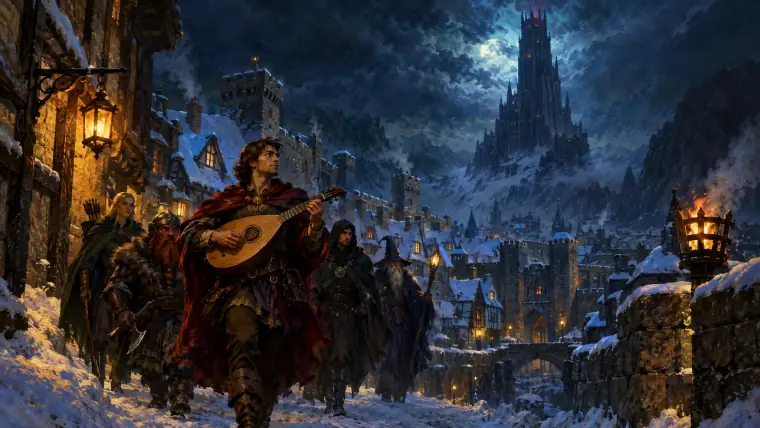
Wizardry was the first widely successful party-based computer RPG and the template for the first-person 'blobber'; its success sent players scrambling for Apple IIs and, through Japan, shaped Dragon Quest and the whole JRPG tradition.
Overview
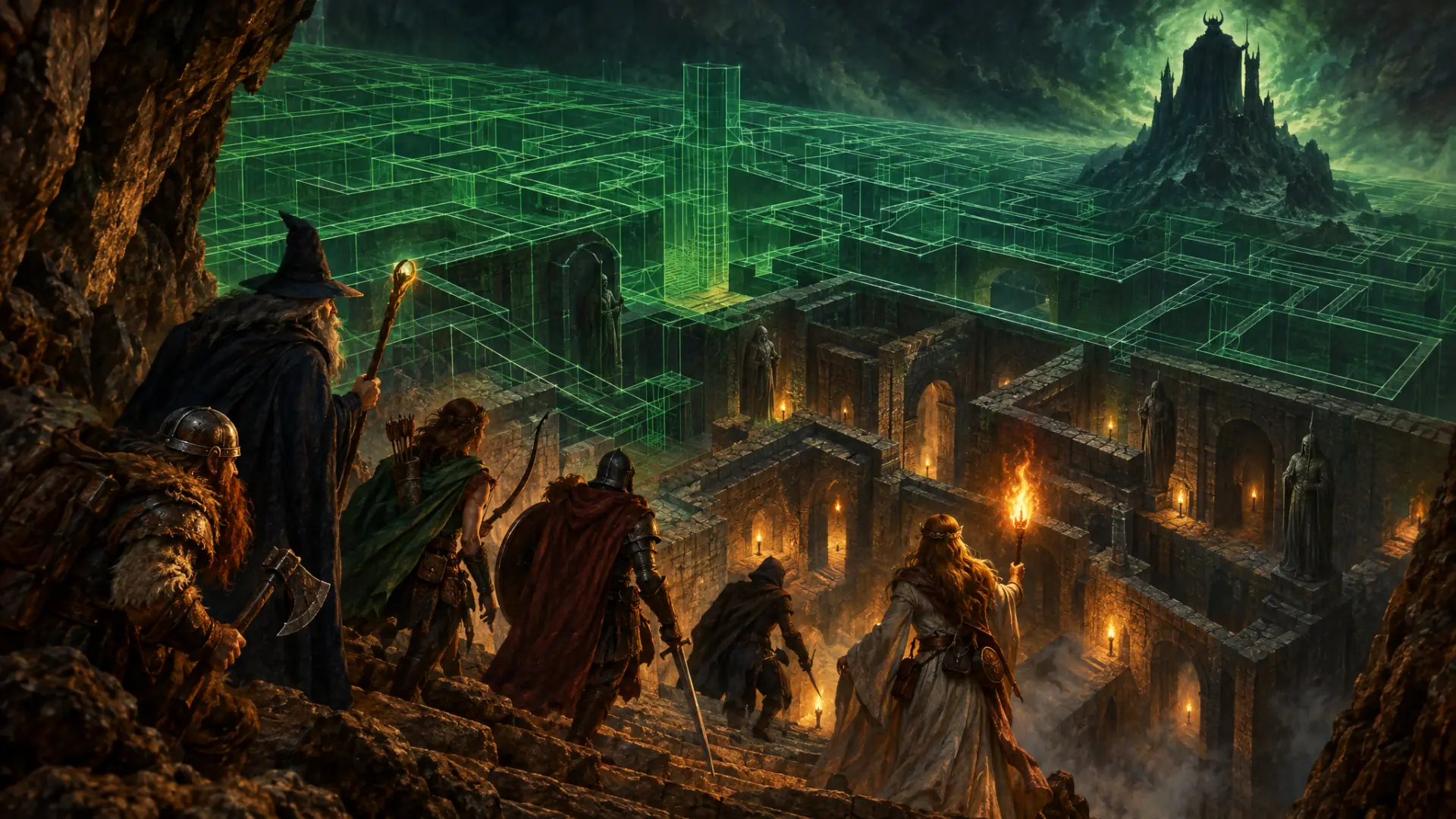
The town is a menu. The dungeon is a small square of green lines in a screen full of text. And yet Wizardry: Proving Grounds of the Mad Overlord, released by Sir-Tech Software for the Apple II in September 1981, was for many players the most absorbing game of its time. The mad overlord Trebor sends adventurers into the ten-level maze beneath his castle to recover an amulet stolen by the wizard Werdna. You create a The party of up to six, equip them, and descend. You map every step on graph paper. If everyone dies, a fresh party can go down to recover the bodies, if they can find them.
Designed by Andrew C. Greenberg and Robert Woodhead, Wizardry was the first widely successful party-based computer RPG and, with Ultima, one of the two pillars on which the Western computer RPG was built.
Origins
Greenberg began the project in 1978 as a student at Cornell University, and by the fall of 1979 an early version was popular among fellow students. Its most important model was Oubliette (1977), a first-person group dungeon game on the PLATO network, of which Woodhead was an alumnus. The first versions were written in Applesoft BASIC, which proved too slow; the pair rewrote it in Pascal and had to wait until early 1981 for a runtime system that let them publish it. By their count it took two and a half man-years.
Norman Sirotek formed Sir-Tech to publish it and demonstrated a beta at the 1980 Boston Computer Convention. The delay became an asset: nearly a year of playtesting and balancing set Wizardry apart from hastier contemporaries. Norman's father, Frederick Sirotek, the company's financier, insisted on professional packaging and documentation at a time when rivals sold games in Ziploc bags. The authors signed their work in the fiction: Werdna and Trebor are their names reversed, and their initials appear on the maps of the eighth and ninth floors.
How it plays
The party draws from five races (human, elf, dwarf, gnome, hobbit), three alignments (good, neutral, evil, with good and evil characters normally unable to adventure together) and four basic classes: fighter, priest, mage and thief. Four elite classes open to characters who qualify: bishop (both spell lists), samurai (fighter with mage spells), lord (fighter with priest spells) and ninja. Spellcasters draw on seven tiers of magic.
Below ground, about a tenth of the screen shows the corridor ahead in wireframe. Encounters replace it with a picture of the monster, and combat is menu-driven and turn-based against up to four groups. There is no automap, so the graph paper in the box was essential; dark squares and teleport traps punish the careless, and a mistyped teleport spell can bury the party in solid rock. You cannot save in the dungeon, and a total party kill is permanent unless a rescue party recovers the dead. Finishing can take hundreds of hours, and the reward is the right to export your veterans into the sequels.
Reception & impact
It shipped in September 1981 and almost immediately became the most popular Apple II game of the year: 24,000 copies by June 30, 1982, 200,000 in its first three years, and "well over 500,000" by 1989, according to Video Games & Computer Entertainment. The Space Gamer called it "certainly the best D&D-style computer game on the market," and Computer Gaming World, predicting classic status in 1982, later recalled that it sent fans of AD&D "scrambling to buy Apple IIs." In 1984 Softline readers named it the most popular Apple program of all time, and it led Computer Gaming World's reader poll for five years until Ultima IV displaced it.
Its influence was immediate. Richard Garriott credited it as the inspiration for the party combat of Ultima III. The Bard's Tale set out to improve on its presentation and let players import its characters, and the first-person party crawl it defined, later nicknamed the Blobber, runs through Might and Magic and Dungeon Master.
Legacy
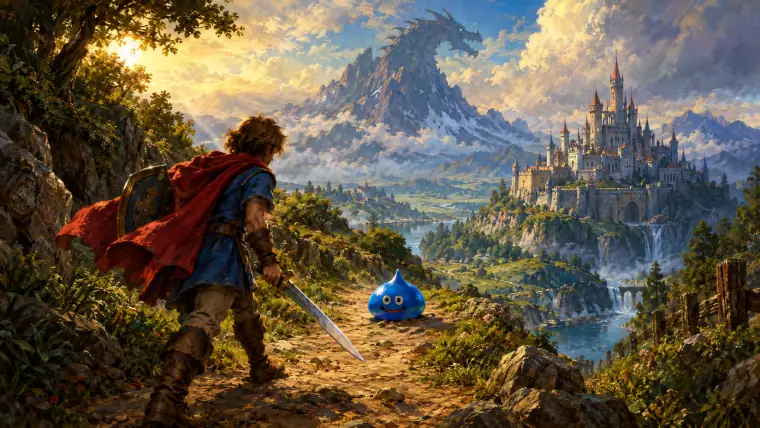
Wizardry became a series of eight main games over two decades, ending with Wizardry 8 in 2001. Its greatest second life was in Japan, where ports for the PC-88, PC-98 and other computers and a 1987 Famicom version made it a sensation. Henk Rogers, a friend of Woodhead's, created The Black Onyx (1984) in the same first-person party mold, and Yuji Horii and Koichi Nakamura, who encountered Wizardry at a Macworld Expo, combined its menu battles with Ultima's overhead world to make Dragon Quest (1986). Japanese studios kept producing Wizardry spin-offs long after the American line ended. In 2024 Digital Eclipse released a faithful 3D remake for PC and consoles.
Marginalia
- The villain Werdna and the mad overlord Trebor are the authors' first names, Andrew and Robert, spelled backwards.
- The box included graph paper, because there was no automap and the player had to chart every 20-by-20 level.
- Greenberg began it at Cornell in 1978; it was rewritten from Applesoft BASIC into Pascal after BASIC proved too slow.
- Sir-Tech showed a beta version at the 1980 Boston Computer Convention, then spent almost a year playtesting and balancing.
- It topped Computer Gaming World's reader poll for five years, until Ultima IV displaced it in 1986.
- Winning parties could be exported into the sequels, Knight of Diamonds (1982) and Legacy of Llylgamyn (1983).
- Yuji Horii and Koichi Nakamura discovered it at a Macworld Expo, a spark for Dragon Quest.
Quick answers
- When was Wizardry: Proving Grounds of the Mad Overlord first released?
- Wizardry: Proving Grounds of the Mad Overlord was first released in 1981 (Apple II).
- Who created Wizardry: Proving Grounds of the Mad Overlord?
- Wizardry: Proving Grounds of the Mad Overlord was made by Andrew C. Greenberg (co-designer & co-programmer) and Robert Woodhead (co-designer & co-programmer).
- Who published or developed Wizardry: Proving Grounds of the Mad Overlord?
- Sir-Tech Software.
- What kind of work is Wizardry: Proving Grounds of the Mad Overlord?
- Wizardry: Proving Grounds of the Mad Overlord is a dungeon crawler in the First-Person Dungeon Crawlers ('Blobbers') and Western Computer RPGs (CRPG) tradition, released for Apple II, IBM PC, Macintosh, Commodore 64/128, FM-7, PC-88, PC-98, Sharp X1, MSX2, NES / Famicom, TurboGrafx-CD, Super Famicom, Game Boy Color and WonderSwan Color.
- Why is Wizardry: Proving Grounds of the Mad Overlord important?
- Wizardry was the first widely successful party-based computer RPG and the template for the first-person 'blobber'; its success sent players scrambling for Apple IIs and, through Japan, shaped Dragon Quest and the whole JRPG tradition.