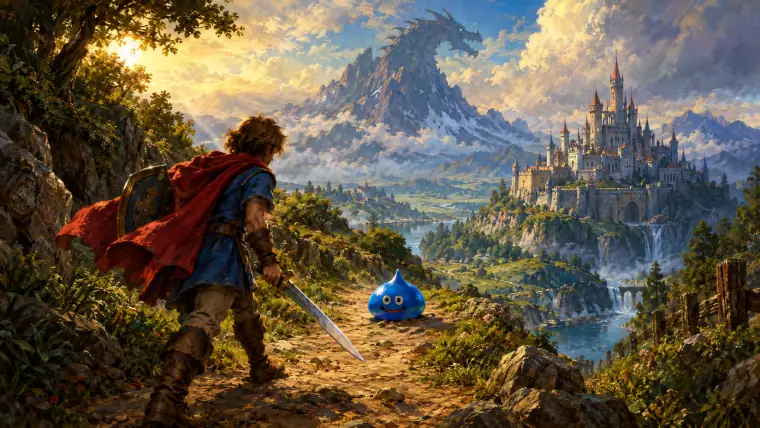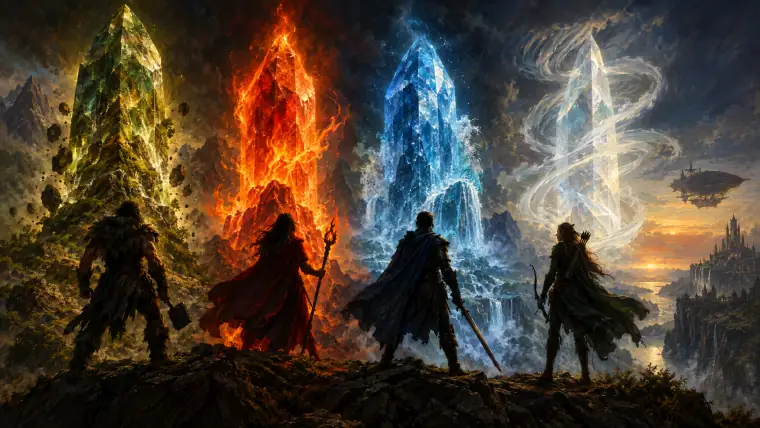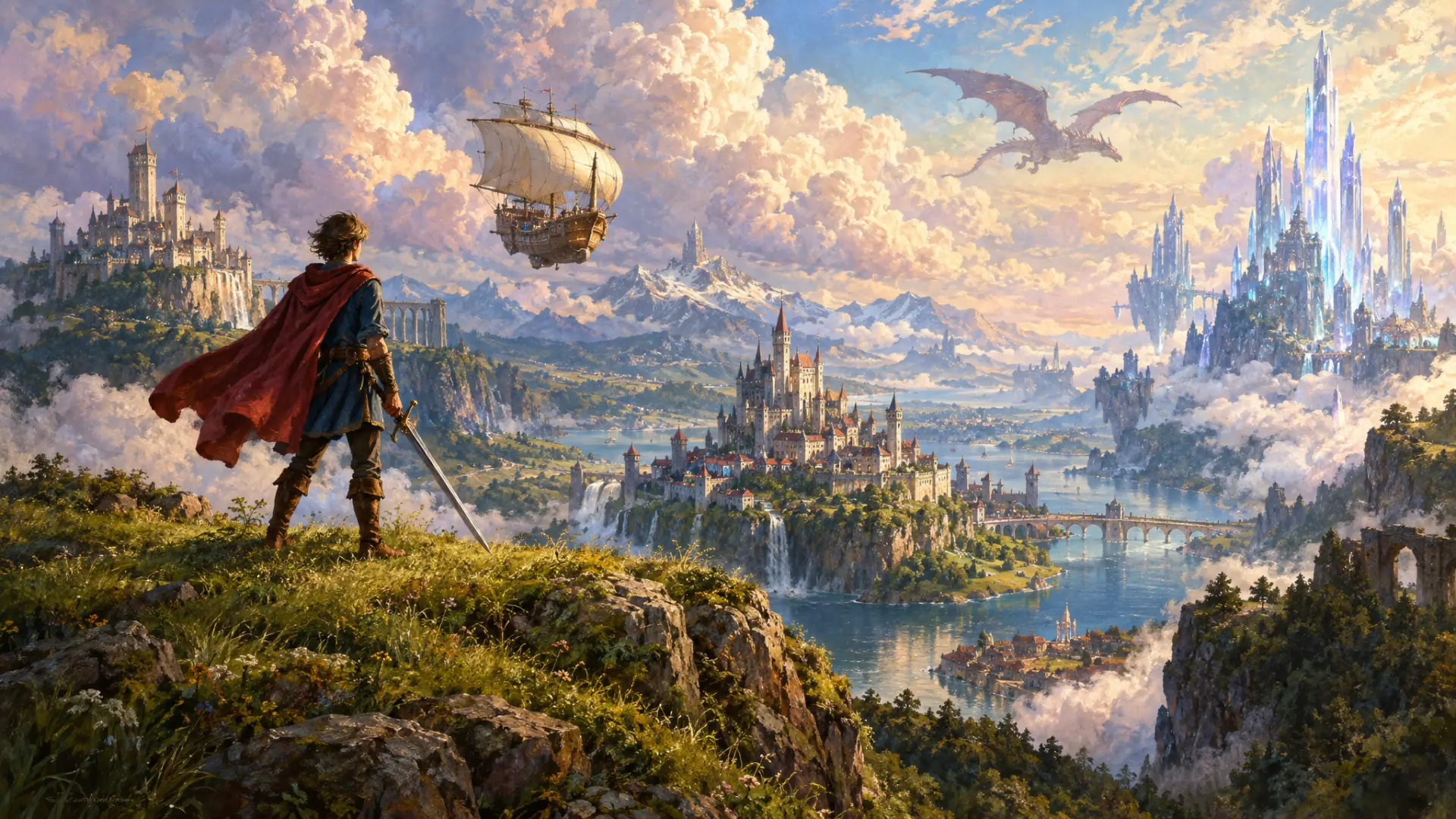
Phantasy Star broke the console RPG out of generic sword-and-sorcery with a science-fantasy setting, a female lead and predefined characters, and it was the first of the great Japanese RPGs released in the West.
Overview
Phantasy Star is a role-playing game developed and published by Sega for the Master System, released in Japan on December 20, 1987 — two days after Final Fantasy arrived on the rival Famicom — and in North America and Europe in November 1988. It follows Alis, a young woman whose brother Nero is killed by the forces of King Lassic, once-benevolent ruler of the Algol star system turned tyrant. Swearing revenge, she gathers a warrior, a wizard and a talking cat-like creature and travels among the three planets of Algol — green Palma, desert Motavia and frozen Dezoris — to bring Lassic down, and then faces the darker power behind him, Dark Falz.
It was one of the earliest Japanese console RPGs and, because Sega localized it before Dragon Quest or Final Fantasy reached the West, it introduced many Western players to the form.
Origins
By the late 1980s, many Japanese designers were drawing on Western RPGs such as Wizardry and Ultima, and Enix and Chunsoft's Dragon Quest series was a phenomenon on the Famicom. Around the release of Dragon Quest II in January 1987, Sega decided its Master System needed an RPG of its own; with a hardware market share around a tenth of Nintendo's, it could not count on outside developers to supply one. Designer Kotaro Hayashida, known for Alex Kidd in Miracle World, and programmer Yuji Naka, known for home conversions of arcade hits, assembled a small team.
That team included more women than was usual at the time: Rieko Kodama drew most of the art, Miki Morimoto handled playtesting and monster statistics, and Chieko Aoki wrote the original story and script. The group was influenced by Star Wars and its mix of Western and Japanese elements, and Kodama designed a world that fused medieval fantasy with science fiction. She went through about a dozen designs for Alis, seeking a heroine who was strong but feminine at a time when women in games were mostly damsels in distress. Kodama has said she pictured the thoughtful wizard Noah and the brawny Odin as a contrast like that between Raistlin and Caramon Majere in the Dragonlance novels.
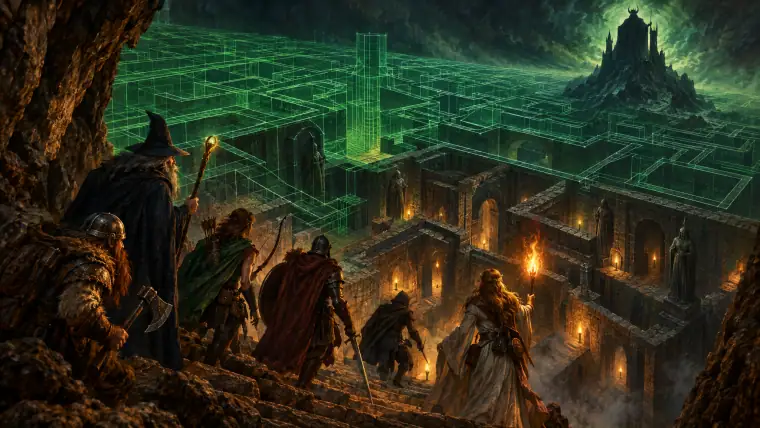
The signature feature was the dungeons. Inspired by Wizardry's first-person mazes, Naka wanted them full-screen and animated, something the Famicom could not do. Hand-drawn perspective frames took too much cartridge space, so he programmed true wireframe 3D corridors and gave the artists a tool to paint over them; making the four quadrants of the screen identical saved three-quarters of the memory. Even on a four-megabit cartridge — only the second Master System game to use one — space was tight: backgrounds were mirrored to save memory, and battery saves replaced a planned password system.
How it plays
Towns and the overworld are seen from above, while battles and dungeons switch to a first-person view. The dungeons are long and twisting — a close cousin of the dungeon crawler — and players were expected to map them on paper. Random encounters are fought through menus, with the option to talk to some monsters instead of fighting. Victory brings experience points and a treasure chest that may hold money or a trap; levels bring new spells and higher statistics.
Unlike games where the player creates characters, the party is fixed: Alis, the warrior Odin, the wizard Noah and Myau, the cat who can speak, each with set personalities and abilities. Instead of the usual airship, the team gave the party vehicles that plow through otherwise impassable terrain, and the animated monsters were among the most admired graphics of the 8-bit era.
Reception & impact
Critics praised its scale, visuals and atmosphere. Electronic Game Player called it a "visual tour-de-force," Computer Gaming World described it as a "big shot in the arm" for Sega, and Electronic Gaming Monthly gave it the Best Graphics award for 1988 in its Players' Choice Awards. The one frequent complaint was the price: the large chip, the save battery and an industry chip shortage made it the most expensive Master System game in every market. In Japan it was hard to find in stores, and Sega eventually issued a limited Mega Drive edition in 1994 in response to fan requests. Tec Toy released a Portuguese version in Brazil in 1991.
Legacy
Nintendo Power later credited Phantasy Star as the first RPG to break out of "the Dragon Quest / Dungeons & Dragons mold of generic Arthurian fantasy" by introducing science-fiction elements, and its predefined cast and female protagonist are counted among its most important innovations. It launched a Sega series and the careers of its makers: Kodama directed Phantasy Star IV: The End of the Millennium (1993) and produced Skies of Arcadia, Naka produced Phantasy Star Online (2000), and character designer Naoto Ohshima created Sonic the Hedgehog with Naka. Kodama's career makes the game a key exhibit on the tour of the women who built fantasy. A full remake, Phantasy Star Generation: 1, appeared on PlayStation 2 in Japan in 2003, and an M2 port with an automap arrived on Nintendo Switch in 2018.
Marginalia
- It came out in Japan on December 20, 1987 — two days after Final Fantasy — and reached the West in November 1988, ahead of both Dragon Quest and Final Fantasy.
- Programmer Yuji Naka built true wireframe 3D dungeons, then had artists paint over them; making each screen quadrant identical saved three-quarters of the memory.
- Rieko Kodama likened the contrast between the wizard Noah and the warrior Odin to Raistlin and Caramon Majere from Dragonlance.
- Its four-megabit cartridge and save battery made it the most expensive Master System game in every market.
- The name came from Naka's fondness for the song "Nagisa no Fantasy" by Noriko Sakai.
- Character designer Naoto Ohshima went on to create Sonic the Hedgehog with Naka.
Quick answers
- When was Phantasy Star first released?
- Phantasy Star was first released in 1987 (Master System, Japan); 1988 (North America & Europe).
- Who created Phantasy Star?
- Phantasy Star was made by Rieko Kodama (lead graphic designer).
- Who published or developed Phantasy Star?
- Sega.
- What kind of work is Phantasy Star?
- Phantasy Star is a Japanese RPG in the Japanese RPGs (JRPG) and First-Person Dungeon Crawlers ('Blobbers') tradition, released for Master System, Mega Drive (Japan, 1994), Sega Saturn (Japan), Game Boy Advance, PlayStation 2 (remake) and Nintendo Switch.
- Why is Phantasy Star important?
- Phantasy Star broke the console RPG out of generic sword-and-sorcery with a science-fantasy setting, a female lead and predefined characters, and it was the first of the great Japanese RPGs released in the West.