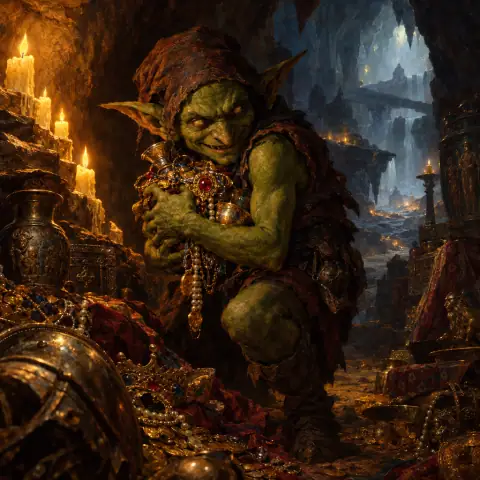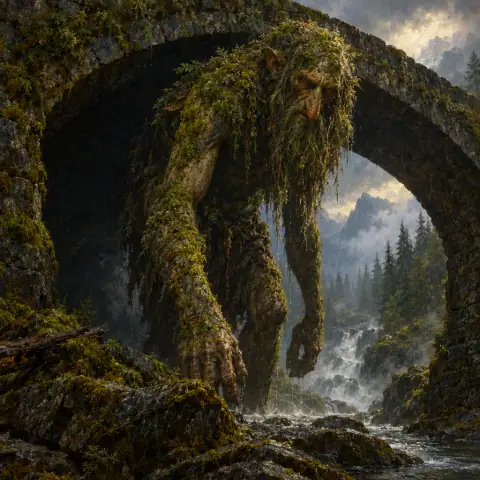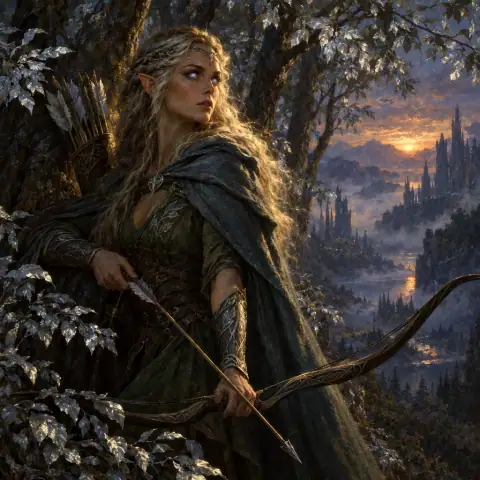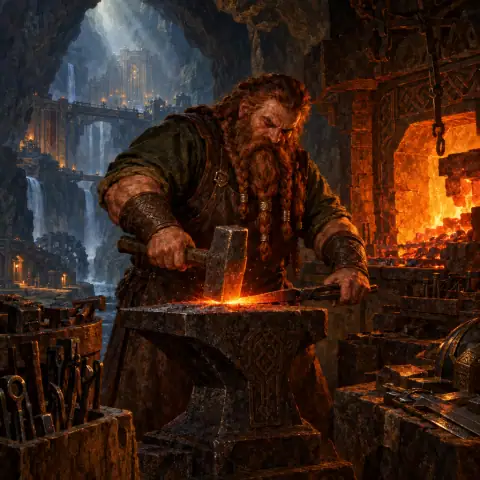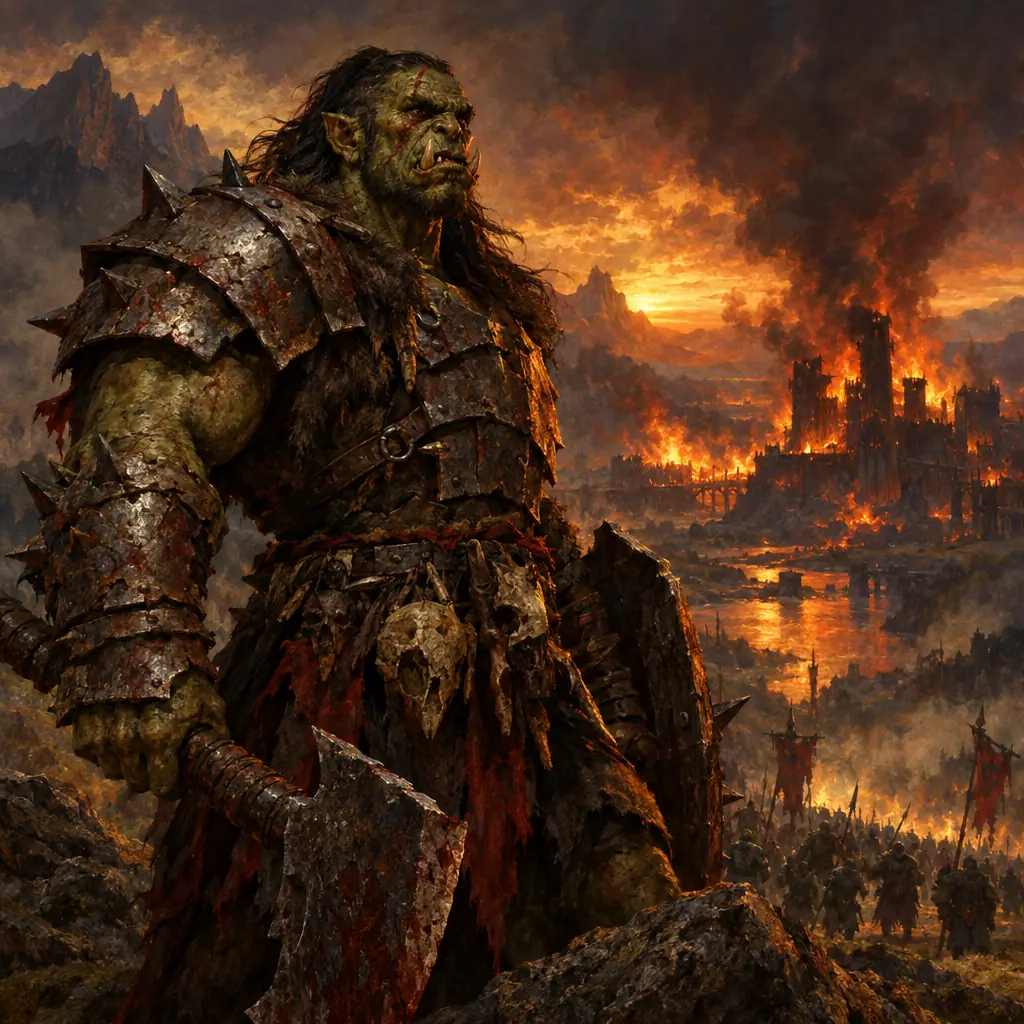
The orc is the purest example of a creature invented in literature and multiplied by games. Tolkien created the modern orc; wargames and RPGs made it fantasy's default enemy — and, lately, one of its most argued-over peoples.
Origins
Before Tolkien there were no orcs — only a word. Old English orc meant a demon or bogey, probably from Latin Orcus, the underworld; a tenth-century glossary renders orcus as "orc, þyrs, oððe hel-deofol," "orc, ogre or hell-devil." In Beowulf the plural compound orcneas appears once, in the list of monstrous races descended from Cain, alongside elves and giants; scholars read it as "demon-corpses," perhaps some walking dead.
J. R. R. Tolkien, who knew that line as well as anyone, took the word, he said, for its "phonetic suitability." In The Hobbit (1937) his underground raiders are mostly called goblins, and "orc" appears only once, plus in the name of Thorin's sword Orcrist, "Goblin-cleaver." He told the novelist Naomi Mitchison that these creatures owed something to the goblins of George MacDonald's The Princess and the Goblin. By The Lord of the Rings (1954–55) orcs are a people: squat, fanged, long-armed, sun-hating soldiers bred or corrupted by the Dark Lord, with a new breed, the Uruk-hai, strong enough to march in daylight, and half-orcs lurking at Bree and Isengard. Tolkien never settled their origin — corrupted elves, beasts in human shape, fallen spirits — and the question troubled him, because creatures who speak and scheme ought to have souls. Critics such as Tom Shippey have observed that the book needs them as enemies who can be killed without compunction; others have long noted their uncomfortable racial coding.
Into the dungeon
Wargamers fought Tolkien's battles with Tolkien's orcs in Chainmail's Fantasy Supplement (1971), and Dungeons & Dragons (1974) put orcs among its very first monsters, tribes of cave-dwelling raiders to be met in numbers. When Saul Zaentz's Tolkien Enterprises objected to TSR's borrowings in the late 1970s (see The Tolkien Rights Saga), hobbits and ents were renamed; orcs, a word Tolkien had inherited from Old English, stayed. The 1977 Monster Manual of Advanced Dungeons & Dragons gave them pig-snouted faces in David C. Sutherland III's drawing, a boar-tusked look that stuck, and the 1978 Player's Handbook offered the half-orc as a player character race.
British miniatures gave the orc much of its modern swagger. Games Workshop's Warhammer Fantasy Battle (1983) fielded boisterous, brawling Orcs & Goblins, and in Warhammer 40,000 the Orks became a space-going species. Blizzard's Warcraft: Orcs & Humans (November 1994), which began as an attempt at a Warhammer game, sent orcs through a dark portal to invade Azeroth; later games reframed them as honorable exiles, and in World of Warcraft (2004) orcs led the Horde as a playable race under the warchief Thrall. Bethesda made them a playable people from The Elder Scrolls III: Morrowind (2002). Monolith's Middle-earth: Shadow of Mordor (2014) returned to Tolkien's orcs and made them the stars, generating orc captains who remember, taunt and outgrow the player.
Variations
D&D's orcs gathered a pantheon under the one-eyed god Gruumsh, crossbreeds such as the orog, and gentler portrayals in the Eberron setting. Starting in the 1990s novelists from Mary Gentle to Stan Nicholls told stories from the orc's side, and the debate over "always evil" races grew until Wizards of the Coast rewrote its approach: the 2024 Player's Handbook for Dungeons & Dragons 5th Edition replaced the half-orc with the orc itself as a core player species. The Old English demon has become, in half a century, fantasy's most-fought monster and one of its most sympathetic heroes.
Migration
How the creature traveled from story to story.
- 1000BeowulfThe orcneas, perhaps 'demon-corpses,' are listed with elves and giants among the kin of Cain.
- 1937The HobbitTolkien's creatures are mostly 'goblins'; 'orc' appears once, and in the sword-name Orcrist, 'Goblin-cleaver.'
- 1954The Lord of the RingsOrcs become the Dark Lord's endless infantry, with the larger, sun-tolerant Uruk-hai.
- 1974Dungeons & DragonsOrcs are among the first monsters in the white box, tribal creatures of caves and villages.
- 1977AD&D Monster ManualDavid C. Sutherland III draws orcs with pig faces, a look that lasted for years.
- 1983Warhammer Fantasy BattleGames Workshop fields brawling Orcs & Goblins, a model for the loud, warlike orc of later games.
- 1994Warcraft: Orcs & HumansBlizzard's orcs arrive through a portal to invade Azeroth; a decade later they are a playable World of Warcraft race.
- 2024D&D Player's Handbook (2024)The orc replaces the half-orc as a core player species.
Marginalia
- A 10th-century Old English glossary translates Latin orcus as 'orc, þyrs, oððe hel-deofol' — 'orc, ogre or hell-devil.'
- Tolkien said he chose 'orc' for its 'phonetic suitability,' and told Naomi Mitchison his orcs owed something to George MacDonald's goblins.
- Unlike hobbits and ents, D&D's orcs survived the late-1970s Tolkien rights dispute unrenamed.
- Warcraft began as an attempt to adapt Warhammer; when no license came, Blizzard built its own orcs.
- Monolith's Middle-earth: Shadow of Mordor (2014) built its 'Nemesis System' around orc captains who remember the player.
- The Elder Scrolls made orcs a playable race from Morrowind (2002), with a nation of their own, Orsinium.
Quick answers
- Where does the Orc come from?
- Old English orc, 'demon' (Beowulf's orcneas); made a people by J. R. R. Tolkien (The Hobbit 1937, The Lord of the Rings 1954–55)
- When did the Orc first appear?
- c. 1000, in Beowulf.
- How did the Orc get into games?
- Key appearances: Dungeons & Dragons (1974), AD&D Monster Manual (1977), Warhammer Fantasy Battle (1983) and D&D Player's Handbook (2024) (2024).
- Why is the Orc significant?
- The orc is the purest example of a creature invented in literature and multiplied by games. Tolkien created the modern orc; wargames and RPGs made it fantasy's default enemy — and, lately, one of its most argued-over peoples.