MacDonald wrote the first great adult fantasy novel of the Victorian age and the goblins that Tolkien admitted borrowing. Through Lewis and Tolkien his dreamlike otherworlds sit at the root of modern fantasy.
I have never concealed the fact that I regarded him as my master; indeed I fancy I have never written a book in which I did not quote from him.
Life
George MacDonald was born on 10 December 1824 in Huntly, Aberdeenshire, the son of a farmer, and grew up among the granite and Calvinism of northeast Scotland — two forces he spent a lifetime softening. He studied chemistry and physics at King's College, Aberdeen, and then trained for the Congregational ministry in London. In 1850 he became minister of Trinity Congregational Church in Arundel, Sussex, but his sermons, which dwelt on God's universal love and hinted that even the wicked might finally be redeemed, alarmed his deacons. His stipend was cut in half, and in 1853 he resigned.
After a spell of ministerial work in Manchester, cut short by poor health, he left the ministry and lived instead by lecturing, editing and writing — more than fifty books, most of them realist novels of Scottish life that were popular in their day and are little read now. In 1851 he had married Louisa Powell; they had eleven children, and the family was often poor, often ill with the tuberculosis that killed several of the children, and famously hospitable. They staged an adaptation of The Pilgrim's Progress as a family theater troupe. MacDonald befriended John Ruskin and Lewis Carroll, lectured across the United States in 1872–73, and from 1879 spent his winters in Bordighera on the Italian Riviera, where the family's house, Casa Coraggio, hosted readings and plays. He died at Ashtead, Surrey, on 18 September 1905.
Work
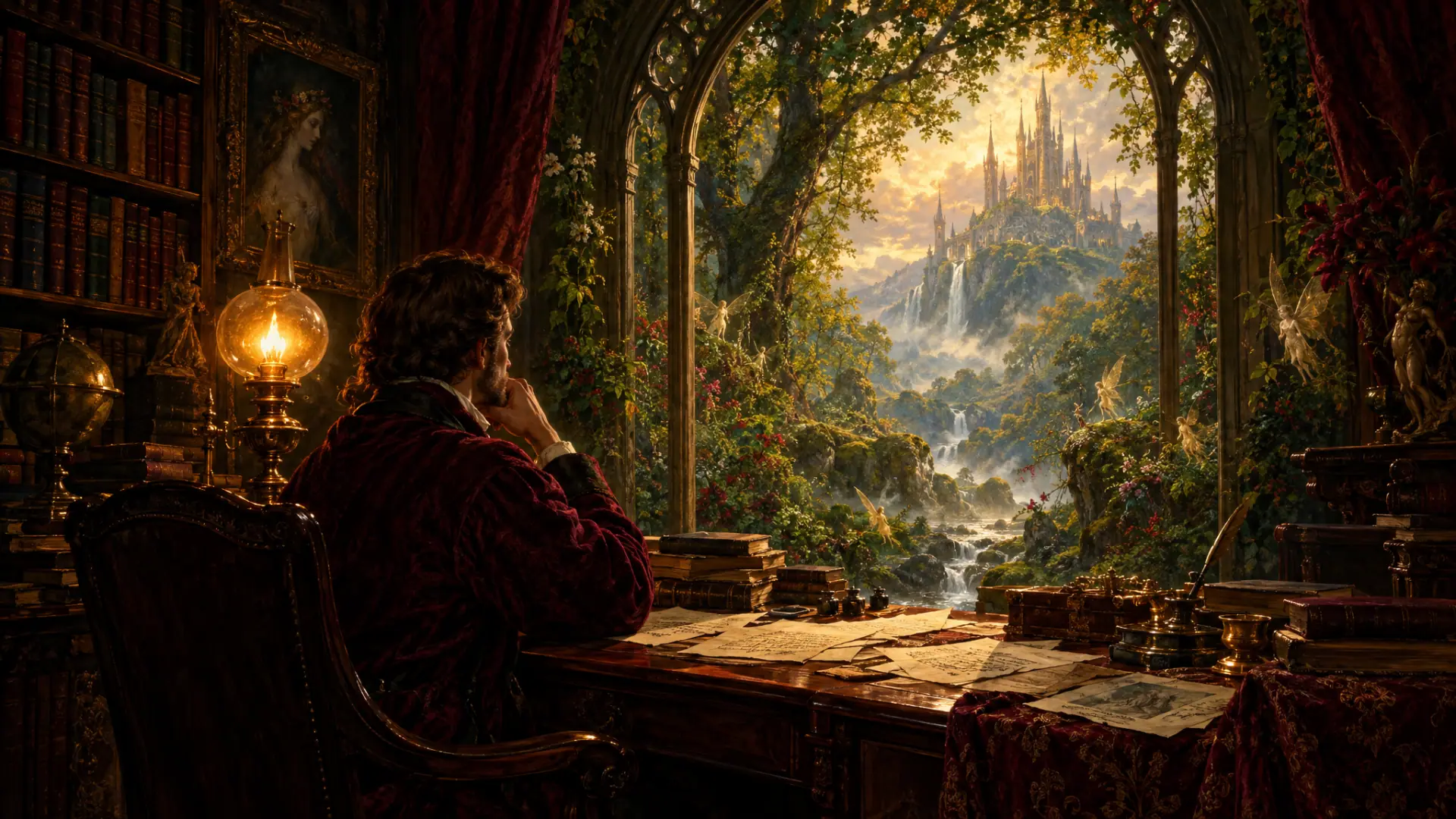
MacDonald's reputation now rests on a handful of fantasies that nobody else in his century could have written. Phantastes (1858), subtitled "A Faerie Romance for Men and Women," follows a young man named Anodos who wakes to find his bedroom turning into a forest and wanders through Fairy Land, pursued by his own shadow. It is dreamlike rather than plotted, and that was the point: MacDonald believed that the fairy tale could reach truths that argument could not.
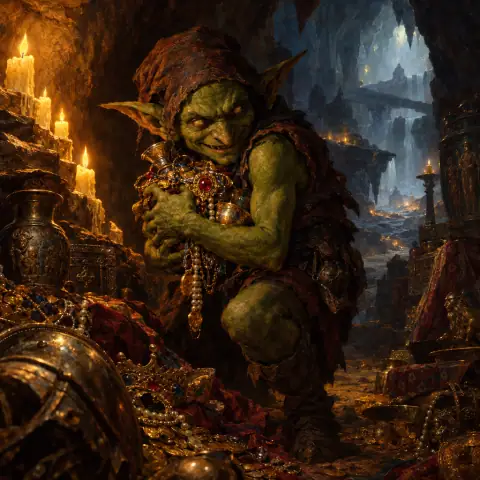
For children he wrote At the Back of the North Wind (serialized 1868–71), The Princess and the Goblin (1872) and its darker sequel The Princess and Curdie (1883), and short tales such as "The Light Princess" and "The Golden Key." The Princess and the Goblin set a subterranean race of goblins, grotesque and resentful, beneath a mountain kingdom, and gave its heroes a magic thread to guide them through the tunnels — a fairy-tale dungeon crawl half a century before the term existed. Late in life he produced Lilith (1895), a strange, dark adult fantasy of death and redemption. His essay "The Fantastic Imagination" is one of the first serious defenses of the form.
Legacy
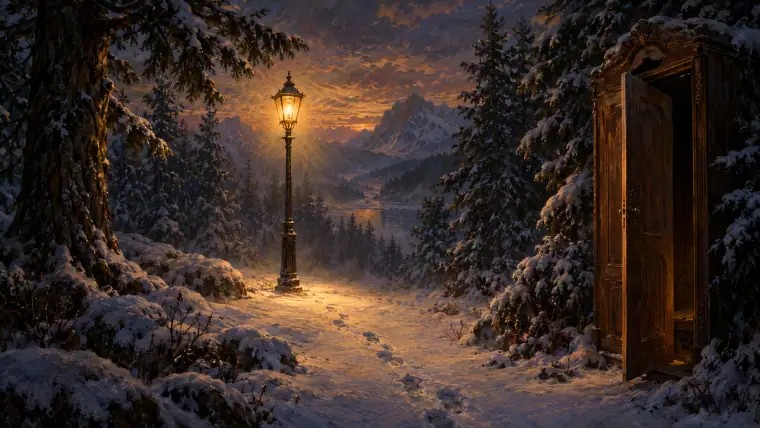
MacDonald is the hinge between the fairy tales of the Grimms and the invented worlds of the twentieth century. Lewis Carroll was a family friend: he read the manuscript of Alice to the MacDonald children, and their enthusiasm helped convince him to publish. C. S. Lewis picked up Phantastes at a railway bookstall in 1916 and wrote in Surprised by Joy that it had baptized his imagination; he made MacDonald his guide through the afterlife in The Great Divorce and edited an anthology of his writings. The doors and wardrobes of The Chronicles of Narnia descend from Anodos's bedroom.
J. R. R. Tolkien was more ambivalent about MacDonald's preaching, but he acknowledged in a letter that his orcs owed "a good deal to the goblin tradition," especially as it appears in George MacDonald. That is a direct line to games. The Goblin of Tolkien's The Hobbit — a sullen underground race, hostile to the folk above — became the goblin of Dungeons & Dragons and of virtually every Dungeon crawl that followed. MacDonald is not on Gygax's Appendix N, and no rule traces to him by name, but the shape of the monster in the tunnels under the mountain begins in his books. G. K. Chesterton, W. H. Auden and Madeleine L'Engle all counted him an influence, and Fairy-Tale Fantasy and Children's & YA Fantasy as we know them owe him their conviction that wonder can carry moral weight.
Marginalia
- MacDonald's liberal preaching at Trinity Congregational Church in Arundel was so unpopular that his stipend was halved; he resigned in 1853.
- Lewis Carroll tried out the manuscript of Alice on MacDonald's children, and their delight helped persuade him to publish it.
- C. S. Lewis bought a copy of Phantastes at a railway station in 1916 and later said it had baptized his imagination.
- Tolkien wrote that his orcs owed a good deal to the goblin tradition as it appears in George MacDonald's The Princess and the Goblin.
- He and his wife Louisa had eleven children, and the family toured Britain performing an adaptation of The Pilgrim's Progress.
- From 1879 he wintered in Bordighera on the Italian Riviera, where his house Casa Coraggio became a cultural center.
Quick answers
- Who was George MacDonald?
- The Scottish minister-turned-fantasist whose Phantastes and goblin-haunted mountains taught C. S. Lewis, Tolkien and Lewis Carroll what a fairy tale for grown-ups could be.
- When was George MacDonald born?
- George MacDonald was born in 1824 in Huntly, Aberdeenshire, Scotland and died in 1905.
- What is George MacDonald known for?
- George MacDonald is best known for Phantastes.
- Why does George MacDonald matter to fantasy and games?
- MacDonald wrote the first great adult fantasy novel of the Victorian age and the goblins that Tolkien admitted borrowing. Through Lewis and Tolkien his dreamlike otherworlds sit at the root of modern fantasy.