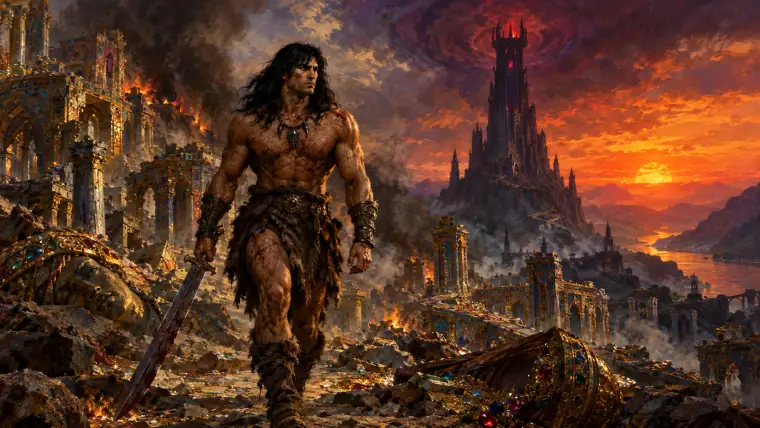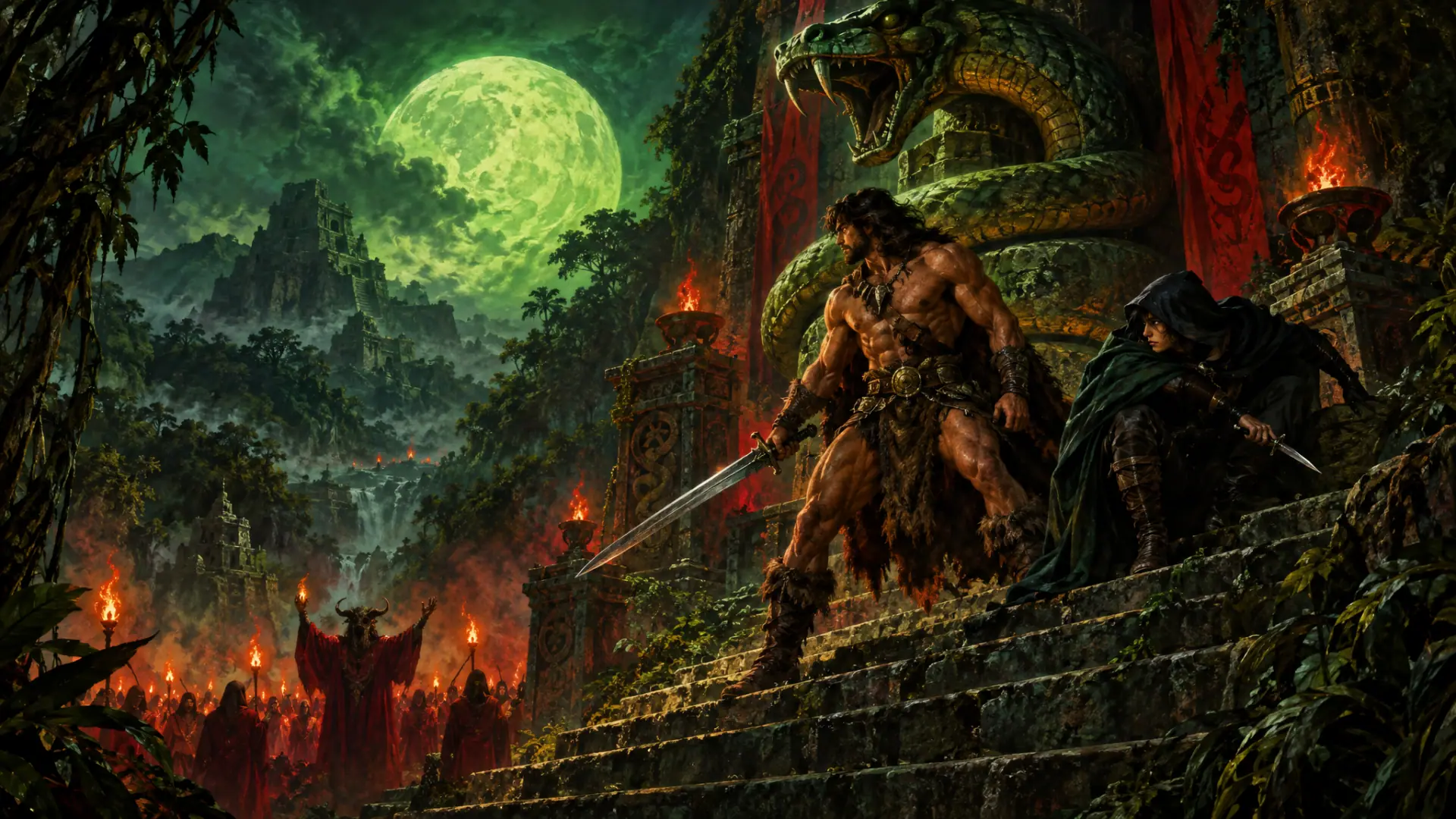
Weird Tales was the proving ground for weird fiction and the birthplace of sword-and-sorcery. Lovecraft's mythos, Howard's Conan and Clark Ashton Smith's dying worlds all passed from its pages into tabletop and computer games.
What happened
In late 1922 two Chicago publishers, J. C. Henneberger and J. M. Lansinger, launched a pulp devoted to a single kind of story: the uncanny. The first issue of Weird Tales, dated March 1923, carried the subtitle "The Unique Magazine," and for once the boast was accurate. Detective, western and romance pulps crowded the newsstands; nobody else was printing only horror and the fantastic.
The start was rocky. Under first editor Edwin Baird the magazine ran up a debt of more than $40,000 in about a year, and one famous stunt — a story by the escape artist Harry Houdini, actually ghost-written by H. P. Lovecraft — could not save its finances. Henneberger reorganized, and in late 1924 Farnsworth Wright became editor. Wright, who ran Weird Tales until 1940 despite suffering from Parkinson's disease, was the magazine's great curator. He could be maddening (he turned down some of Lovecraft's best work, including At the Mountains of Madness), but he built a stable of writers unlike any other.
Lovecraft had debuted with "Dagon" in October 1923; in February 1928 Wright published "The Call of Cthulhu," the story that gave the Cthulhu Mythos its name. Lovecraft's friends and correspondents followed him into print: Clark Ashton Smith, whose jeweled tales of Hyperborea, Averoigne and Zothique set the tone for Dying Earth fantasy; Robert Bloch; and a Texan named Robert E. Howard. Howard's first professional sale, "Spear and Fang," ran in July 1925. In August 1929 came "The Shadow Kingdom," the first Kull story and a strong candidate for the first true Sword & Sorcery tale. In December 1932 Howard rewrote an unsold Kull story into "The Phoenix on the Sword" and introduced Conan. Conan stories ran in Weird Tales into late 1936, months after Howard's death that June.
In November 1933 the magazine published "Shambleau," the first sale by C. L. Moore; in October 1934 her "Black God's Kiss" introduced Jirel of Joiry, the first major sword-and-sorcery heroine. Seabury Quinn's occult detective Jules de Grandin made him the most prolific contributor and, for a time, the most popular. The covers, especially Margaret Brundage's pastel nudes of the mid-1930s, made the magazine notorious.
The Depression hit hard: a 1930 bank failure froze most of its cash and it switched to a bimonthly schedule in 1931. In 1938 the company was sold to William J. Delaney and moved to New York, and in 1940 Dorothy McIlwraith replaced Wright. Under her the magazine printed early work by Ray Bradbury, but the pulp era was ending. The last issue of the original run was dated September 1954.
Why it mattered
Weird Tales gave Weird Fiction a home and a readership, and in doing so made a community. Lovecraft, Howard and Smith read each other in its pages and wrote to each other constantly, borrowing gods and place-names; the shared mythology that resulted is the ancestor of every shared-world franchise. Robert Weinberg called it "the most important and influential of all fantasy magazines."
It also created a genre. Howard's Kull and Conan, Smith's decadent sorcerers and Moore's Jirel established the template of Sword & Sorcery: a lone, physical hero, a decadent ancient world, sorcery that is always dangerous. That template was revived in the 1960s paperback boom (see The Ballantine Adult Fantasy Series, which reprinted Smith and Lovecraft), picked up by Fritz Leiber and Michael Moorcock, and painted by Frank Frazetta.
Legacy
The line from Weird Tales to games is direct. Gary Gygax listed Howard and Lovecraft among his inspirations in Appendix N of the Dungeon Masters Guide; the barbarian, the cursed jewel, the forbidden temple and the tentacled horror are all Weird Tales furniture. Chaosium's Call of Cthulhu (1981) turned Lovecraft's stories into a full roleplaying game, and the tentacled, star-born horrors of countless later games descend from the same pages. Conan went on to comics, paperbacks and John Milius's 1982 film.
The title itself refused to die. Revivals came in 1973 (four issues), as Lin Carter's paperback anthologies in the early 1980s, and from 1988 through a long-running run begun by Terminus Publishing, with another relaunch in 2019. None matched the original, but all traded on the same promise printed on that first 1923 cover: something no other magazine would give you.
Marginalia
- Founded in Chicago by J. C. Henneberger and J. M. Lansinger, the first issue was dated March 1923 and reached newsstands in February.
- After thirteen issues under editor Edwin Baird the magazine was more than $40,000 in debt; Farnsworth Wright took over in late 1924 and edited it until 1940.
- H. P. Lovecraft ghost-wrote "Imprisoned with the Pharaohs" for the escape artist Harry Houdini, published under Houdini's name in 1924.
- Robert E. Howard's first Kull story, "The Shadow Kingdom," appeared in August 1929; Conan followed in "The Phoenix on the Sword," December 1932.
- Margaret Brundage was the magazine's only cover artist from June 1933 into 1936, famous for her pastel-chalk nudes.
- The original run ended with the September 1954 issue, the 279th.
Quick answers
- What was Weird Tales?
- "The Unique Magazine": a cheap Chicago pulp that gave the world Cthulhu, Conan and Jirel of Joiry, and invented sword-and-sorcery between lurid covers.
- When did Weird Tales happen?
- 1923 – 1954 (original run); revived repeatedly since.
- Why did Weird Tales matter?
- Weird Tales was the proving ground for weird fiction and the birthplace of sword-and-sorcery. Lovecraft's mythos, Howard's Conan and Clark Ashton Smith's dying worlds all passed from its pages into tabletop and computer games.