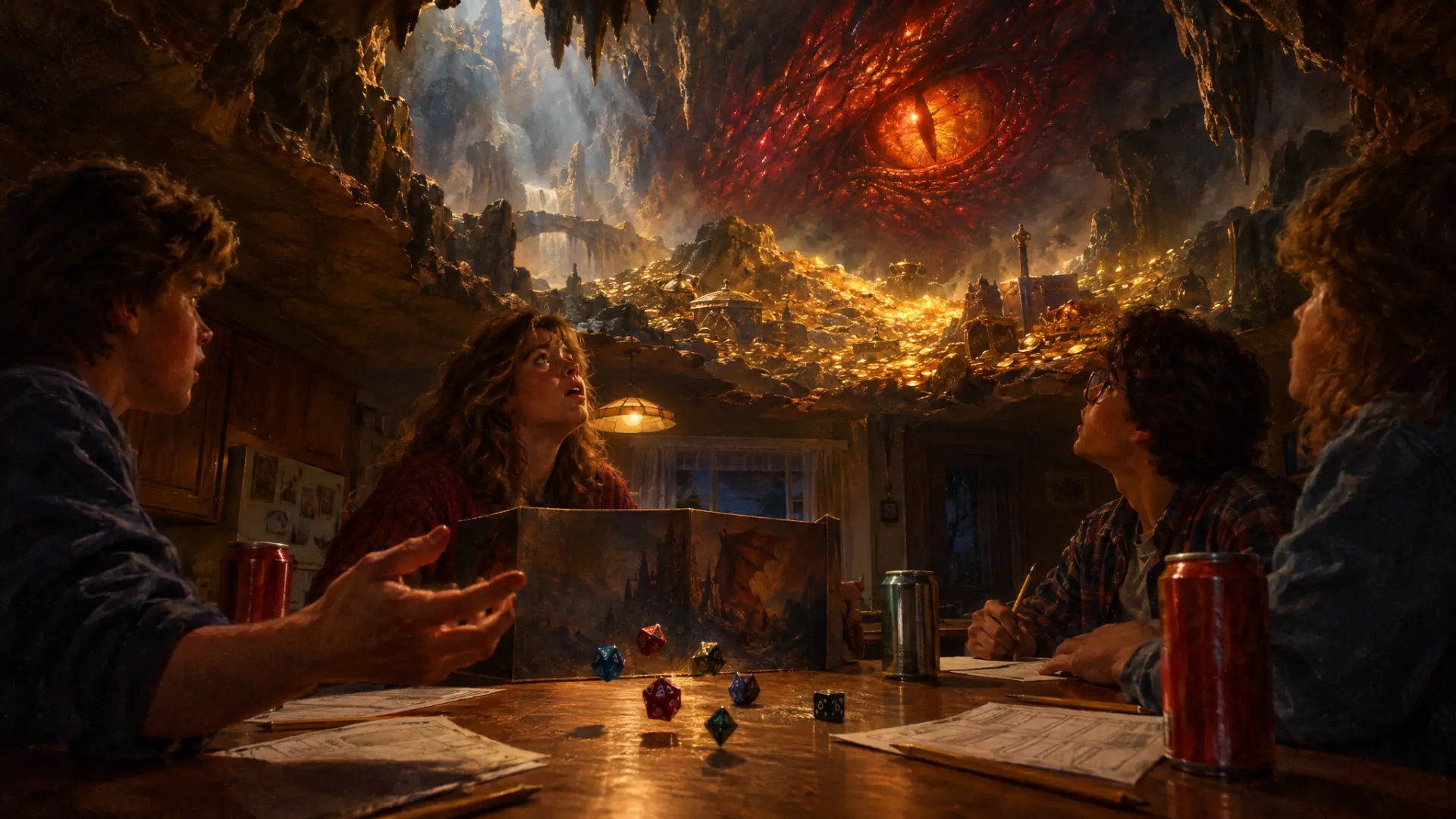
Dragon was the connective tissue of the tabletop hobby before the internet: a monthly forum where designers tested ideas, fans became professionals, and material later canonized in official rulebooks first saw print.
What happened
In 1975, a year after it published Dungeons & Dragons, TSR began a house magazine called The Strategic Review. Roleplaying was then still thought of as a branch of wargaming, and the newsletter covered both, carrying rules clarifications, new ideas for D&D and articles on TSR's other games. It lasted seven issues. Its most consequential article was probably Gary Gygax's 1976 piece "The Meaning of Law and Chaos in Dungeons and Dragons and Their Relationships to Good and Evil," which added a second axis to the game's Alignment system and set up the nine-alignment grid of later editions.
By then it was obvious that D&D had outgrown its wargame parent. In 1976 TSR split the magazine in two: Little Wars for miniatures, which lasted twelve issues before being folded into its sibling, and The Dragon, for roleplaying and fantasy. Gygax hired Tim Kask as editor, and the first issue appeared in June 1976. Years later Gygax admitted he had never contemplated "so great a success or so long a lifespan."
Why it mattered
Before bulletin boards and forums, Dragon was where the hobby talked to itself. Each issue offered new character classes, spells, magic items and monsters, much of which was later absorbed into official rulebooks. It was a proving ground for designers and a bridge for fans: Ed Greenwood, a Canadian contributor, introduced the Forgotten Realms through a run of 1980s articles before TSR made his world its flagship setting in 1987. The long-running "Sage Advice" column delivered official answers to rules questions, a job later inherited by designers such as Jeremy Crawford. "The Ecology of..." articles, initially framed in the voice of the Realms sage Elminster, examined monsters as if they were real animals.
The magazine was also a showcase for art and humor. Dave Trampier's comic Wormy, Larry Elmore's SnarfQuest, What's New with Phil & Dixie and later Knights of the Dinner Table and The Order of the Stick ran in its pages, and in the early 1980s many issues included a complete bonus game; Tom Wham's Snit's Revenge and The Awful Green Things from Outer Space both began as Dragon inserts. Fantasy fiction and book reviews ran for years. The magazine even reviewed the CBS film of Mazes and Monsters, one of the artifacts of the Satanic Panic & D&D.
Critics sometimes found it too much of a TSR house organ; a 1980 review in the fanzine Abyss complained about its advertising and juvenile articles while conceding its quality. The industry disagreed: Dragon won Origins Awards as best roleplaying or gaming magazine repeatedly from 1984 to 1995 (see Origins Game Fair).
Legacy
The title passed through the hands of each D&D owner. Wizards of the Coast bought TSR in 1997 and moved production from Wisconsin to Washington state. In 2002 Paizo, a company founded by Wizards veterans, took over both Dragon and its adventure-publishing sibling Dungeon under license, printing them until Wizards declined to renew in 2007. The last print issue, #359, was dated September 2007. The loss of the magazines was one reason Paizo turned to its own adventure paths and, in 2009, to the Pathfinder Roleplaying Game.
Wizards continued Dragon online for fourth-edition subscribers until issue #430 in December 2013, then launched the free app magazine Dragon+ in 2015; it ended in 2022. A 1999 CD-ROM, the Dragon Magazine Archive, collected the first 250 issues and all seven Strategic Reviews, but went out of print over rights to its comics.
Across nearly four decades the magazine chronicled the hobby it helped build, and a remarkable number of its contributors went on to become the hobby's professional designers, novelists and artists.
Marginalia
- TSR launched The Strategic Review in 1975; after seven issues it was replaced in 1976 by two magazines, Little Wars for miniatures and The Dragon for roleplaying.
- The Dragon #1 appeared in June 1976 under editor Tim Kask, hired by Gary Gygax for the job; Kask edited issues 1–34.
- Gygax's 1976 Strategic Review article "The Meaning of Law and Chaos" added the good–evil axis to D&D Alignment.
- Ed Greenwood introduced the Forgotten Realms to readers through a series of Dragon articles in the 1980s, years before the 1987 campaign set.
- The cover title became simply Dragon in July 1980 and Dragon Magazine in November 1987.
- Paizo published the magazine under license from September 2002; its last print issue, #359, was dated September 2007.
- The online Dragon ran to issue #430 in December 2013; its app-based successor, Dragon+, ran 41 issues from 2015 to 2022.
Quick answers
- What was The Strategic Review & Dragon?
- TSR's house newsletter The Strategic Review became The Dragon in June 1976, and for 359 print issues it was where D&D players found new classes, monsters, rules answers and the first glimpses of the Forgotten Realms.
- When did The Strategic Review & Dragon happen?
- 1975 – 2013 (print to 2007); Dragon+ 2015 – 2022.
- Why did The Strategic Review & Dragon matter?
- Dragon was the connective tissue of the tabletop hobby before the internet: a monthly forum where designers tested ideas, fans became professionals, and material later canonized in official rulebooks first saw print.