Final Fantasy took the Western RPG formula that Dragon Quest had brought to the Famicom and added a player-built party of classes, elemental weaknesses and cinematic ambition, launching a series that did more than any other to popularize the Japanese RPG worldwide.
Overview
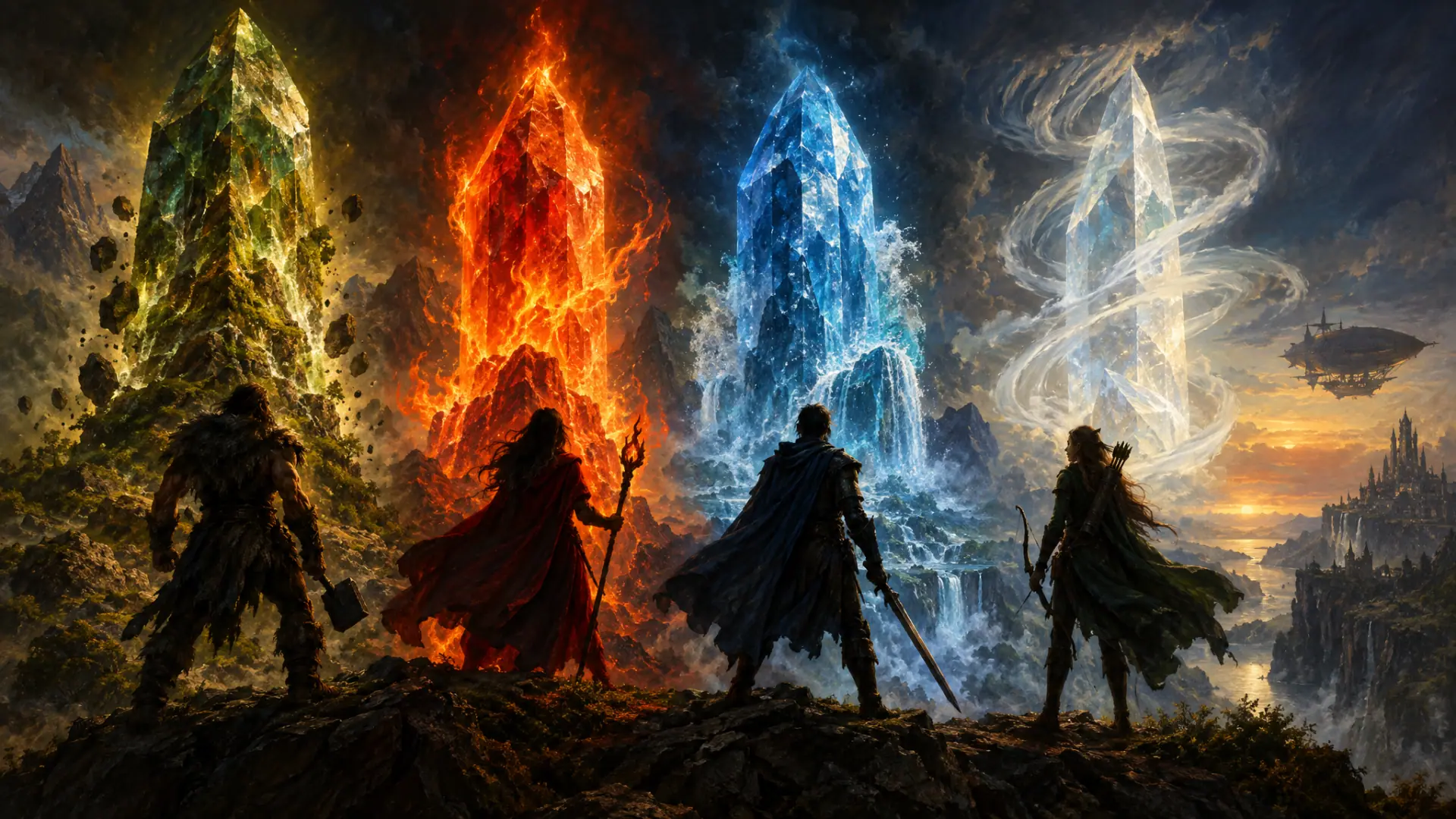
Final Fantasy is the role-playing game Square released for the Famicom in Japan on December 18, 1987, and the first entry in what became one of the best-known series in video games. Four youths called the Warriors of Light arrive carrying four darkened crystals — earth, fire, water and wind — and set out to defeat the four Elemental Fiends who have drained them, and finally the demon Chaos behind them all. Created and directed by Hironobu Sakaguchi, with character art by Yoshitaka Amano and music by Nobuo Uematsu, it was localized for the NES by Nintendo of America and released in North America in July 1990. Europe did not get it until Final Fantasy Origins in 2003.
Origins
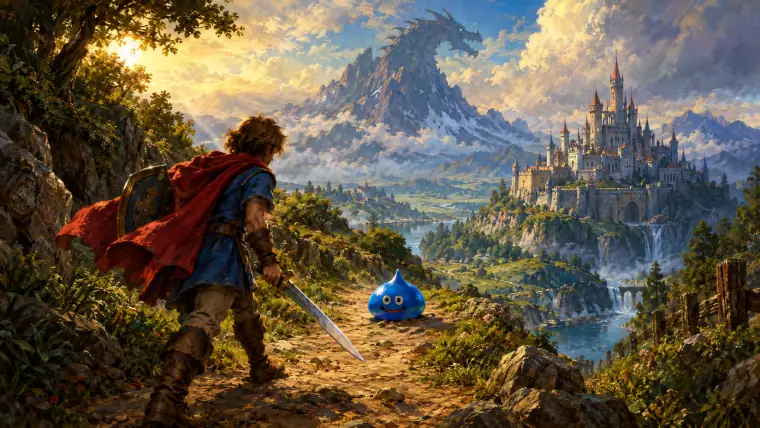
Sakaguchi had long wanted to make a role-playing game, but Square's management expected such a game to sell poorly. That changed when Enix and Chunsoft's Dragon Quest became a hit in 1986. Dragon Quest itself was Yuji Horii's attempt to translate Western computer RPGs for a console audience: Horii had played Wizardry and Ultima, and took Wizardry's first-person random battles and Ultima's overhead map as models. Square now approved Sakaguchi's own RPG, likewise inspired by Ultima and Wizardry, making Final Fantasy a second-generation product of the same Western line.
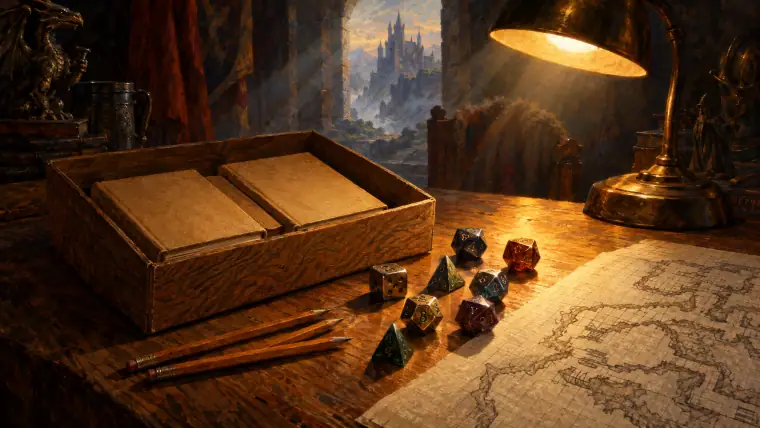
The team was small — seven core staff remembered as the "A-Team" — because Sakaguchi had a reputation as a rough boss. Koichi Ishii contributed the idea of the crystals and suggested Amano, whose magazine illustrations Sakaguchi had admired without knowing whose they were. Akitoshi Kawazu built the battle system, basing it heavily on the tabletop Dungeons & Dragons and on Wizardry; elemental weaknesses to fire and ice, standard in Western games, had not appeared in Japanese RPGs before. Kawazu also insisted that players choose their own party's classes, because he felt the fun of an RPG began with creating characters. Kenji Terada wrote the scenario from Sakaguchi's story, and Nasir Gebelli, the Iranian-American programmer known for Apple II games, coded it — adding what is often called the first RPG minigame, a sliding puzzle, on his own initiative.
The title has attracted legends. The working name was Fighting Fantasy, abandoned to avoid a clash with the Fighting Fantasy gamebooks. Uematsu has said that "final" reflected Sakaguchi's intention to quit games if it failed, and Square's shaky finances; Sakaguchi later downplayed this, saying the team mainly wanted a title abbreviated "FF" and that any word starting with F would have done.
How it plays
Players begin by forming a party of four from six character classes — Fighter, Thief, Black Belt, Red Mage, White Mage and Black Mage — and are locked into that choice for the whole game. Late in the adventure a quest lets each hero "class up" into a stronger form, such as Fighter to Knight. Exploration moves between an overworld map, towns and dungeons; travel expands from walking to a ship, a canoe and finally an airship.
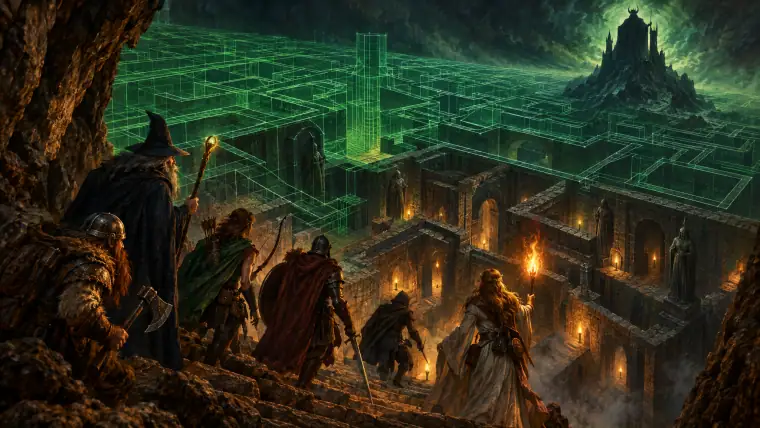
Enemies attack in random encounters, fought through menus in turn-based combat, with the party lined up on the right of the screen facing monsters on the left — a side view that the series kept for years. Victory earns experience points and gil. Magic is bought in shops and has a distinctly tabletop, Vancian flavor: spells are ranked in eight levels, each with four white and four black spells, a character may learn only three spells per level, and casting draws on charges for each spell level rather than a single pool of magic points. White magic heals and protects; black magic destroys. The four Fiends — Lich, Kary, Kraken and Tiamat — draw on the bestiary of D&D and myth, and the story closes with a time loop in which the knight Garland, defeated at the very start, has become Chaos 2,000 years in the past.
Reception & impact
The Famicom version shipped 520,000 copies in Japan after Sakaguchi persuaded management to raise the initial run, and the NES version sold about 700,000 in North America. By March 2003 all versions together had shipped 1.99 million copies. Famitsu initially called it "one of many" imitators of the Dragon Quest formula, but it soon stood apart for its graphics and ambition. Writing in Computer Gaming World, Roe R. Adams III recommended it for people who had never played a computer RPG. Later critics have faulted the Grinding it demands while crediting it with popularizing the genre; GamesRadar summarized that Dragon Warrior introduced players to console RPGs, but Final Fantasy popularized them.
Legacy
The success allowed Square to keep making sequels, and each numbered entry reinvented setting and systems while keeping crystals, airships, and Uematsu's "Prelude" and victory fanfare. Square's line grew to include Secret of Mana, the 16-bit epic Final Fantasy VI, Chrono Trigger and the global breakthrough Final Fantasy VII. The original was remade many times, from the MSX2 in 1989 to the 2021 Pixel Remaster, and its hero and villain returned in Square Enix's Dissidia fighting games. Together with Dragon Quest, it defined the template of the Japanese RPG: a party, a world map, random battles and a story told in grand strokes.
Marginalia
- Released in Japan on December 18, 1987, it reached North America in July 1990, published by Nintendo.
- Its working title was Fighting Fantasy, dropped to avoid a clash with the British gamebook series of that name.
- Battle designer Akitoshi Kawazu based the combat heavily on Dungeons & Dragons and Wizardry, bringing Western-style elemental weaknesses to Japanese RPGs.
- Three of the four Elemental Fiends — Lich, Kraken and Tiamat — are names familiar from Dungeons & Dragons and myth.
- Square planned 200,000 copies; Sakaguchi argued for 400,000, and the Famicom version ultimately shipped 520,000 in Japan.
- The Iranian-American programmer Nasir Gebelli, famous for Apple II games, coded it.
- Its "Prelude" arpeggio and victory fanfare by Nobuo Uematsu became fixtures of the whole series.
Quick answers
- When was Final Fantasy first released?
- Final Fantasy was first released in 1987 (Famicom, Japan); 1990 (NES, North America).
- Who created Final Fantasy?
- Final Fantasy was made by Hironobu Sakaguchi (director & creator; story), Yoshitaka Amano (character & image design) and Nobuo Uematsu (composer).
- Who published or developed Final Fantasy?
- Square / Square Enix and Nintendo.
- What kind of work is Final Fantasy?
- Final Fantasy is a Japanese RPG in the Japanese RPGs (JRPG) tradition, released for Famicom / NES, MSX2, WonderSwan Color, PlayStation, Game Boy Advance, PlayStation Portable, Mobile, Windows and Nintendo Switch.
- Why is Final Fantasy important?
- Final Fantasy took the Western RPG formula that Dragon Quest had brought to the Famicom and added a player-built party of classes, elemental weaknesses and cinematic ambition, launching a series that did more than any other to popularize the Japanese RPG worldwide.