Dragon Quest translated the Western computer RPG of Wizardry and Ultima into a simple, story-led console game, created the template for the Japanese RPG, and became one of Japan's best-loved entertainment franchises.
Overview
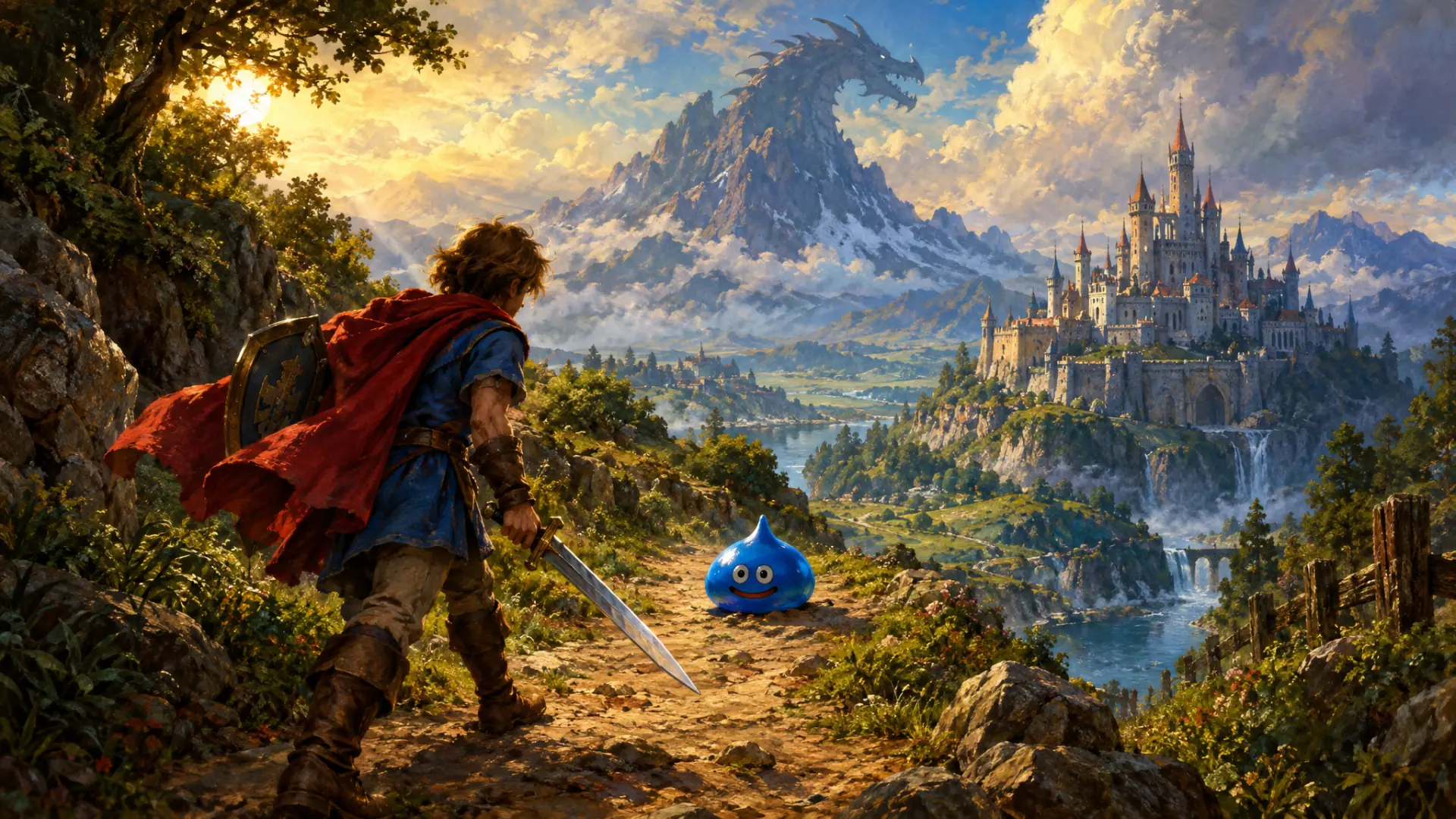
Long ago the warrior Erdrick drove darkness from the kingdom of Alefgard and gave King Lorik the Ball of Light. Now the Dragonlord has stolen it, monsters roam the land, and Princess Gwaelin has been carried off. A young descendant of Erdrick stands in the throne room of Tantegel Castle, and across the water, visible from the very first step, looms the Dragonlord's castle. Dragon Quest, created by Yuji Horii, developed by Chunsoft and published by Enix for Nintendo's Famicom on May 27, 1986, is the game that made the Japanese console RPG. It stripped the computer role-playing game to its essentials, wrapped it in Akira Toriyama's manga art and Koichi Sugiyama's orchestral-minded music, and taught millions of players who had never touched a PC what an RPG was.
Origins
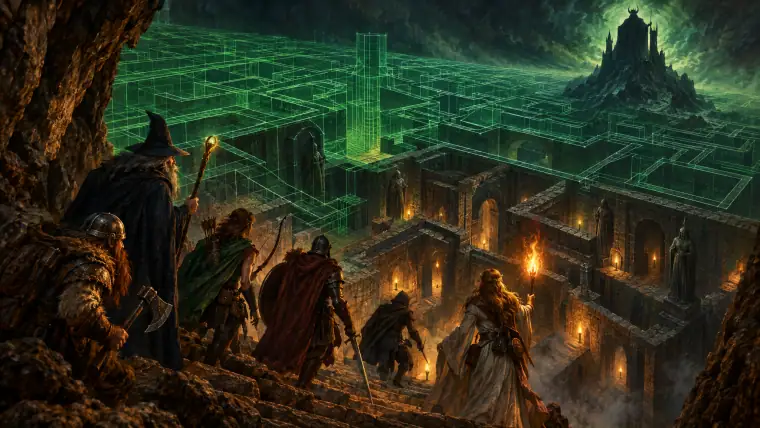
Horii, a freelance writer for Weekly Shonen Jump, had been the top winner of the new publisher Enix's game-programming contest and then written the detective adventure The Portopia Serial Murder Case (1983), whose menu-driven command system and focus on dialogue carried directly into Dragon Quest. While porting Portopia to the Famicom, he and Chunsoft programmer Koichi Nakamura came across Wizardry at a Macworld Expo. Horii loved its depth, and he was also playing the Ultima games. Japanese computer owners already had homegrown RPGs such as The Black Onyx and Dragon Slayer, but the genre remained a hobby for enthusiasts. After Super Mario Bros. showed how huge the Famicom audience could be, Horii set out to make an RPG anyone could play, one that required no knowledge of Dungeons & Dragons, no keyboard and no hundreds of hours of grinding.
He took Wizardry's first-person, menu-based battles and Ultima's overhead world map, and simplified both. Memory limits forced a single hero rather than the party Horii wanted. He designed early levels to come quickly, made the goal visible from the start, and used bridges to signal rising danger. Losing a battle sends the hero back to the king with half his gold, not to a game-over screen. To reach a mass audience, Enix hired Toriyama, creator of Dragon Ball, whose cheerful monsters, above all the grinning blue Slime, became icons. Sugiyama, a well-known television and pop composer who had contacted Enix through a questionnaire in one of its games, wrote a classical-style score whose themes survive, barely changed, throughout the series.
How it plays
The hero explores the overworld, towns and caves, talks to everyone for clues, and fights monsters that appear at random, one at a time, in a first-person view with four commands: Fight, Run, Spell and Item. Victory brings experience and gold, levels raise hit points, magic points and strength and unlock spells, and gold buys better weapons, armor and keys. Caves require torches or the Radiant spell. The world is almost entirely open; only the monsters, which grow deadlier with distance from Tantegel, hold the player back. The Japanese version records progress with long passwords; the North American release saves to a battery-backed cartridge.
Its famous final choice has become lore: the Dragonlord offers to share his rule with the hero if he will join him, and the player may accept.
Reception & impact
Initial sales were so weak that Enix expected to lose money, until Horii's articles in Shonen Jump built excitement. The original version went on to sell 1.5 million copies in Japan, and with its sequels Dragon Quest became a national phenomenon, sometimes called Japan's national game. Its template, with menu battles, towns and inns, and a hero growing stronger through a coming-of-age journey, was adopted by rivals, notably Square's Final Fantasy (1987).
North America received it in August 1989 as Dragon Warrior, localized by Nintendo of America with a battery save, enlarged sprites and faux-Elizabethan dialogue; the title changed because Simulations Publications owned the tabletop RPG trademark DragonQuest. Sales disappointed until Nintendo, in 1990, sent free copies with a strategy handbook to Nintendo Power subscribers, a promotion that drew nearly 500,000 new subscriptions and opened the way for the sequels in the West. The original sold about 500,000 copies in the United States.
Legacy
Dragon Quest has been remade repeatedly: for the Super Famicom with its sequel in 1993, which sold 1.2 million copies in Japan; for the Game Boy Color in 1999; for mobile phones, the Nintendo Switch and PlayStation 4; and as an HD-2D remake released on October 30, 2025. Its trilogy with Dragon Quest II and III established the legend of Erdrick, known in Japan as Loto. The series made Horii a household name in Japan and set the terms of the Japanese RPG for decades, as this museum's The Japanese Line: Console RPGs chapter traces.
Marginalia
- Yuji Horii and programmer Koichi Nakamura discovered Wizardry at a Macworld Expo; Horii combined its first-person battles with Ultima's overhead map.
- It was renamed Dragon Warrior in North America to avoid SPI's tabletop RPG DragonQuest.
- The name you enter for the hero determines his starting statistics and growth.
- Koichi Sugiyama, already a noted TV and pop composer, contacted Enix after answering a questionnaire in one of its PC games.
- Sugiyama said the famous overture took him five minutes to compose.
- Sales were so slow at first that Enix feared a loss; Horii's articles in Weekly Shonen Jump turned it around.
- In 1990 Nintendo gave copies to Nintendo Power subscribers, attracting nearly 500,000 new subscriptions.
Quick answers
- When was Dragon Quest first released?
- Dragon Quest was first released in 1986 (Famicom, Japan); 1989 (NES, North America).
- Who created Dragon Quest?
- Dragon Quest was made by Yuji Horii (creator, designer & scenario writer), Akira Toriyama (character and monster design) and Koichi Sugiyama (composer).
- Who published or developed Dragon Quest?
- Enix and Nintendo.
- What kind of work is Dragon Quest?
- Dragon Quest is a Japanese RPG in the Japanese RPGs (JRPG) tradition, released for Famicom / NES, MSX, MSX2, PC-9801, Super Famicom, Game Boy Color, Mobile, Nintendo Switch, PlayStation 4 and Windows, Switch, Switch 2, PS5, Xbox Series (2025 HD-2D remake).
- Why is Dragon Quest important?
- Dragon Quest translated the Western computer RPG of Wizardry and Ultima into a simple, story-led console game, created the template for the Japanese RPG, and became one of Japan's best-loved entertainment franchises.