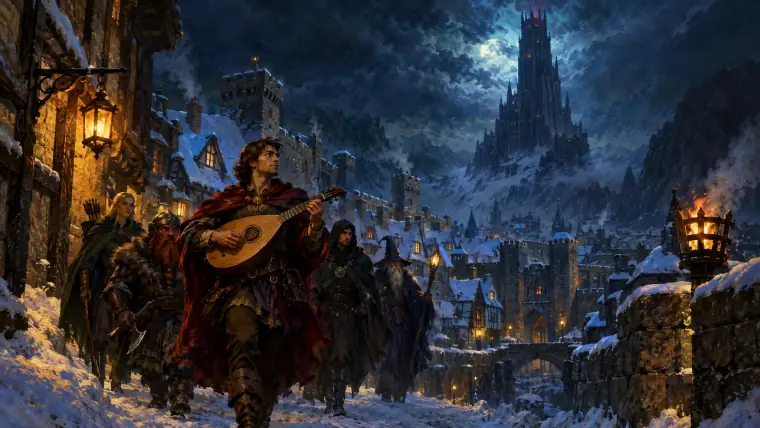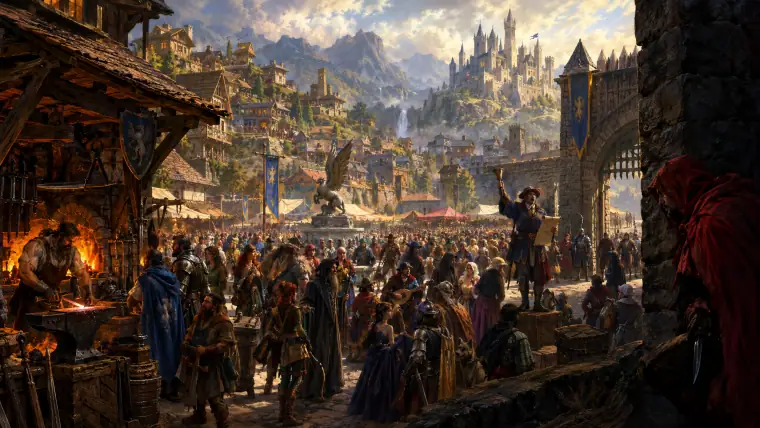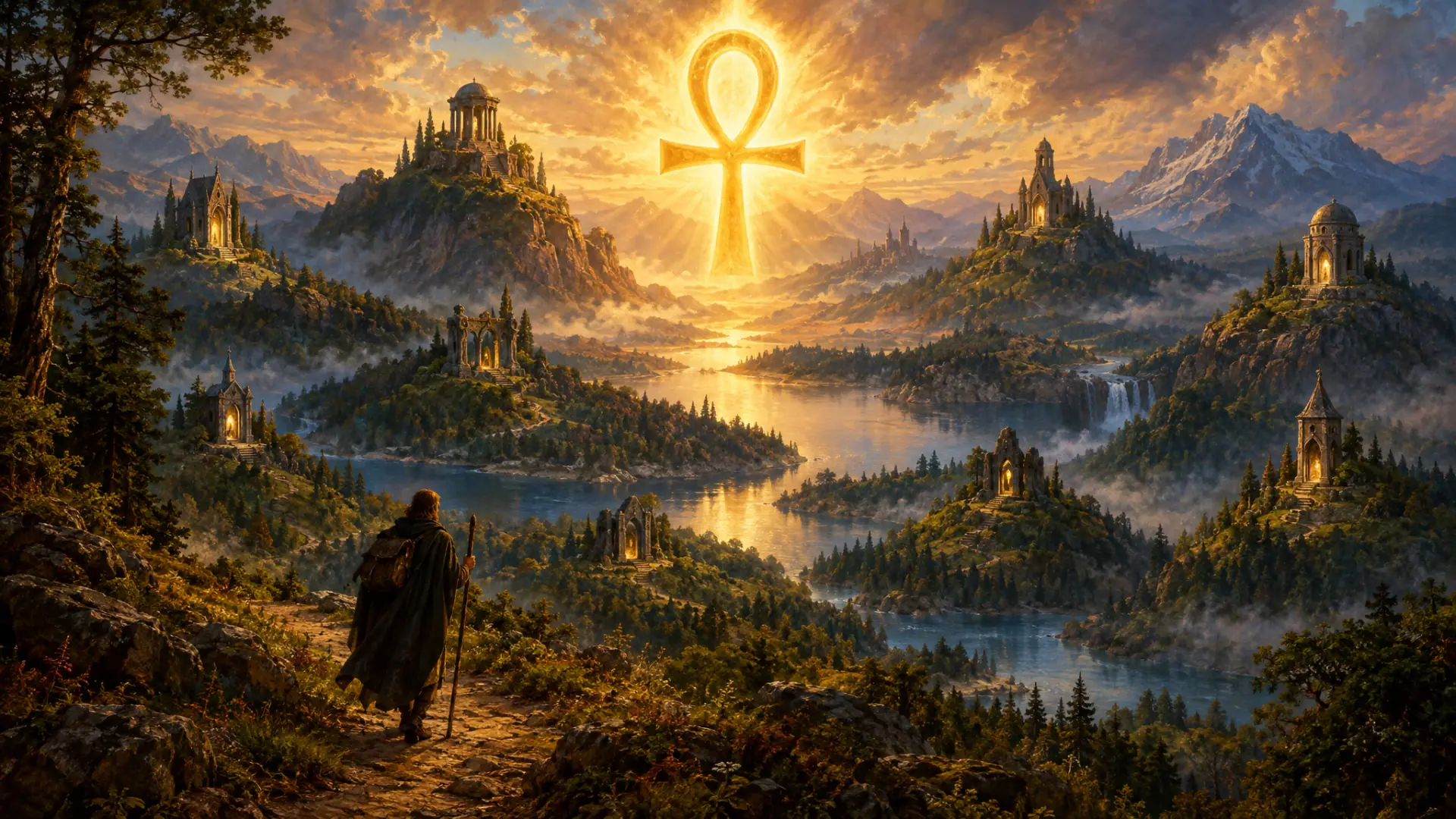
Ultima IV was the first major computer RPG built around the player's own ethics instead of a villain, and it popularized 'avatar' as the word for a player's self in a virtual world. It reset the genre's ambitions for story and meaning.
Overview
For the first three Ultima games, the formula was the formula of nearly every computer RPG of the early 1980s: grow strong, find the evil wizard, kill him. Mondain, Minax and Exodus had all fallen that way. Ultima IV: Quest of the Avatar, released by Origin Systems for the Apple II on September 16, 1985, removed the villain entirely. Sosaria has been reshaped and renamed Britannia, peace reigns under Lord British, and the king's worry is spiritual rather than military: the land needs an example to follow. The player's task is to become that example, the Avatar, by embodying eight virtues and then descending into the Stygian Abyss to reach the Codex of Ultimate Wisdom.
It is among the most studied games of its era, and for many players who grew up in the 1980s it remains the moment computer games first seemed to have something to say.
Origins
Richard Garriott later explained that he had received almost no player mail for his earlier games, because his publishers, California Pacific and Sierra On-Line, never forwarded it. Once his own company shipped Ultima III in 1983, the letters arrived, and some were from parents alarmed by what their children were doing on screen. The demonic figure on the Ultima III box had drawn protests from religious critics during the years of the Satanic Panic, and Garriott realized that in his own games stealing from shops and killing peaceful townsfolk were not merely possible but useful. His response was not to retreat but to engage: if people were going to look for meaning in his work, he would give them some worth thinking about.
The ideas came from several directions. A television documentary on religion, and a program describing the avatars of Hindu tradition as figures who must master many virtues, gave him both a structure and a word. He reduced the list to eight virtues built from three principles, Truth, Love and Courage, a trio he recognized in The Wizard of Oz, whose travelers each lack one of them. The ankh, chosen as the sign of the Avatar's path, came from the film Logan's Run. Garriott wanted players to feel that they, not an invented hero, had been transported into Britannia, so he removed non-human races and treated the character as the player's own self; he applied the Sanskrit-derived word "avatar" to that on-screen self, a usage the game did much to popularize. (The PLATO game Avatar had used the name six years earlier.)
Development took about two years, twice as long as either of the previous two games. Roe R. Adams III contributed writing, Kenneth W. Arnold composed the music, and Denis Loubet painted the cover. Garriott still wrote most of the core code himself on the Apple II, calling in help for music and faster disk routines; the game needed a 64K machine and filled two floppy disks. Playtesting was rushed to make the Christmas season, and Garriott said he was the only person who had completed the game when it went out the door.
How it plays
Ultima IV begins not with a stat screen but with a fortune-teller. A gypsy lays out cards and poses dilemmas, each forcing a choice between two virtues: honor or compassion, sacrifice or justice. There is no correct answer; whichever virtue ranks highest determines your class. Compassion makes a bard, Honor a paladin, Sacrifice a tinker, Humility a shepherd.
The eight moral axes that follow are wired into the game's systems:
- Honesty (Truth): blind merchants let you name your own price, and shortchanging them costs you.
- Compassion (Love): give to beggars.
- Valor (Courage): do not flee from battle.
- Justice (Truth and Love): do not attack creatures that are not evil, and let fleeing foes go.
- Sacrifice (Love and Courage): donate blood at a healer; critic Scorpia reported that this was the virtue her readers struggled with most.
- Honor (Truth and Courage): seek out sacred quests and dungeons.
- Spirituality (all three): meditate at the shrines.
- Humility (none; the root of all): answer boasting questions modestly.
Each virtue has a town, a shrine, a rune, a mantra and a companion who embodies it: Iolo the bard in Britain, Dupre the paladin in Trinsic, Shamino the ranger in Skara Brae, and five more, all of whom can join a The party of up to eight. The seer Hawkwind at Castle Britannia reports on your progress, or warns that you have "strayed far from the path of the Avatar." Meditating at a shrine while chanting its mantra three times grants partial and finally full enlightenment. The game watches constantly; a single boast or a stolen chest can undo hours of patient goodness.
It was also a technical leap from Ultima III. The overworld is sixteen times larger, and the world can be crossed on foot, on horseback, by ship or by balloon, with moongates that open with the phases of Britannia's twin moons. For the first time in the series, conversation is keyword-driven: you ask townsfolk about their name, job and health, then about any word they mention, which lets quests sprawl across cities as rumors lead to other rumors. Dungeons gained hand-designed puzzle rooms. It is an open world in the fullest sense: almost everything can be done in any order. Near the end Garriott deliberately tempts players to overthink, including an encounter with apparent children who are revealed as disguised monsters; one playtester threatened to quit over it, but Garriott kept it.
The box
Ultima IV is also remembered for what came in it. Following the tradition Garriott had begun when he insisted on boxing Ultima II, the package held a cloth map of Britannia, a metal ankh pendant that many players wore on a chain, a player reference card, and two illustrated books: The History of Britannia and The Book of Mystic Wisdom, which explained the virtues, spells and reagents. Spellcasting required mixing reagents in the combinations the book described, so the feelies were both atmosphere and a key to play. After victory, players could originally write to Origin for a certificate of completion.
Reception & impact
Ultima IV topped Billboard's software best-seller list in February and March 1986, sold more than 100,000 copies in the United States by August 1986, and passed 400,000 worldwide by May 1989. Scorpia of Computer Gaming World called it "an incredible game" and later observed that for the first time a CRPG's focus was character development rather than kill counts. It was the game that finally unseated Wizardry at the top of that magazine's reader poll, which named it game of the year for 1986; Dragon magazine's reviewers were similarly lavish. In 1996 Computer Gaming World ranked it the second-best game of all time.
Not everyone followed its lead. Dave Arneson, co-creator of Dungeons & Dragons, wrote in 1988 that games like Ultima IV had "stood pretty much alone as quirks instead of trend setters." The genre did keep killing monsters. But the ambition had been set.
Legacy
Ports spread the game across Commodore 64 (December 1985), Atari 8-bit, MS-DOS (1987, with EGA graphics), Atari ST, Amiga and a dozen Japanese computers. A heavily reworked NES version, Ultima: Quest of the Avatar, arrived from Pony Canyon and FCI (Famicom 1989, North America 1990), and Sega published a Master System port in Europe in 1990.
The virtues became the spine of the Ultima series. Ultima V (1988) imagined them twisted into tyranny; Ultima Underworld: The Stygian Abyss (1992) returned to the Abyss itself; Ultima VII (1992) set a smiling counterfeit philosophy, the Fellowship, against them; and Ultima Online (1997) carried the shrines and virtues into a shared world. Garriott's crowdfunded spiritual successor, Shroud of the Avatar: Forsaken Virtues (2018), wore the debt in its title. In 2011 Electronic Arts released the DOS version as freeware to promote a mobile remake, Ultima Forever: Quest for the Avatar (2013), and fan engines such as xu4 keep it running on modern systems.
Marginalia
- There is no final villain. The quest ends when the player, having mastered all eight virtues, reads the Codex of Ultimate Wisdom at the bottom of the Stygian Abyss.
- The eight virtues are built from three principles, Truth, Love and Courage; Garriott noticed the same trio of missing qualities in The Wizard of Oz.
- Character creation is a gypsy fortune-teller posing moral dilemmas with tarot-like cards; your answers decide your class.
- The box held a cloth map of Britannia, a metal ankh pendant, and two books: The History of Britannia and The Book of Mystic Wisdom.
- Richard Garriott was reportedly the only person to have finished the game when it shipped for Christmas 1985.
- The ankh became the Avatar's symbol after Garriott saw it in the film Logan's Run.
- Its Skara Brae, the city of Spirituality, shares a name with the town in The Bard's Tale, released the same year.
- Computer Gaming World named it game of the year for 1986 and, in 1996, the second-best game of all time.
Quick answers
- When was Ultima IV: Quest of the Avatar first released?
- Ultima IV: Quest of the Avatar was first released in 1985 (Apple II).
- Who created Ultima IV: Quest of the Avatar?
- Ultima IV: Quest of the Avatar was made by Richard Garriott (designer, writer & lead programmer).
- Who published or developed Ultima IV: Quest of the Avatar?
- Origin Systems.
- What kind of work is Ultima IV: Quest of the Avatar?
- Ultima IV: Quest of the Avatar is a computer RPG in the Western Computer RPGs (CRPG) and Open-World RPGs tradition, released for Apple II, Commodore 64, Atari 8-bit, MS-DOS, Atari ST, Amiga, NES / Famicom, Master System, FM-7, PC-88, PC-98, MSX2, Sharp X1, X68000 and FM Towns.
- Why is Ultima IV: Quest of the Avatar important?
- Ultima IV was the first major computer RPG built around the player's own ethics instead of a villain, and it popularized 'avatar' as the word for a player's self in a virtual world. It reset the genre's ambitions for story and meaning.