No monster changed character more completely on its journey from West to East. D&D's slimes were hazards; Dragon Quest turned the slime into a mascot, and the gentle slime is now the first enemy of Japanese RPGs and a genre icon.
Origins
The slime has no ancient pedigree; it is a monster of the 20th century and of the microscope. When H. P. Lovecraft wrote At the Mountains of Madness, serialized in 1936, he gave Weird Fiction its archetypal living ooze: the shoggoths, shapeless servants of black protoplasm that form eyes and limbs as they need them. Joseph Payne Brennan's novelette "Slime", the cover story of Weird Tales in March 1953, sent a formless, devouring mass up from the ocean depths to hunt on land. Then The Blob (1958), with its creeping, ever-growing jelly, made the idea a drive-in hit. Behind all of them stands the amoeba, which engulfs its food exactly as these monsters engulf their victims.
Into the dungeon
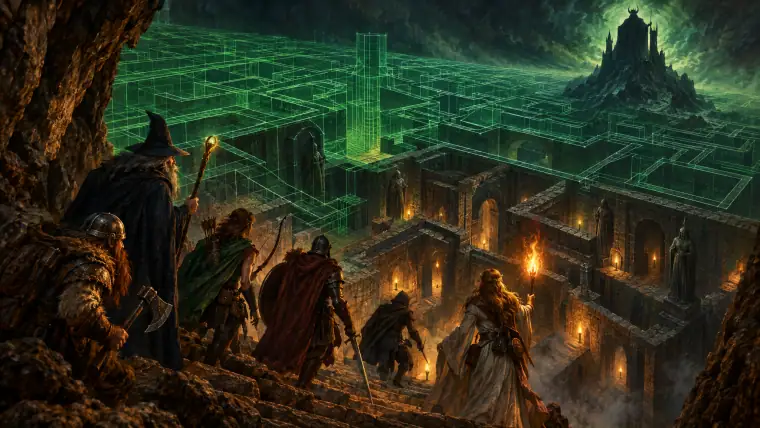
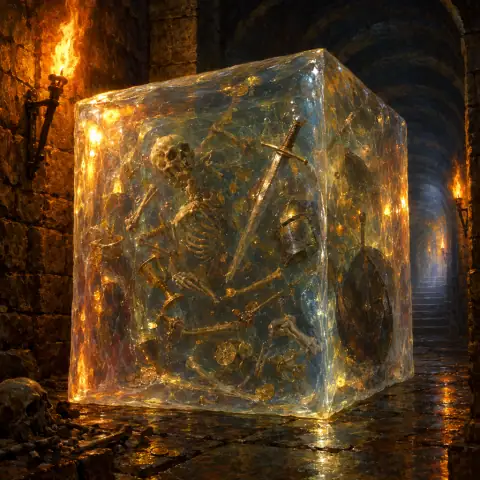
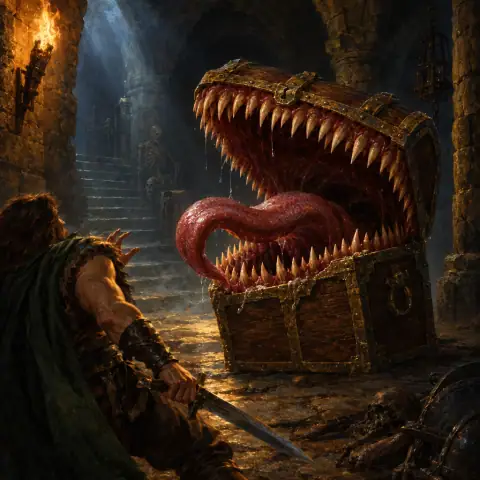
Dungeons & Dragons (1974) gathered these fears into a family inspired in part by horror films such as The Blob. Its first monster list included green slime, a motionless hazard that turns flesh into more green slime; ochre jelly, a giant amoeba that splits into smaller jellies when struck with weapons; the corrosive black pudding; and gray ooze, which looks like wet stone. The Greyhawk supplement (1975) added the Gelatinous Cube. In the artificial ecology of the Dungeon crawl they served as a clean-up crew, scouring corridors of refuse and careless adventurers, and players learned to carry fire and prod ceilings with ten-foot poles.
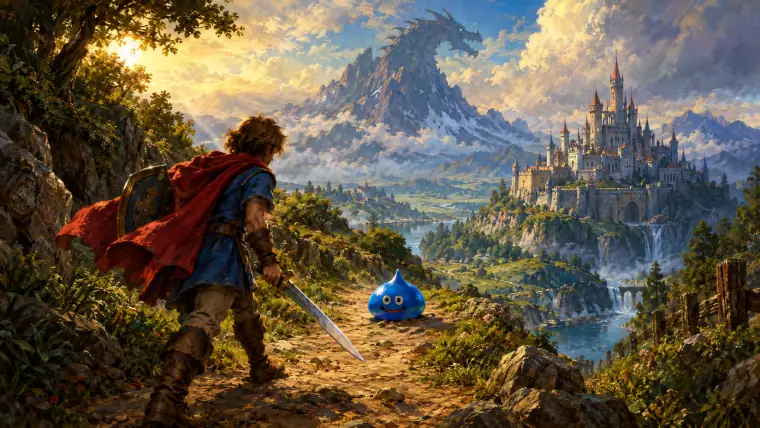
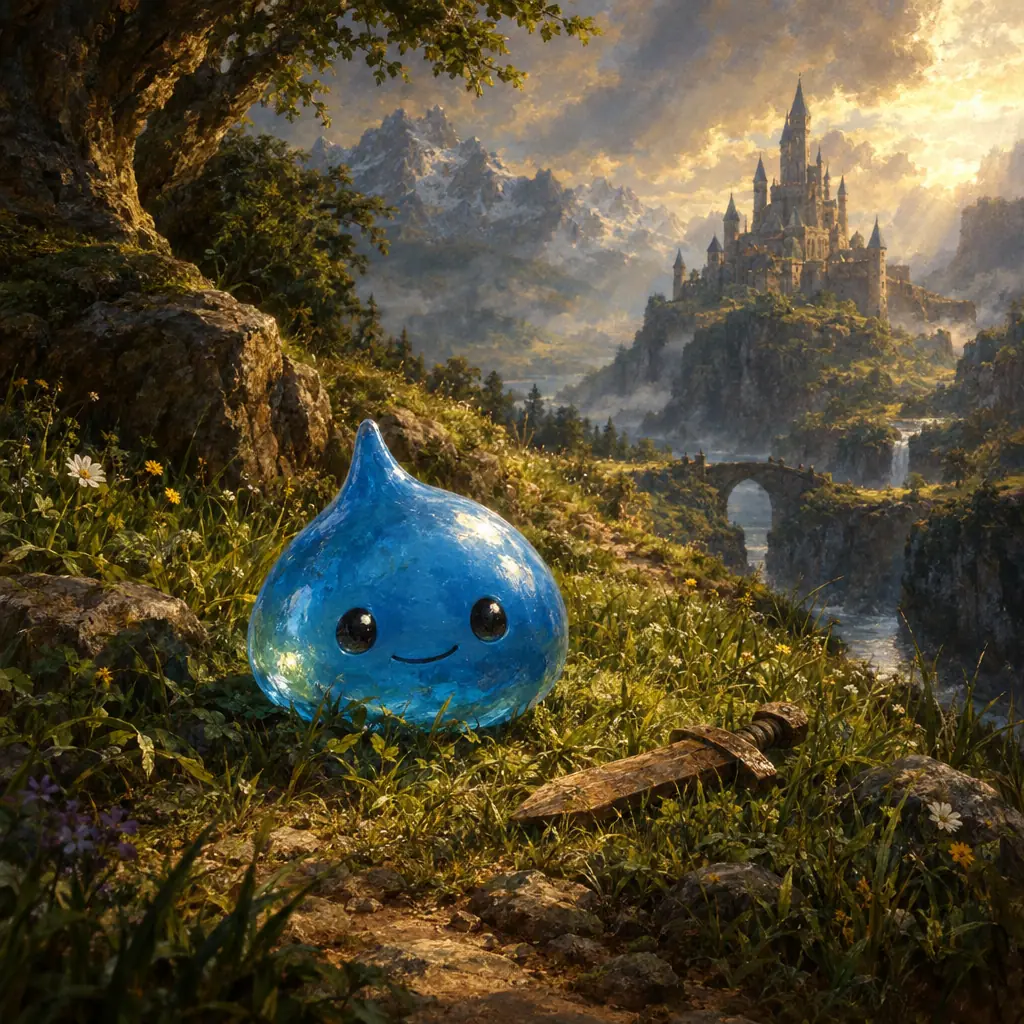
Computer games absorbed them at once. Wizardry: Proving Grounds of the Mad Overlord (1981) put slime-like monsters in its maze, and NetHack later made its puddings divide when hit with iron. The Legend of Zelda (1986) filled its dungeons with small hopping blobs. But the decisive step came in Japan. Yuji Horii, who had been captivated by Wizardry, has said its slime-looking creatures inspired him. For Dragon Quest (1986) he sketched a slime as "a pile of goo", and the manga artist Akira Toriyama redrew it as a blue teardrop with big eyes and a wide smile. It was the first and weakest enemy of the game, the monster every new hero met in the fields outside Tantegel Castle.
Variations
That smile changed the creature's meaning. Because players killed hundreds of slimes while Grinding their first levels, they grew fond of them, and the slime became the mascot of the Dragon Quest series and one of the most recognizable characters in Japanese games. It spawned a family: orange She Slimes, the Healslime with its tentacles, the crowned King Slime and above all the Metal Slime, which flees almost at once and resists damage, but gives a jackpot of Experience points when defeated. Slimes became recruitable allies in Dragon Quest V (1992) and the heroes of their own spin-offs, beginning with Slime MoriMori Dragon Quest on the Game Boy Advance in 2003 and continuing with Dragon Quest Heroes: Rocket Slime on the Nintendo DS. Slime plush toys, controllers and steamed buns followed.
Through Dragon Quest the cute slime became a convention of the Japanese RPGs (JRPG) and beyond: the weak, bouncing blob that appears on the first screen of countless games, Western and Japanese alike. The web novel That Time I Got Reincarnated as a Slime, begun in 2013, reincarnated its hero as a small blue slime and made him the ruler of a monster nation, one of many LitRPG & Progression Fantasy and isekai stories built on game logic. Meanwhile D&D's oozes still dissolve careless adventurers; the two traditions, one dreadful and one adorable, share a single ancestor in the pulp slime of the 1930s to the 1950s.
Migration
How the creature traveled from story to story.
- 1936H. P. Lovecraft, At the Mountains of MadnessThe shoggoths, shapeless servitors of black protoplasm, give weird fiction its archetypal living slime.
- 1953Weird Tales, March 1953Joseph Payne Brennan's cover story 'Slime' sends a formless, devouring mass up from the sea floor.
- 1958The BlobThe drive-in hit's creeping, ever-growing jelly is credited as one inspiration for D&D's oozes.
- 1974Dungeons & Dragons, Monsters & TreasureGreen slime, ochre jelly, black pudding and gray ooze: the dungeon's 'clean-up crew', dissolving flesh, wood and metal.
- 1981WizardrySlime-like creatures lurk in the Mad Overlord's maze — the monsters Yuji Horii later cited as his inspiration.
- 1986Dragon QuestAkira Toriyama redraws Horii's 'pile of goo' as a grinning blue teardrop, the first and weakest enemy of the game.
- 2003Slime MoriMori Dragon QuestOn the Game Boy Advance the slime becomes a hero of its own spin-off series, followed by Rocket Slime on the Nintendo DS.
- 2013That Time I Got Reincarnated as a SlimeA Japanese web novel reincarnates its hero as a small blue slime, and the cute slime becomes a staple of isekai fiction.
Marginalia
- D&D's green slime, ochre jelly, black pudding and gray ooze all appeared in the first 1974 rules; the gelatinous cube followed in the Greyhawk supplement.
- An ochre jelly hit by weapons does not die — it splits into smaller jellies.
- Yuji Horii has said his slime came from Wizardry; he pictured 'a pile of goo', and Akira Toriyama's design came back as a teardrop.
- Horii rejected Toriyama's first pixel-art slime because it lacked the artist's personal style.
- The rare Metal Slime flees battles and resists damage but pays out huge experience, making slime-hunting a Dragon Quest ritual.
- Friendly Dragon Quest slimes often greet the player with 'I'm not a bad slime!'
Quick answers
- Where does the Slime come from?
- Pulp horror (Lovecraft's shoggoths, 1936; 'Slime', 1953) and The Blob (1958), codified as D&D's oozes (1974), made cute by Dragon Quest (1986)
- When did the Slime first appear?
- 1936, in H. P. Lovecraft, At the Mountains of Madness.
- How did the Slime get into games?
- Key appearances: Dungeons & Dragons, Monsters & Treasure (1974), Wizardry (1981) and Dragon Quest (1986).
- Why is the Slime significant?
- No monster changed character more completely on its journey from West to East. D&D's slimes were hazards; Dragon Quest turned the slime into a mascot, and the gentle slime is now the first enemy of Japanese RPGs and a genre icon.