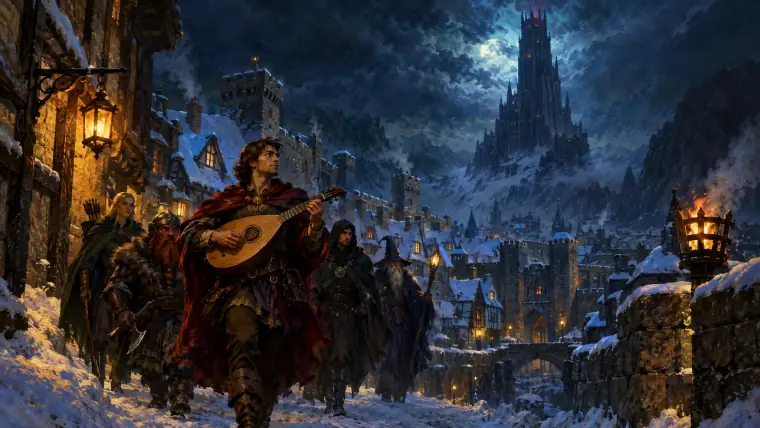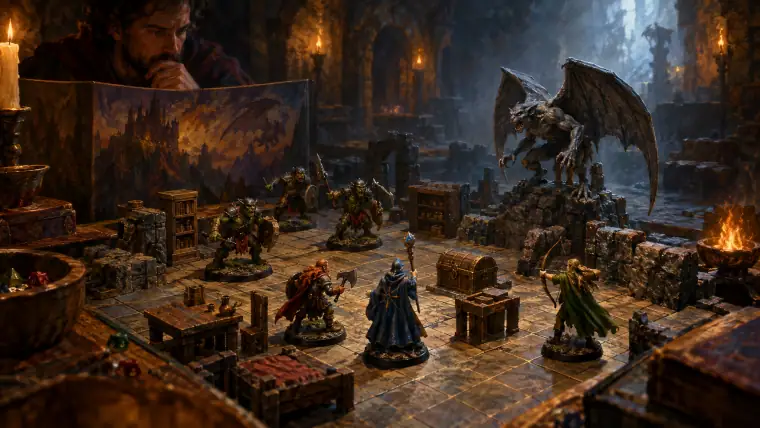
Heroes of Might and Magic grafted role-playing heroes onto a turn-based war game, refining the formula of Jon Van Caneghem's King's Bounty into a hybrid that spawned a long-running series and a durable subgenre.
Overview
Heroes of Might and Magic: A Strategic Quest is a turn-based fantasy strategy game developed and published by New World Computing for MS-DOS near the end of September 1995. A spin-off from the studio's Might and Magic role-playing series, it asks the player to build up castles, gather resources and send generals — the "heroes" of the title — across a map at the head of armies of knights, dragons, genies and ghosts.
It was a hit, and it began one of the most affectionately remembered series on the PC. Its sequels, above all Heroes of Might and Magic II (1996) and III (1999), refined the formula, and new entries were still appearing two decades later. The first game, simpler and brighter than its successors, set out nearly every idea they would inherit.
Origins
The game's direct ancestor is King's Bounty, a turn-based fantasy game designed by Jon Van Caneghem and published by New World Computing in 1990. In it, a single hero recruited creatures, led them as stacks into tactical battles, paid their upkeep weekly and hunted villains to collect pieces of a map to a hidden sceptre. Those mechanics — creature stacks, a weekly economy, morale based on compatible troops, and a treasure hunt by map fragments — reappear, expanded, in Heroes. Later Heroes anthologies bundled King's Bounty as the series' forerunner.
Van Caneghem, who had founded New World Computing in 1983 and built it on the Might and Magic role-playing games, gave the new game the family name and a link to the older fiction. Its story follows Lord Morglin Ironfist, forced to flee Varn — the world of the first Might and Magic — through a magic portal after his cousin Ragnar usurps the throne. He arrives in the unclaimed land of Enroth, which three other warlords also covet: the barbarian Lord Slayer, the sorceress Queen Lamanda and the warlock Lord Alamar. In the canonical ending, Ironfist wins and founds a kingdom, and Enroth went on to host later Might and Magic role-playing games as well.
How it plays
Play alternates between two layers. On the adventure map, each turn is a day. Heroes move across terrain to explore, capture gold and resource mines, pick up treasure and artifacts, and fight neutral monsters or rival heroes. Towns generate income, construct buildings and produce new recruits each week, so the economy of the map drives the war. Most scenarios are won by capturing every enemy castle and defeating every enemy hero, though some have special goals such as amassing gold or finding a particular artifact.
When armies meet, the game switches to a tactical battlefield where units are represented as stacks — a single figure standing for any number of creatures of one type. Stacks move and attack in turn, ranged units shoot, and the hero stands to one side, boosting the army and casting spells, rather than fighting as a unit.
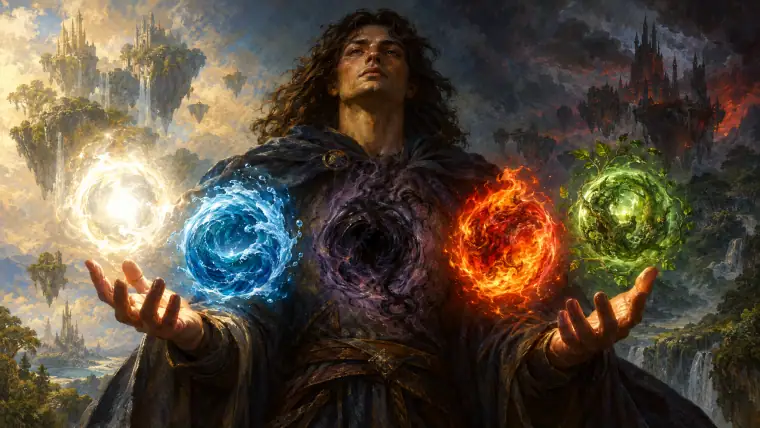
There are four classes of hero and castle, each with its own creatures. The two "might" classes, Knight and Barbarian, advance mostly in attack and defense; the two "magic" classes, Sorceress and Warlock, advance mostly in spell power and knowledge. Heroes gain experience from battle, which makes veterans far more valuable than raw recruits — the experience and statistics that give the hybrid its role-playing heart. Alongside the faction troops wander neutral creatures such as Rogues, Nomads, Genies and Ghosts, the last of which cannot be hired.
Reception & impact
The game sold quickly. In mid-November 1995 New World Computing said it had shipped 100,000 copies to retailers with strong sell-through, and by October 1997 the first game, Heroes II and its expansion The Price of Loyalty had together passed 500,000 copies. The series had sold 1.5 million copies by December 1999.
Critics liked its accessibility. Next Generation called it "part wargame, part adventure, and part sim" and "easy to learn, but difficult to master." Arcane found it simpler and shallower than MicroProse's Master of Magic, which it resembled, but much easier to get into. Computer Gaming World named it the best strategy game of 1995 (sharing the honor), Computer Games Strategy Plus named it best turn-based strategy game (tied with Jagged Alliance), and Computer Game Review gave it a Golden Triad award. In 1996 Computer Gaming World ranked it the 133rd best computer game ever, calling it "a brilliantly balanced game of fantasy combat."
Legacy
Heroes of Might and Magic established the template of a genre that sits between the strategy RPG and the war game. The series passed with New World Computing to the 3DO Company in 1996 and, after 3DO's 2003 bankruptcy, to Ubisoft, which commissioned Heroes V (2006) from Nival and later entries from other studios. Heroes remakes appeared on the Game Boy Color in 2000, and a 2015 HD edition of Heroes III brought the series to mobile devices.
Though Heroes III is usually the entry fans hold up as the peak, its central ideas — heroes who level up, stacks of creatures, a week-by-week economy and a buried "ultimate artifact" revealed piece by piece — were all present in 1995. Van Caneghem himself was inducted into Computer Gaming World's Hall of Fame in 2004 for his work in strategy and role-playing.
Marginalia
- It was first released near the end of September 1995, for MS-DOS.
- The story follows Lord Morglin Ironfist, who flees the world of Varn — the setting of the first Might and Magic — for the uncharted land of Enroth.
- Its design refines Jon Van Caneghem's 1990 strategy game King's Bounty, which later Heroes anthologies include as the series' forerunner.
- By mid-November 1995, New World Computing reported shipping 100,000 copies to retailers.
- A 1996 Windows 95 edition added a map editor, a random map generator, CD audio and the original King's Bounty as a bonus.
- Computer Gaming World named it 1995's best strategy game (in a tie) and in 1996 listed it as the 133rd best computer game ever.
Quick answers
- When was Heroes of Might and Magic first released?
- Heroes of Might and Magic was first released in 1995 (MS-DOS); 1996 (Windows 95).
- Who created Heroes of Might and Magic?
- Heroes of Might and Magic was made by Jon Van Caneghem (series creator; head of New World Computing).
- Who published or developed Heroes of Might and Magic?
- New World Computing.
- What kind of work is Heroes of Might and Magic?
- Heroes of Might and Magic is a strategy RPG in the Tactical & Strategy RPGs tradition, released for MS-DOS, Windows 95 (1996) and Game Boy Color remake (2000).
- Why is Heroes of Might and Magic important?
- Heroes of Might and Magic grafted role-playing heroes onto a turn-based war game, refining the formula of Jon Van Caneghem's King's Bounty into a hybrid that spawned a long-running series and a durable subgenre.