Hobb's sixteen-book Realm of the Elderlings made interior, first-person character study a pillar of modern epic fantasy, standing beside George R. R. Martin's work as the decade's great argument for realism in the genre.
Life
Margaret Astrid Lindholm was born in Berkeley, California, on March 5, 1952, and from the age of ten grew up in Fairbanks, Alaska, during an oil boom that crowded her school onto staircases and pushed roads into the woods she loved. Her family hunted caribou and moose and kept a half-wolf named Bruno. After graduating from Lathrop High School and a year at the University of Denver, she returned north and at eighteen married Fred Ogden, a merchant mariner. After a spell in Hawaii the couple settled in his hometown of Kodiak, and she came to love his ships and the sea.
While raising four children with a husband often offshore as a commercial fisherman, she wrote "during the naptime" and "after the children are in bed," and worked as a waitress and in mail delivery. The family's income, she once said, "depended entirely on fish and editors." The Alaskan and Pacific Northwest landscapes shape much of her fiction; scholars have noted that the larger map of her Realm of the Elderlings resembles Alaska.
Work
She began by selling stories to children's magazines, then turned to fantasy. As M. Lindholm and later Megan Lindholm (a name born of an editor's misunderstanding), she made her first professional fantasy sale, "Bones for Dulath," to the anthology Amazons! (DAW, 1979), which won a World Fantasy Award. Harpy's Flight (Ace, 1983) launched four novels about the traders Ki and Vandien. Wizard of the Pigeons (1986), about a homeless Vietnam veteran working small, fragile magic on the streets of Seattle, is regarded as a forerunner of Urban Fantasy. She contributed to the Liavek shared-world anthologies, co-wrote The Gypsy with Steven Brust, and earned Hugo and Nebula nominations for the novella "A Touch of Lavender." The books were admired but did not sell.
In 1995 she began again under an androgynous new name, Robin Hobb, for a different kind of story. Assassin's Apprentice, Royal Assassin and Assassin's Quest (1995–97), The Farseer Trilogy, are narrated in retrospect by FitzChivalry Farseer, the bastard son of a prince, raised in the stables and trained as a royal assassin. Fitz is gifted in two forbidden-seeming magics, the royal Skill and the bestial Wit, and bonded to the wolf Nighteyes; he is also frequently wrong, frightened, used and hurt. Hobb gave epic fantasy the density of a psychological novel, with trauma and its long aftermath treated as the real plot.
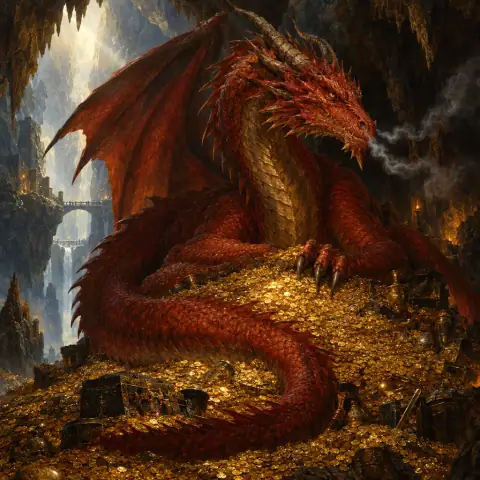
The world grew into the Realm of the Elderlings: the nautical Liveship Traders (1998–2000), with sentient ships carved from wizardwood, sea serpents and a family of merchants; The Tawny Man (2001–03), returning to Fitz and his enigmatic friend the Fool; The Rain Wild Chronicles (2009–13), in which the return of dragons proves a mixed blessing; and Fitz and the Fool (2014–17), whose final volume, Assassin's Fate, gathered every thread. The Soldier Son trilogy (2005–09) is her only Hobb series set outside that world. She still publishes short fiction as Lindholm.
Legacy
Critics often pair Hobb with George R. R. Martin, whose A Song of Ice and Fire began in 1996, midway through the Farseer books, as twin realists of 1990s epic fantasy: Martin interested in the brutality of power, Hobb in its psychological cost. The critic Amanda Craig found her mood "nothing like as bleak" as Martin's "nor as Manichean as Tolkien's, but close to Ursula Le Guin's redemptive humanism." By 2003 her first nine Hobb novels had sold more than a million copies; by 2018 her work had been translated into 22 languages, and Le Monde reported sales of more than four million copies. The Times called her "one of the great modern fantasy writers" in 2005, and she received the World Fantasy Award for Life Achievement in 2021.
Unlike many peers in this gallery, Hobb has not yet seen the Elderlings reach the screen, so her influence has run through readers and writers instead. Her early work in the Liavek shared world links her to the collaborative, game-like side of 1980s fantasy that Thieves' World pioneered; her mature work showed how much emotional weight a single point of view could carry, a lesson absorbed by the character-driven fantasy that followed.
Marginalia
- As a child in Fairbanks, Alaska, her family kept a half-wolf named Bruno, a model for Fitz's wolf companion Nighteyes.
- She married a merchant mariner at 18; the family's income, she said, "depended entirely on fish and editors."
- Her first professional fantasy sale, "Bones for Dulath," appeared in DAW's World Fantasy Award-winning anthology Amazons! (1979).
- As Megan Lindholm she wrote Wizard of the Pigeons (1986), an early landmark of urban fantasy set among Seattle's homeless.
- She chose the androgynous pen name Robin Hobb for a first-person male narrator; Assassin's Apprentice (1995) was its debut.
- The Realm of the Elderlings runs to sixteen books, concluding with Assassin's Fate in 2017; she won the World Fantasy Life Achievement Award in 2021.
Quick answers
- Who is Robin Hobb?
- The Alaska-raised writer who, after a critically admired but modest career as Megan Lindholm, became Robin Hobb in 1995 and wrote the Farseer books, epic fantasy told from inside one wounded assassin's head.
- When was Robin Hobb born?
- Robin Hobb was born in 1952 in Berkeley, California.
- What is Robin Hobb known for?
- Robin Hobb is best known for The Farseer Trilogy.
- Why does Robin Hobb matter to fantasy and games?
- Hobb's sixteen-book Realm of the Elderlings made interior, first-person character study a pillar of modern epic fantasy, standing beside George R. R. Martin's work as the decade's great argument for realism in the genre.