Iwiński co-founded CD Projekt and steered it from a localization house to the studio behind The Witcher, making Poland a major force in the RPG and turning a national fantasy saga into a global one.
Life
Marcin Piotr Iwiński was born in 1974 and grew up in Warsaw in the last years of the Polish People's Republic, when Western video games were scarce and political unrest, martial law and shortages shaped daily life. He loved games as a child. In high school, in the free-for-all market economy of early-1990s Poland, he sold copied Western games at a Warsaw marketplace, a common trade in the loosely regulated years after communism. There he met Michał Kiciński, who was also selling games and became his business partner.
Iwiński finished secondary school at Warsaw's XXVII Liceum Ogólnokształcące im. Tadeusza Czackiego in 1994 and later graduated in management and marketing from the University of Warsaw.
Work
Determined to run a legitimate business, Iwiński and Kiciński began importing games from American retailers, and in May 1994 they founded CD Projekt with about $2,000, operating from a friend's apartment. The company distributed games in Poland and became one of the first to localize them, translating text and recording Polish voices. Its breakthrough was BioWare's Baldur's Gate, published internationally by Interplay Productions: CD Projekt packed the Polish edition with extras, hired famous Polish actors for the voices, and shipped 18,000 copies on release day, far above the norm.
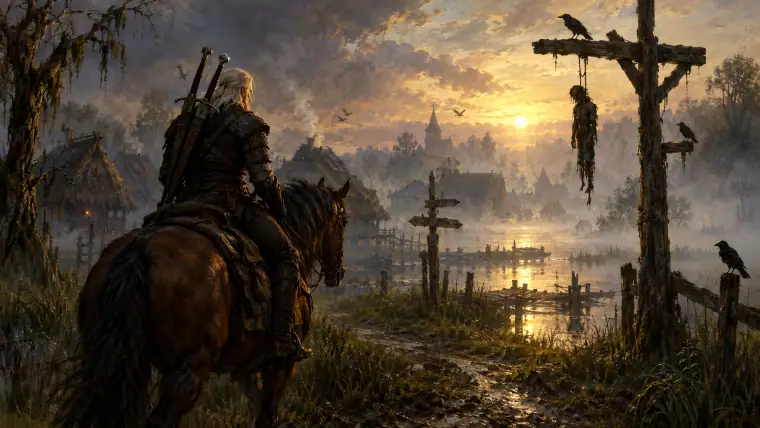
Working with Interplay led to a contract to port the console action-RPG Baldur's Gate: Dark Alliance to the PC. When Interplay's financial troubles killed the port, the founders asked whether they should remain distributors or become developers. They chose to develop, and they chose a subject every Polish reader knew: Andrzej Sapkowski's Wiedźmin stories, The Witcher Saga. CD Projekt acquired the game rights in 2002 and founded a development studio, CD Projekt Red. Iwiński later admitted that he and Kiciński had no idea how to make a video game. An early demo was rejected by publishers across Europe, and the project was restarted.
With help from BioWare, which licensed its Aurora engine and gave the Polish team space at its E3 booth in 2004, and with Atari as publisher, The Witcher arrived in 2007. Its team had grown from 15 to about 100 and its budget to 20 million złoty. It found an international audience for Geralt of Rivia and led the company to adopt the English name "The Witcher." The following years were perilous: a troubled console version, The Witcher: White Wolf, and the 2008 financial crisis brought CD Projekt close to bankruptcy. Iwiński and his partners cut the console project and focused on The Witcher 2: Assassins of Kings (2011), built on the company's own REDengine. That same period saw the 2008 launch of Good Old Games, later GOG.com, a digital store selling older PC games free of copy protection, which reflected the founders' long-standing opposition to DRM.
In 2010 CD Projekt became publicly traded through a merger with Optimus S.A. Then came The Witcher 3: Wild Hunt (2015), an Open-World RPGs that took three and a half years and more than $81 million to make, and won Game of the Year awards; by May 2020 CD Projekt was valued as Europe's largest video game company. Cyberpunk 2077 (2020), based on Mike Pondsmith's tabletop RPG, was far more troubled: its buggy console launch led to refunds, a class-action settlement and years of repair work. In 2015, amid rumors of a takeover bid, Iwiński said he would fight to keep CD Projekt independent. In December 2025 the company sold GOG to his co-founder Kiciński.
Legacy
Iwiński's career is the story of a country's game industry. He grew up in a market where Western games arrived through bazaars, built a business translating them into Polish, and then helped create games that the world played in translation from Polish. The Witcher games carried Sapkowski's saga to an international audience, alongside the later Netflix adaptation, and they became a model for mature, morally ambiguous fantasy RPGs.
He was honored with the Knight's Cross of the Order of Polonia Restituta in 2013 and was named Poland's Internet Person of the Year for 2010. For visitors to this museum, he is the entrepreneur who proved that the next great fantasy RPG could come from Warsaw.
Marginalia
- According to Polish records he was born on June 30, 1974; he graduated in management from the University of Warsaw.
- He and Michał Kiciński founded CD Projekt in May 1994 with about $2,000, using a friend's flat as a rent-free office.
- CD Projekt's Polish edition of Baldur's Gate featured well-known Polish actors and shipped 18,000 copies on its release day.
- The first The Witcher game (2007) was built on BioWare's licensed Aurora engine, the technology of Neverwinter Nights.
- In 2008 the company launched Good Old Games, now GOG.com, selling classic PC games free of DRM.
- He received the Knight's Cross of the Order of Polonia Restituta in 2013.
Quick answers
- Who is Marcin Iwiński?
- The Warsaw teenager who sold copied Western games at a market stall, co-founded CD Projekt with $2,000, and gambled the company on a video game of Andrzej Sapkowski's Witcher saga.
- When was Marcin Iwiński born?
- Marcin Iwiński was born in 1974.
- What is Marcin Iwiński known for?
- Marcin Iwiński is best known for The Witcher and The Witcher 3: Wild Hunt.
- Why does Marcin Iwiński matter to fantasy and games?
- Iwiński co-founded CD Projekt and steered it from a localization house to the studio behind The Witcher, making Poland a major force in the RPG and turning a national fantasy saga into a global one.