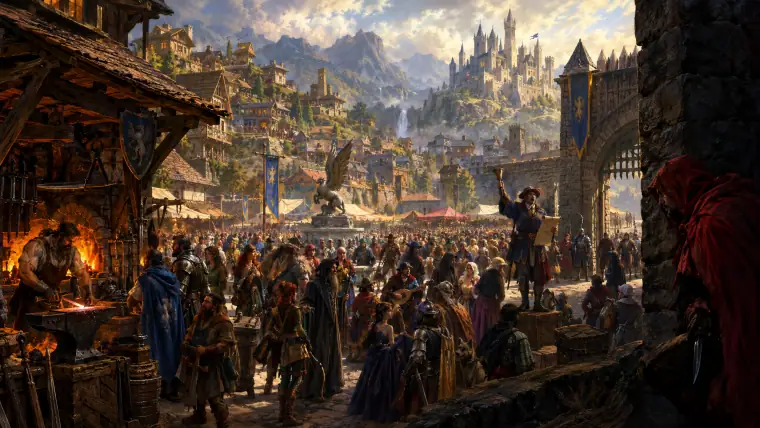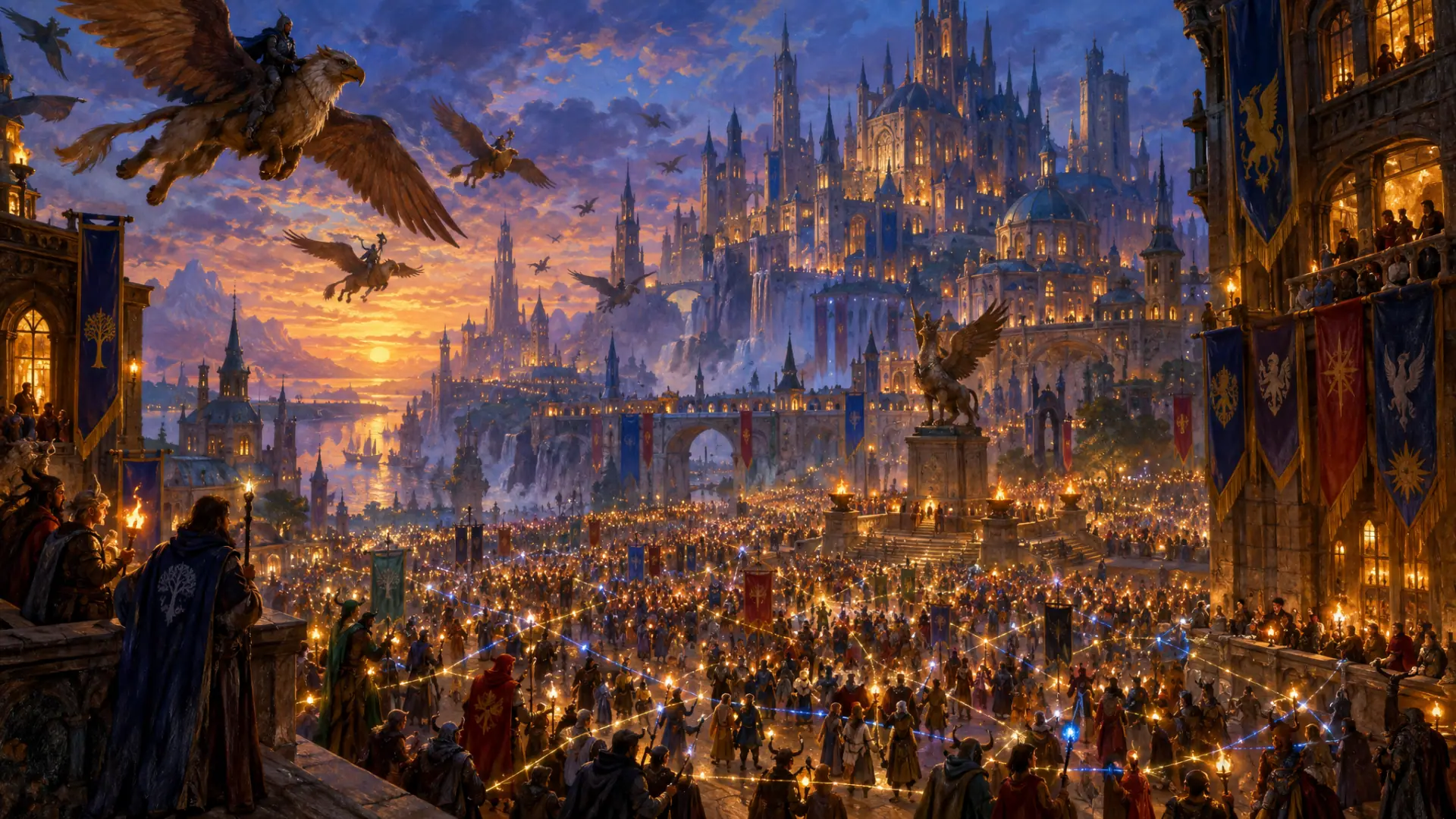
The death of Lord British became the founding legend of MMORPG culture, a vivid demonstration that in a shared persistent world even the creator's avatar is subject to the players, and a warning to every designer who followed.
What happened
Lord British had been Richard Garriott's alter ego since his teenage years, when his first Dungeons & Dragons friends nicknamed him "British" because he was born in England; Akalabeth: World of Doom went out under the name, and the benevolent monarch Lord British ruled Britannia through the Ultima series. In the single-player games he was all but invulnerable, which made killing him an irresistible challenge. Players discovered methods over the years: luring him within range of a ship's cannons in Ultima III, or, in Ultima VII, double-clicking the plaque above the throne-room door at noon, when he always stood beneath it. Garriott made the task hard; his players kept finding the gaps.
In the summer of 1997 Origin Systems, owned by Electronic Arts since 1992, was beta-testing Ultima Online, an attempt to put thousands of people into one persistent Britannia. On August 9, during a server stress test designed to cram as many players as possible into the world, Garriott appeared in-game as Lord British to address the testers. A player whose character was called Rainz cast a "fire field" spell, and the king died.
Producer Starr Long explained afterward that it was human error. Lord British, like other staff characters, was normally flagged invulnerable, but by design the flag did not persist across sessions; when the server crashed shortly before the appearance, Garriott had not reset it. Rainz was promptly banned from the beta. Origin said the ban was not for the assassination but for earlier complaints, including exploiting bugs rather than reporting them, which the incident had brought to attention. Many testers saw it differently, and the ban and the staff's subsequent behavior, including accounts of daemons summoned to slaughter the onlookers, drew protests on the beta boards. The original beta closed on September 23 with a staged apocalypse in which shadowlords and daemons killed every character in sight, and the game launched the next day.
Why it mattered
The death of Lord British was a comic accident, but it became a parable. Ultima Online was built as a genuine sandbox: players could steal, murder, hoard, and build, and the designers had promised a living world. The assassination showed, in a single spectacular moment, that such a world belonged as much to its players as to its creators. It was also a preview of the Player killer (PK) culture that would dominate early Ultima Online, eventually leading Origin to split the world in 2000 into the consensual-combat Trammel and the lawless Felucca.
The story traveled fast because it was so perfectly shaped: a god-king slain by a mortal, at the unveiling of his own new world, through his own oversight. It crystallized questions about emergent behavior, player freedom, and the authority of developers inside their own creations that the builders of persistent worlds, including Ultima Online's lead designer Raph Koster and the teams behind EverQuest and World of Warcraft, would wrestle with for years.
Legacy
Ultima Online launched on September 24, 1997, became the first MMORPG to reach 100,000 subscribers, and helped establish the MMORPGs as a genre; Garriott is credited with coining the term itself. Guinness World Records: Gamer's Edition 2008 listed "First and Only Person to Kill Lord British" among the game's records, and the story remains a staple of histories of Online Worlds: From MUD1 to World of Warcraft. Garriott left Origin in 2000, taking Lord British with him.
For this museum the incident is a hinge between two eras. The single-player Ultima games, with their Avatar and their virtues, asked players to be good. The online Britannia discovered that, given a crowd and a loophole, some of them would simply kill the king.
Marginalia
- Lord British was killed on August 9, 1997, during a server stress test in Ultima Online's beta.
- Producer Starr Long blamed human error: after a server crash, Garriott's character had not had its invulnerability reset.
- Rainz was banned from the beta; Origin said the ban was for previously exploiting bugs rather than for the killing itself.
- Guinness World Records: Gamer's Edition 2008 listed 'First and Only Person to Kill Lord British' among Ultima Online's records.
- Players had long hunted ways to kill Lord British in single-player Ultima games, such as dropping a plaque on him in Ultima VII.
- Ultima Online launched a few weeks later, on September 24, 1997, and became the first MMORPG to reach 100,000 subscribers.
Quick answers
- What was The Assassination of Lord British?
- In a 1997 Ultima Online beta test, a player called Rainz killed Richard Garriott's supposedly immortal avatar, Lord British, with a fire field spell: online gaming's first great lesson in what players will do.
- When did The Assassination of Lord British happen?
- August 9, 1997.
- Why did The Assassination of Lord British matter?
- The death of Lord British became the founding legend of MMORPG culture, a vivid demonstration that in a shared persistent world even the creator's avatar is subject to the players, and a warning to every designer who followed.